From Call to Cleanup: What Actually Happens During a Quad Cities Tree Emergency
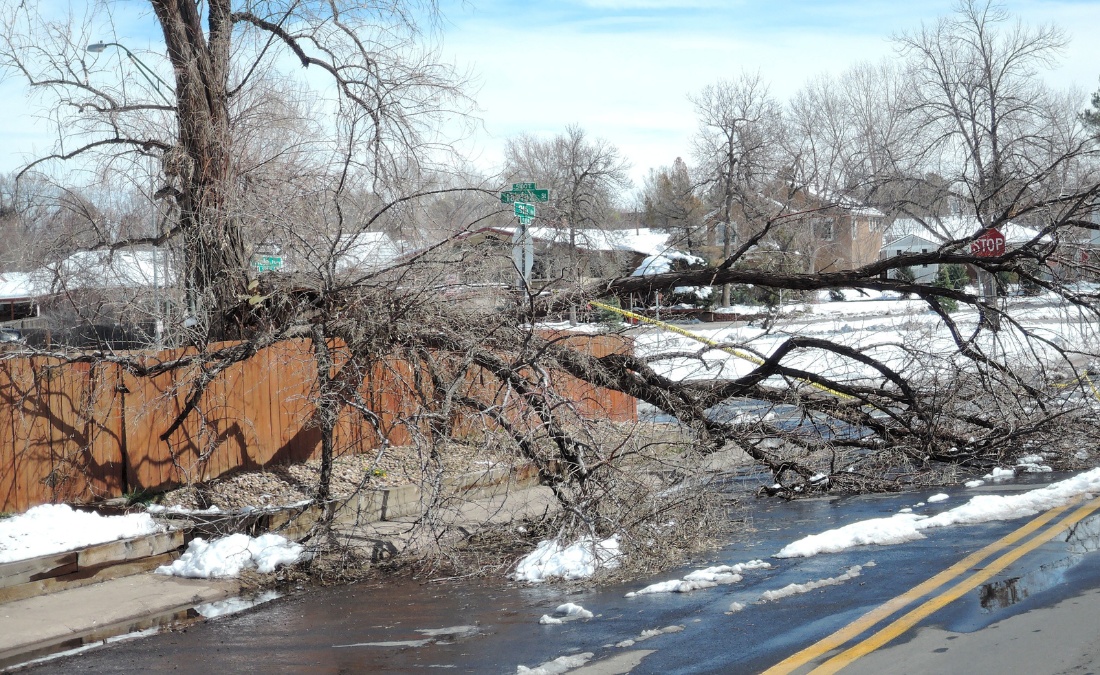
Who removes storm-damaged trees in Davenport – the city, utility, or you? A Quad Cities guide to emergency tree service that saves hours of runaround.
Last year’s storms wreaked havoc across Davenport, including the one that knocked out power to more than 21,000 Illinois customers in a single night. As MidAmerican Energy scrambled to restore service, many homeowners stood in their yards wondering what to do and who to call first for the tree blocking their driveway or the branches tangled in power lines.
When you’re facing a Quad Cities tree emergency, knowing the right sequence of steps can mean the difference between a resolved situation and days of frustrating phone calls.
Key Takeaways
- If a tree is touching power lines, call MidAmerican Energy (800-799-4443) first and stay at least 25 feet away – never assume downed lines are safe.
- MidAmerican will clear the power line hazard, but removing the rest of the tree from your property is your responsibility.
- Emergency tree crews assess the full situation before cutting anything, coordinating with utilities when needed and identifying the safest removal approach.
- Document everything with photos before cleanup begins; your insurance claim depends on evidence of what the storm damaged.
- Proactive pruning catches the structural weaknesses that cause most storm failures before they become emergencies.

Knowing who to call first—utility, city, or tree service—saves hours of frustration after a storm.
What to Do First When a Tree Falls on Your Property
Your immediate priority is determining whether power lines are involved – this single factor dictates everything that happens next.
Start by scanning from a safe distance. If any wires are down or the tree is touching lines, stay back at least 25 feet. Electricity can arc through air and travel through wet wood without direct contact. Even lines that appear “dead” can re-energize without warning when utility crews restore upstream sections.
If anyone is trapped or injured, call 911 immediately. Human safety comes before property concerns.
If power lines are involved but no one is hurt, call MidAmerican Energy at 800-799-4443. They dispatch crews to make the area electrically safe before any tree work can begin.
SAFETY FIRST: Never assume downed power lines are safe. Even lines that appear “dead” can re-energize without warning when utility crews restore upstream sections.
What If No Power Lines Are Involved?
When you’ve confirmed no wires are down and no one is injured, assess where the tree landed. If it’s blocking a public road, call your city’s non-emergency line – Davenport, Bettendorf, Rock Island, and Moline each handle road obstructions through their public works departments. If the tree is entirely on your property, it’s time to call a tree service.
Step 2: Who to Call First During a Tree Emergency
The right call depends entirely on the situation, and getting the sequence wrong can cost you hours or days.
When to Call the Utility Company
Call MidAmerican Energy when any part of the tree is touching or near power lines. They handle one thing: making their lines safe.
They’ll de-energize the area and clear the immediate hazard from their infrastructure, but they won’t remove the full tree or debris from your property. Once they’ve cleared the line, remaining removal becomes your responsibility.
NOTE: During severe weather, MidAmerican deploys hundreds of line crew employees and tree workers to restore power to customers as soon as possible – but homeowners are still responsible for removing the rest of the tree from their property.
When to Call the City
Call the city when a fallen tree is blocking a public road or in the right-of-way. Municipal crews won’t respond to trees that fall entirely on private property, regardless of size. They only handle trees blocking public roads or in the right-of-way.
When to Call a Tree Service
Call a professional tree service once power lines are clear (or weren’t involved) and the tree is on your property rather than blocking a public road.
Life-safety situations – a tree on your house with people inside or blocking emergency vehicle access – get priority response within hours, even during major storm events. Non-emergencies, like a tree down in the yard without immediate danger, can often wait for regular business hours, which may save on after-hours rates.
What Emergency Tree Crews Actually Do
Emergency tree removal isn’t just cutting and hauling. Professional crews follow a systematic process that prioritizes safety and prevents additional damage.
Site Assessment and Hazard Identification
Before anyone touches a chainsaw, the crew assesses the full situation. They identify:
- Power line proximity
- Structural instability in remaining branches
- Tension points in fallen wood
- Anything else that could shift unexpectedly during removal.
Storm-damaged trees behave unpredictably – a branch that looks stable may be under enormous pressure from the way it fell.
Coordination with Utilities (When Required)
If any part of the work brings crews within 10 feet of power lines, OSHA regulations require either de-energized lines or certified line-clearance arborists.
This coordination with MidAmerican can add time to your timeline – during widespread outages, expect 12 to 24 hours before a tree service can safely begin work near involved lines.
Stabilization and Removal
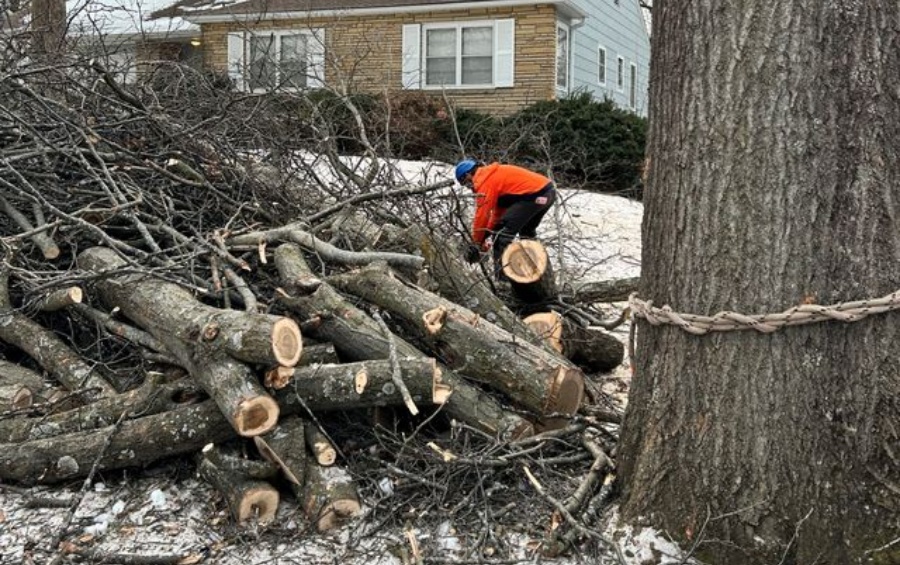
Crews work systematically to prevent secondary damage. This might mean supporting a partially fallen tree before cutting, removing sections in a specific sequence to control where weight shifts, or using rigging to lower heavy limbs away from structures. The goal is controlled removal, not just fast removal.
How Cleanup and Debris Removal Works After a Tree Emergency
Once the hazard is addressed, cleanup begins – and understanding who handles what prevents surprises.
What the Tree Service Handles
Professional tree services typically include full debris removal as part of emergency response. They haul away all wood, branches, and debris generated during the job. Some services offer the option to leave cut firewood on-site if you want it.
The tree service also handles any debris that resulted from the emergency itself – the fallen tree, broken limbs, scattered branches. If MidAmerican cut sections to clear their lines, those pieces become part of your cleanup scope, not theirs.
What Cleanup You Are Responsible For
You are responsible for any debris that doesn’t meet municipal curbside limits – most Quad Cities communities only accept branches bundled under 5 feet, under 50 pounds, and nothing over 6 inches in diameter. Anything larger requires either hiring a tree service or hauling it to the compost facility yourself.
PRO TIP: After major storms, municipalities often announce temporary free debris drop-off or expanded curbside pickup. Follow your city’s social media pages and local news for these time-limited programs.
What You Must Document for Insurance
Photograph all storm damage from multiple angles before any cleanup begins – insurance adjusters rely on this evidence to process your claim:
- Capture where the tree fell from (root ball, break point) and what it damaged
- Note the date and time of the storm and when you discovered damage
- Keep records of all calls (utility, city, tree service) with timestamps
- Save copies of tree service estimates and invoices
One important detail many homeowners miss: insurance typically covers tree removal only if the tree damaged a covered structure like your house, garage, or fence.
If a tree falls in your yard without hitting anything, removal costs may not be covered. Document thoroughly and contact your insurance company early in the process to understand your coverage.
Frequently Asked Questions About Emergency Tree Service in the Quad Cities
How much does emergency tree removal cost in the Quad Cities?
Emergency tree removal costs vary based on tree size, location, and complexity. Expect higher rates for after-hours calls, power line involvement, or trees on structures. Most companies provide free estimates even for emergency situations – get one before authorizing work so you understand the scope.
Can my neighbor be held liable if their tree falls on my property?
Generally, no – unless you can prove they knew the tree was hazardous and failed to act. Iowa and Illinois both follow the “act of God” principle for storm damage, so your homeowners insurance typically covers damage to your property regardless of where the tree originated.
What if a tree falls and blocks my driveway but doesn’t damage anything?
You’re still responsible for removal since it’s on your property. If the tree isn’t touching power lines and poses no immediate danger, this is considered non-emergency work. You may be able to wait for regular business hours to get estimates and potentially save on after-hours rates.
How do I know if my damaged tree can be saved or needs removal?
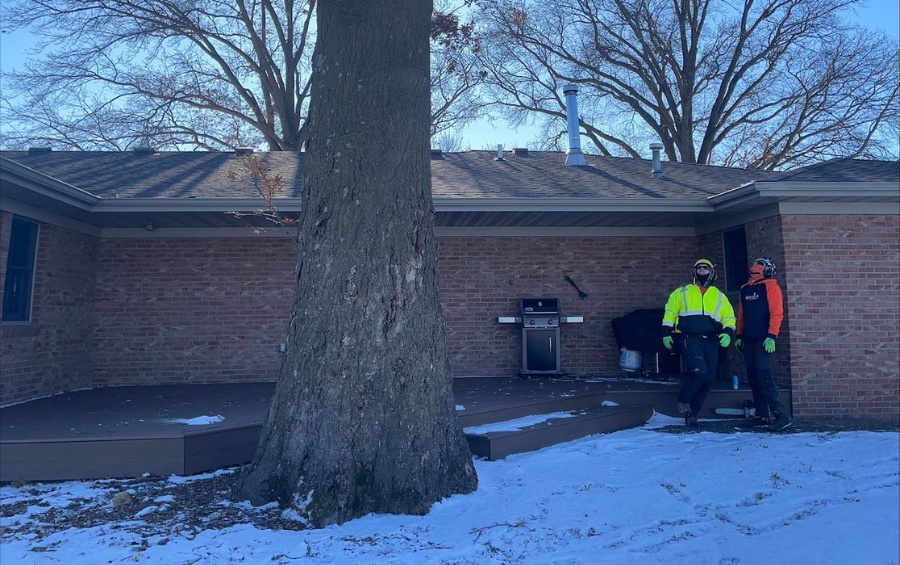
Trees with less than 50% crown damage and intact main structural limbs often recover with proper care. However, trees with split trunks, major root damage, or severe lean after a storm typically require removal. An ISA Certified Arborist can assess structural integrity and recommend the safest path forward.
Be Prepared for the Next Storm with Arbor Masters
Knowing the sequence of phone calls and events critical time during emergencies. But the best emergency is one you prevent. Considering most storm damage comes from problems that were visible before the storm hit, and with ice storms hitting the Quad Cities approximately every three years, preparation isn’t something to put off.
For 24/7 emergency response, call 563-355-7508. To get ahead of the next storm and to ensure your trees are ready for winter weather, reach out to schedule an inspection with our ISA Certified Arborists.
Learn More With These Related Articles


Want More Like This?
Get the latest local news, tree care tips, special offers, and company updates directly to your inbox! It's easy to subscribe and there's no spam - we promise.
"*" indicates required fields