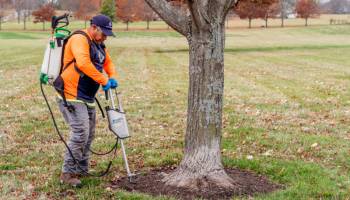
Which Oklahoma City Trees Can Bounce Back After Ice Storm Damage?
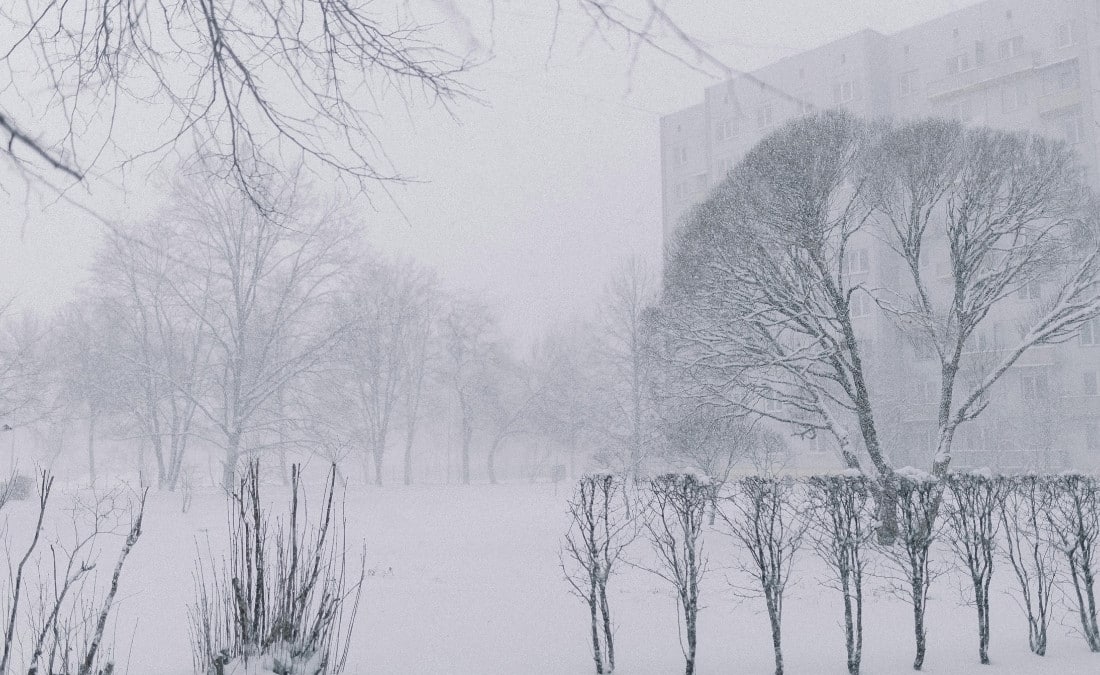
Ice storms are rough on trees, but most aren’t a lost cause. Many OKC species can recover fully with the right post-storm care from Certified Arborists.
Winter weather is here in Oklahoma City and already causing headaches for Oklahomans. Recent years have shown that even minor ice accumulation can create serious problems. December 2025’s light freezing rain caused over 105 traffic collisions in a single morning, reminding residents that it doesn’t take a major storm like the devastating October 2020 ice event to cause significant problems and tree damage.
After ice brings down some branches, it may feel like the right instinct to remove a tree. But not every ice-damaged tree is destined for removal. Many trees can bounce back stronger than before with proper ice storm damage recovery techniques and patience. Understanding which trees can recover, and how to help them, can save you thousands in unnecessary removals while preserving your landscape investment.
Key Takeaways
- Many Oklahoma City trees can fully recover from ice damage if they retain at least 50% of their crown and have intact main trunks.
- Bur oaks, cedar elms, and hackberries show exceptional recovery rates due to their adaptation to Great Plains weather extremes.
- Proper post-storm care, including targeted pruning and soil support, can dramatically improve recovery success within 2-3 growing seasons.
- Professional assessment within the first month after damage determines recovery potential and prevents costly mistakes.
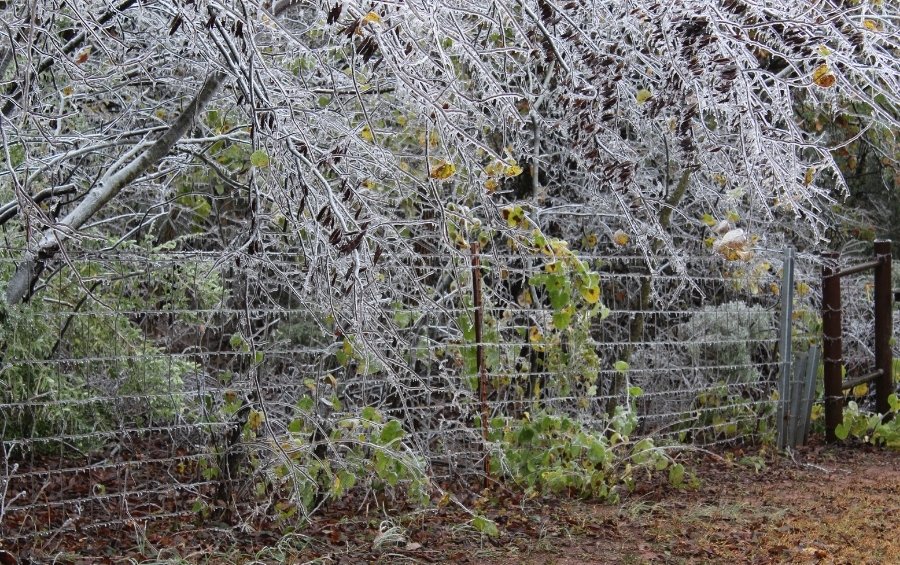
Even smaller landscaping features like shrubs and garden areas suffer significant ice damage that requires careful assessment and recovery planning.
How Do Ice Storms Damage Trees in Oklahoma?
Understanding how ice storms specifically damage trees helps homeowners make better decisions about recovery potential. Oklahoma’s unique geography and climate create perfect conditions for these devastating weather events.
Ice Loading Creates Unique Structural Stress
Ice accumulation creates simultaneous stress across the entire tree structure unlike wind damage that affects specific areas. When just 0.25 inches of ice qualifies as an ice storm, major Oklahoma events often see accumulation exceeding one inch. This level of ice loading adds thousands of pounds of weight to tree crowns.
Great Plains Geography Amplifies Ice Storm Impact
Oklahoma’s position in the Great Plains makes it particularly vulnerable because warm air masses from the Gulf ride over cold surface air, creating supercooled raindrops that freeze
instantly upon contact with branches. The flat terrain across central Oklahoma offers no natural windbreaks, allowing ice-laden branches to sway and crack under the additional weight.
During the 2020 ice storm, the combination of ice loading and sustained winds created a scissoring effect that snapped branches at weak points and split trunks along natural fault lines. Trees that might have survived either ice or wind alone couldn’t withstand the double stress, yet many that looked doomed at first glance proved more resilient than expected.
How Do You Know if Your Oklahoma City Tree Can Recover from Ice Damage?
Several key indicators help homeowners assess whether their damaged trees can bounce back or need removal. Professional evaluation remains important, but these guidelines provide an initial recovery assessment.
The 25-50% Crown Loss Recovery Rule
The 25-50% crown rule provides the best initial assessment for storm damage recovery potential. The rule looks like this:
- Trees that have lost less than 25% of their crown will likely recover without professional intervention.
- Any trees that have suffered between 25% and 50% have a good chance of surviving with professional help.
- Damage that exceeds half of the crown is likely too much for a tree to survive, and preservation becomes impossible.
Structural Integrity Assessment Indicators
A quick visual assessment can help homeowners understand whether a storm-damaged tree has a reasonable chance of recovery.
Positive recovery signs include:
- Intact terminal leaders on younger trees
- No major trunk splits or bark stripping, especially not exceeding more than one-third of the circumference
- Stable root systems that haven’t been compromised by soil heaving at the base
- Damage concentrated on only one side
These signs indicate that the tree still has the structural framework it needs to rebuild its canopy and support spring growth. When damage is uniform across the crown or involves major trunk failure, recovery becomes far less likely.
For borderline cases, a professional tree health assessment within the first month helps distinguish between recoverable damage and fatal structural compromise.
Which Oklahoma Native Species Show the Best Ice Storm Recovery?
Not all trees respond equally to ice storm damage. Oklahoma’s native species have evolved to handle Great Plains weather extremes, giving them distinct advantages in recovery situations.
“Many homeowners make the mistake of immediately removing ice-damaged trees that could have recovered with proper care. I’ve seen countless bur oaks and cedar elms that looked completely destroyed after ice storms come back stronger than ever. The key is patience and understanding that these native species have survived Oklahoma weather for centuries – they’re more resilient than people realize.” – Wes Klein, ISA Certified Arborist at Arbor Masters
Champions of Oklahoma Ice Storm Recovery
- Bur Oak: Deep taproot systems extending up to 20 feet into Oklahoma clay provide exceptional stability, while natural compartmentalization ability helps seal wounds quickly. Bur oaks bounce back from ice damage with remarkable resilience, often showing new growth within the first spring following damage.
- Cedar Elm: Demonstrates impressive recovery through flexible branching structure and rapid wound closure rates. Adapted specifically to Oklahoma conditions over thousands of years, cedar elms can regrow entire sections of their crown within two to three growing seasons. Their multi-trunk growth pattern means even significant damage rarely affects the entire tree structure.
- Hackberry: Earns recognition as a reliable survivor thanks to multi-trunk recovery capability and tolerance for structural damage. When main trunks split, hackberries often develop new leaders from lateral branches, essentially rebuilding their crown architecture.
Good Recovery Prospects with Proper Care
- Eastern Redbud: Benefits from understory flexibility, bending rather than breaking under ice loads
- Sugar Maple and Red Oak: Show moderate recovery rates when damage doesn’t exceed the 50% threshold
- Most Other Native Species: Generally outperform non-adapted ornamental trees in recovery situations
How to Help Trees Recover After an Ice Storm
Recovery success depends heavily on the care trees receive in the months following ice damage. The right approach can mean the difference between full recovery and costly removal.
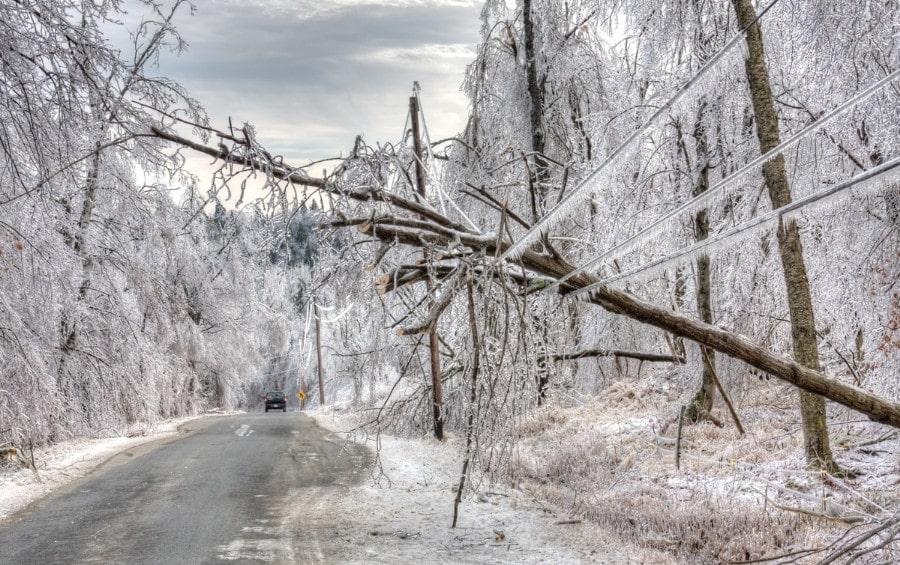
Ice loading causes tree failures that can block roads and create dangerous conditions, making professional storm cleanup essential for Oklahoma City residents.
Immediate Safety Assessment and Hazard Removal
Immediate post-storm care focuses exclusively on safety rather than tree recovery. You should only remove hanging or obviously dangerous branches that threaten people or property. Many trees that look devastated immediately after ice storms show surprising recovery potential once spring growth begins.
Document damage with photos for professional assessment and potential insurance claims. However, resist the urge to start major pruning before understanding the full extent of structural damage.
Professional fall and winter tree care requires specific safety considerations and techniques that differ significantly from emergency hazard removal.
Strategic Recovery Pruning During Growing Season
Recovery support care begins during the following growing season and requires proper pruning techniques that promote healing rather than create additional stress.
Appropriate pruning after a storm will remove any weak or damaged branches to protect against future damage. An arborist will also be able to remove any problematic branches (such as those that are overly long) that could potentially break during the next storm.
PRO TIP: For trees with structural weaknesses that survive ice damage, cabling and bracing systems can provide additional support to prevent future failures.
Soil and Water Support During Recovery
After ice damage, roots need oxygen and consistent moisture to rebuild tissue and support new growth. In Oklahoma’s clay-heavy soils, improving drainage around recovery trees can help prevent waterlogged conditions that limit root function.
During the first season after damage, consistent watering matters more than fertilization. Trees with reduced canopy cover struggle in Oklahoma’s hot summers, so steady moisture helps them allocate energy toward healing instead of simply surviving heat stress.
How Long Recovery Takes After Ice Damage
Recovery timelines vary significantly based on tree species, damage severity, and care quality. Setting realistic expectations helps homeowners make informed decisions about patience versus removal.
What to Expect in the First Growing Season
Rome wasn’t built in a day, and first growing season expectations should focus on initial response signs rather than complete restoration. Leaf emergence patterns in spring following damage reveal the tree’s recovery potential. Healthy buds breaking along main branches indicate strong recovery prospects, while delayed or sparse leafing suggests more serious internal damage.
The compartmentalization process begins immediately but becomes visible only as new callus tissue forms around wound edges.
How Long Full Crown Recovery Really Takes
Full crown restoration timeframes vary significantly by species and damage severity. Bur oaks and cedar elms typically show substantial regrowth within two growing seasons, while red oaks and maples may require three to five years for complete crown restoration.
Structural strength recovery progresses more slowly than aesthetic recovery, with trees needing two to three years to develop adequate branch structure for normal wind resistance.
When recovery plateaus after three years with minimal new growth or continued branch dieback, removal becomes the practical choice. Trees that haven’t shown significant improvement by the third growing season rarely justify continued investment in recovery care.
PRO TIP: If you decide to remove a tree that hasn’t recovered from storm damage, make sure you ask your tree service the right questions to ensure the best care possible.
Frequently Asked Questions Ice Storm Damage
Can trees with major ice damage actually recover completely?
Trees losing 25-50% of their crown can often make full recoveries within 2-3 years with proper care, especially Oklahoma native species that have adapted to our extreme weather. Complete recovery depends on trunk integrity and the tree’s age, with younger trees showing better recovery rates than mature specimens.
How long should I wait before deciding to remove an ice-damaged tree?
Wait at least one full growing season to assess recovery potential but get a professional evaluation within the first month to establish a recovery plan. Most trees show their true recovery potential by the end of the second growing season following damage.
Which Oklahoma trees recover fastest from ice storm damage?
Bur oaks, cedar elms, and hackberries typically show the strongest recovery due to their deep root systems and adaptation to Great Plains weather extremes. These native species often regrow substantial crown portions within two growing seasons.
Should I prune ice-damaged branches myself?
Only remove obviously hanging or dangerous branches immediately; proper recovery pruning requires specific techniques best handled by Certified Arborists. Improper pruning can prevent recovery and create additional stress points that lead to further damage.
When should I call a professional arborist for ice-damaged trees?
Contact an ISA Certified Arborist within the first month after damage for proper assessment, especially if trees have trunk damage, major limb loss, or pose safety risks to structures. Professional evaluation determines whether the recovery investment makes financial sense compared to removal and replacement.
Can cabling and bracing help prevent future ice damage?
Yes, properly installed structural support systems can significantly improve a tree’s ability to withstand ice loading. Annual inspections ensure these systems continue providing effective protection year after year.
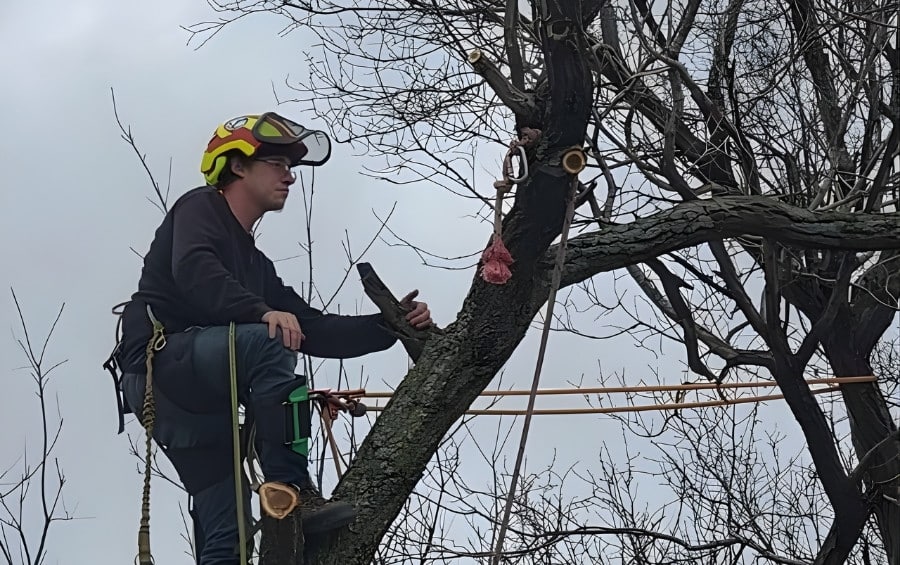
Professional arborists use proper techniques and safety equipment when pruning ice-damaged trees to promote healthy recovery
Get Professional Help for Your Ice-Damaged Trees from Arbor Masters
Oklahoma City’s trees have weathered ice storms for generations, and many of them can survive this winter’s challenges with the right approach. Understanding the difference between repairable damage and fatal structural compromise helps you make smart decisions that protect both your landscape investment and your budget.
The Arbor Masters team is ready to help your tree recover. We offer emergency services for trees that have failed during the storm, and recovery programs with pruning and fertilization to save your high-value species.
Call us at 405-495-8746 or request a quote online for help with storm-damaged trees today.
Learn More With These Related Articles
Want More Like This?
Get the latest local news, tree care tips, special offers, and company updates directly to your inbox! It's easy to subscribe and there's no spam - we promise.
"*" indicates required fields