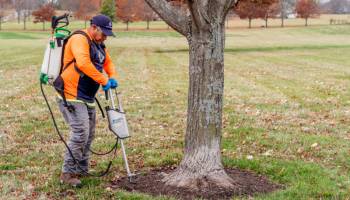
Oklahoma City Spring Tree Care: Essential Tips to Protect Your Trees

Oklahoma City’s spring doesn’t last long. Here’s what to do now to protect your trees before storms, pests, and heat start taking a toll later in the season.
Spring in Oklahoma City moves fast. One week you’re looking at bare branches, and the next, redbuds and oaks are leafing out across Nichols Hills, Moore, and every neighborhood in between.
That short window between the last freeze and the first 90-degree day is the most important stretch of the year for spring tree care. Knowing what your trees need right now — and what to watch for — sets them up for a healthier, stronger growing season and fewer problems down the road.
Key Takeaways
- Inspect every tree while branches are still bare — structural damage, hanging limbs, and trunk cracks are much easier to spot before leaves emerge.
- Spring is the final window for dormant pruning; once trees push into active growth, pruning becomes more stressful and less effective.
- Remove tree wraps and stakes before active growth begins to prevent bark damage and trunk girdling.
- Preventive disease and pest treatments are more effective and less expensive than reacting after a problem takes hold.
- Proper mulching in Oklahoma City’s clay soils reduces moisture loss, moderates soil temperatures, and protects roots before summer heat.
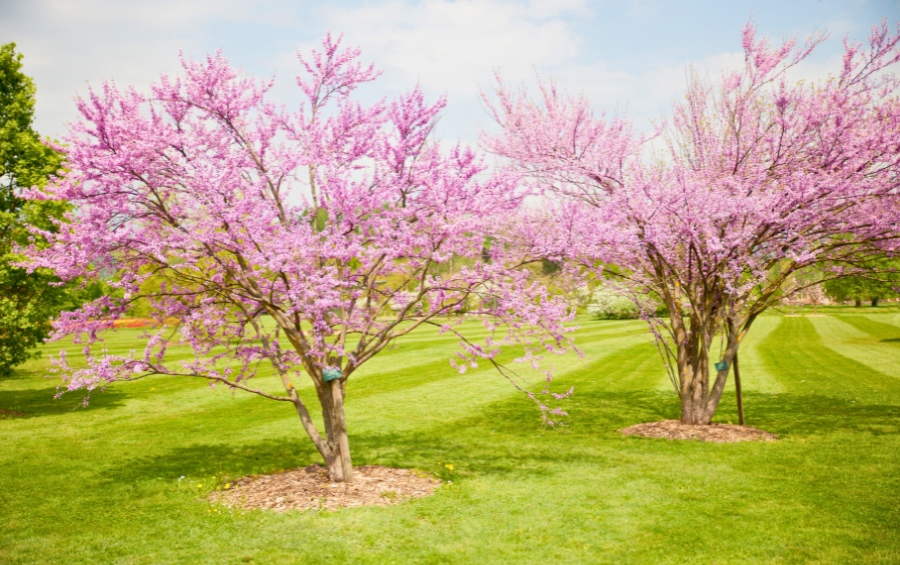
Oklahoma’s native redbud trees showcase the brief but beautiful spring window when preventive tree care becomes essential before summer heat arrives.
Inspect Your Trees for Winter Damage
Early spring is the best time to inspect your trees — bare branches give you a clear view of the canopy that isn’t possible once leaves emerge. Walk your property before growth kicks in, and you’ll catch problems while there’s still time to act.
Signs of Winter Damage to Watch For
Start with a slow walk around every tree. The most common signs of winter damage on Oklahoma City trees include:
- Split bark from freeze-thaw cycles
- Hanging or partially attached branches
- Vertical cracks in the trunk
- Changes in lean compared to previous seasons
- Gradual leaning in newer neighborhoods like Deer Creek and Yukon, where trees are sometimes planted too deep in clay soil
Use binoculars to see into the upper canopy without standing underneath potentially hazardous limbs and take dated photos of any damage you find — they’ll be valuable for arborist consultations and insurance documentation.
PRO TIP: Take photos of every tree on your property each spring. This creates a visual record that helps you spot gradual changes — like a slowly increasing lean or expanding trunk crack — that are easy to miss season to season.
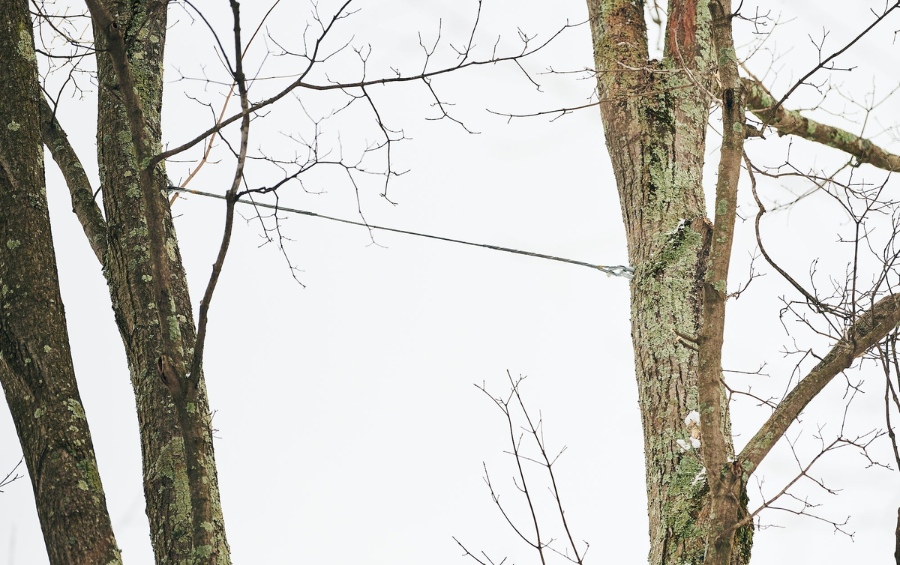
Structural support systems like cables and braces strengthen mature trees with weaknesses before severe weather tests their limits during Oklahoma’s storm season.
Identify Storm Risks Before Severe Weather Hits
A tree can look healthy and still be a serious storm risk. Inspecting for damage tells you what’s wrong with the tree but storm risk is about what happens if something fails.
Instead of looking for general damage, shift your focus to targets and impact. Which trees could hit your home, driveway, fence, or power lines if they came down?
Start by identifying the highest-risk situations:
- Large limbs positioned over your roof, vehicles, or outdoor spaces
- Trees leaning toward structures or recently shifted after wet weather
- Branches growing over power lines or blocking clearances
- Trees close to your home with dense, heavy canopies that catch wind
Even a structurally sound tree can cause major damage if it’s poorly positioned. That’s why storm risk assessments focus less on overall tree health and more on what’s within reach if something breaks.
If you’re unsure whether a tree poses a risk, it’s worth getting a professional opinion before storm season — when small concerns can turn into urgent problems.
Protect Your Trees from Spring Pests and Disease
Spring is when most tree pests and diseases start to become active. A few simple steps now can prevent bigger problems later in the season:
- Rake up and dispose of fallen leaves from last season — many fungal spores overwinter in leaf litter
- Water at the base of trees, not overhead, to keep foliage dry
- Make sure mulch isn’t piled against the trunk, which traps moisture and invites decay
- Avoid pruning oaks in warm weather
Early Signs of Pest and Disease Activity
Catching problems early makes them much easier to manage. As your trees start to leaf out, keep an eye out for:
- Leaves that are wilting, spotted, or discolored
- Premature leaf drop in spring
- Visible insects, egg cases, or webbing
- Thin or uneven canopy growth compared to nearby trees
If something looks off early in the season, it’s usually worth paying attention to—it rarely fixes itself.
Common Spring Tree Problems in Oklahoma City
Some of the most common issues we see this time of year include:
- Anthracnose
- Oak wilt
- Powdery mildew
- Dutch elm disease
- Scale insects and aphids
- Bagworms
- Webworms
Each has a specific treatment window based on temperature and moisture — not the calendar.
Resume Regular Watering as Temperatures Rise
Once temperatures are consistently above freezing, it’s time to start watering your trees again — especially during dry springs. Oklahoma City is already dealing with drought conditions, which means natural rainfall may not be enough to support healthy growth.
Established trees can usually handle short dry periods, but extended drought stress weakens them over time and makes them more vulnerable to pests and disease. Newly planted trees are even more at risk and need consistent moisture to establish strong roots.
Water slowly and deeply at the base of the tree to encourage deep root growth. Avoid frequent light watering, which leads to shallow roots and makes trees more susceptible to heat and drought later in the season.
Handle the Small but Important Spring Tree Care Tasks
Once the bigger tasks are handled, these smaller spring tree care steps help keep your trees healthy and set up for the growing season.
Fertilize (If Needed)
Spring fertilization is appropriate for most Oklahoma City trees, but start with a soil test rather than a generic fertilizer — it reveals what your soil actually needs. Applying the wrong fertilizer, or too much of the right one, can stimulate excessive growth that makes trees more susceptible to insects and disease.
Mulch Properly
Apply 2–4 inches of shredded hardwood mulch or wood chips in a ring extending to the drip line, keeping it at least six inches back from the trunk.
While you’re mulching, check that the root flare — the widening at the base of the trunk — is visible above the soil line. Buried root flares are common in OKC neighborhoods like Norman and Moore where rapid development led to improper planting depth. If the trunk goes straight into the ground like a telephone pole, carefully pull back soil and mulch until you expose the flare.
Remove Tree Wrap
Remove tree wraps as temperatures begin to climb and before active growth starts. Left on too long, wraps trap moisture against the bark, creating ideal conditions for disease and insect damage.
Remove Stakes
Stakes should come out as soon as the tree can stand upright on its own; most newly planted trees only need staking for one growing season. Leaving them longer prevents the trunk from developing natural strength and can cause girdling damage where ties press against the bark.
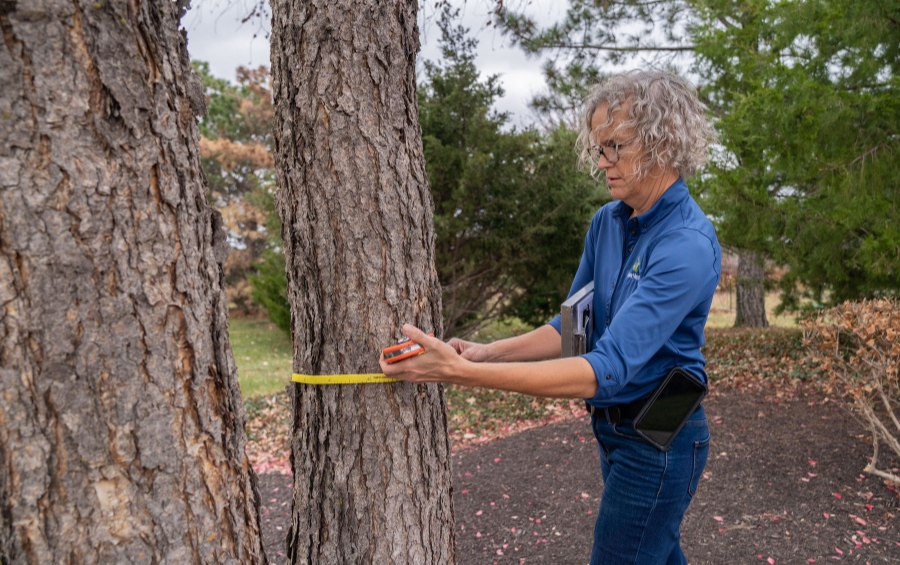
Professional tree assessment identifies hidden winter damage and structural weaknesses that could become dangerous during Oklahoma’s severe weather season.
Frequently Asked Questions About Spring Tree Care in Oklahoma City
How do I know if my tree is safe after an ice storm?
Look for hanging branches, visible trunk cracks, or any significant change in the tree’s lean after the storm. Keep in mind that internal fractures from ice loading aren’t always visible from the ground. When in doubt, an ISA Certified Arborist inspection gives you a definitive answer and identifies hidden structural damage before it becomes a safety hazard.
Can I prevent spring tree diseases myself?
Homeowners can help by cleaning up fallen leaves and avoiding unnecessary wounds to trees. But preventive treatments require professional timing, proper products, and application expertise to be effective against Oklahoma’s specific disease pressures. A DIY approach with off-the-shelf products rarely delivers the same results as professionally timed applications.
Is spring a good time to plant new trees in Oklahoma City?
Spring is one of the two best planting windows in OKC, alongside fall. Trees planted now have time to establish root systems before summer heat stress arrives. Species selection matters enormously in Oklahoma City’s clay soils, though, and an ISA Certified Arborist can help you
choose species suited to your specific site conditions and ensure proper planting depth from the start.
Why does spring timing matter so much for tree care in Oklahoma City?
Oklahoma City’s spring season is short. Temperatures can move quickly from late winter conditions to summer heat, and tornado season begins in earnest by April. The spring window is your last realistic opportunity to complete dormant pruning, address winter damage, apply preventive treatments, and strengthen trees before severe weather season; miss it, and many of these opportunities won’t come back until fall.
Protect Your Trees Before Storm Season Arrives
Oklahoma City’s climate demands proactive spring tree care, and the window to act is shorter than it seems. Every week you wait is a week closer to summer heat, active disease and pest pressure, and the first severe storms of the season.
The team at Arbor Masters of Oklahoma City is ready to help with everything on your spring tree care checklist, from professional assessments and preventive treatments to pruning, soil care, and structural support. Call us today at 405-495-8746 or request a quote online and let’s get your trees ready for whatever Oklahoma’s weather brings next.
Learn More With These Related Articles

Want More Like This?
Get the latest local news, tree care tips, special offers, and company updates directly to your inbox! It's easy to subscribe and there's no spam - we promise.
"*" indicates required fields