
What’s Included in a Professional Tree Treatment Program in Oklahoma’s Cleveland and Canadian Counties
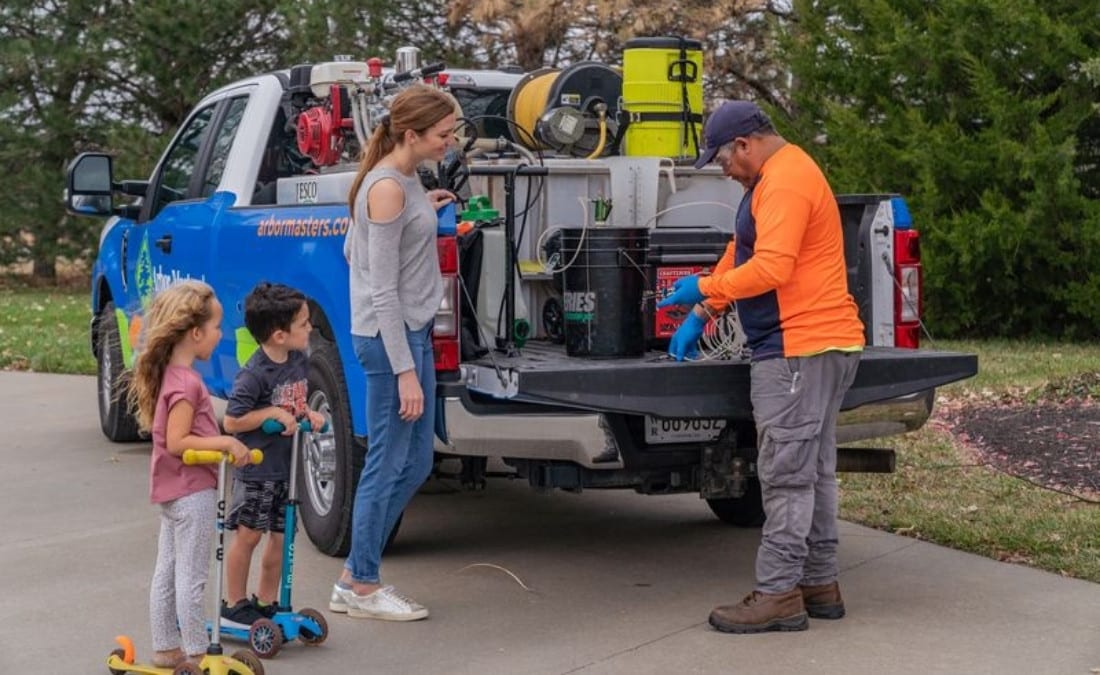
Effective tree care involves more than spraying chemicals and hoping for improvement. Learn what’s included in a professional tree treatment program.
With pests like bagworms, aphids, and emerald ash borer showing up across Cleveland and Canadian Counties, more homeowners are looking into professional tree treatment programs to protect mature trees before visible decline sets in. The challenge is knowing whether a program is actually designed to improve tree health—or simply apply treatments on a schedule and hope for the best.
A good treatment program should give homeowners a clear understanding of what’s affecting the tree, what results are realistic, and what to expect throughout the year—all from a reputable company that’s actively monitoring how the tree responds over time, not just applying treatments and disappearing.
Key Takeaways
- A professional tree treatment program starts with a Certified Arborist’s diagnosis, not a pre-set spray schedule.
- The core components include an initial assessment, soil testing, targeted treatments, scheduled monitoring, and documentation.
- “Cover spray” programs that apply pesticides on a calendar regardless of pest presence often cause more problems than they solve.
- Across Oklahoma, treatment costs run a fraction of removal and replacement, making plant health care the budget-conscious choice for mature trees.
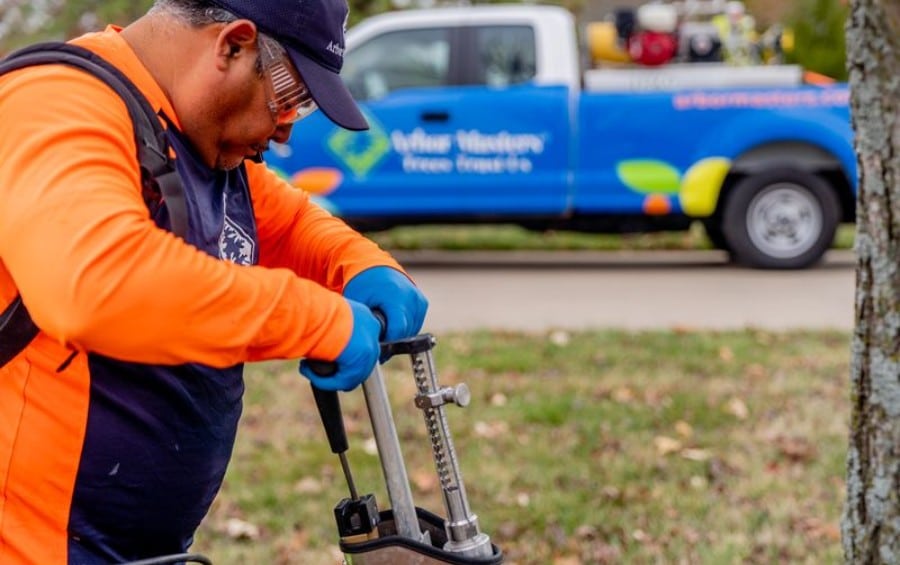
An Arbor Masters technician uses a trunk injector to deliver a targeted treatment directly into a tree—a precision tool used when diagnosis calls for it.
What’s Included in a Professional Tree Treatment Program?
Professional tree treatment programs are built around ongoing monitoring and targeted care rather than one-time spray applications. In Cleveland and Canadian Counties, most programs include five core components:
- An initial arborist assessment
- Soil testing and site evaluation
- Targeted treatments based on what the assessment finds
- Scheduled monitoring visits
- Ongoing documentation
Initial Assessment by a Certified Arborist
Every real program starts with a walk-through by an ISA Certified Arborist. They’ll examine the:
- Canopy
- Trunk
- Root flare
- Surrounding conditions
Then, they’ll identify active pests, diseases, and stress symptoms to establish the baseline every future treatment decision is measured against.
Soil Testing and Site Evaluation
Soil tells most of the story in central Oklahoma. The heavy clay soils common across Cleveland and Canadian counties affect:
- Drainage
- Root development
- Nutrient availability
Compaction, pH, and nutrient balance all shape which treatment will be most effective.
Targeted Treatments Based on the Diagnosis
Treatments are selected based on what the assessment actually finds, not applied generically across every property. Depending on the issue, treatment may include:
- Trunk injections for specific pathogens
- Deep root fertilization where soil tests show deficiencies
- Precision foliar sprays only when monitoring confirms a pest threshold has been crossed
- Root-zone aeration where compaction is choking growth
- Proper mulching
Scheduled Monitoring Visits
Programs include multiple visits throughout the year timed around seasonal pest and disease activity. Arborists monitor how the tree responds over time and adjust the treatment plan as conditions change.
PRO TIP: A documented baseline is what turns tree care from a series of disconnected visits into an actual program. When you can see what changed from last spring to this one, you can treat the cause instead of chasing the symptoms.
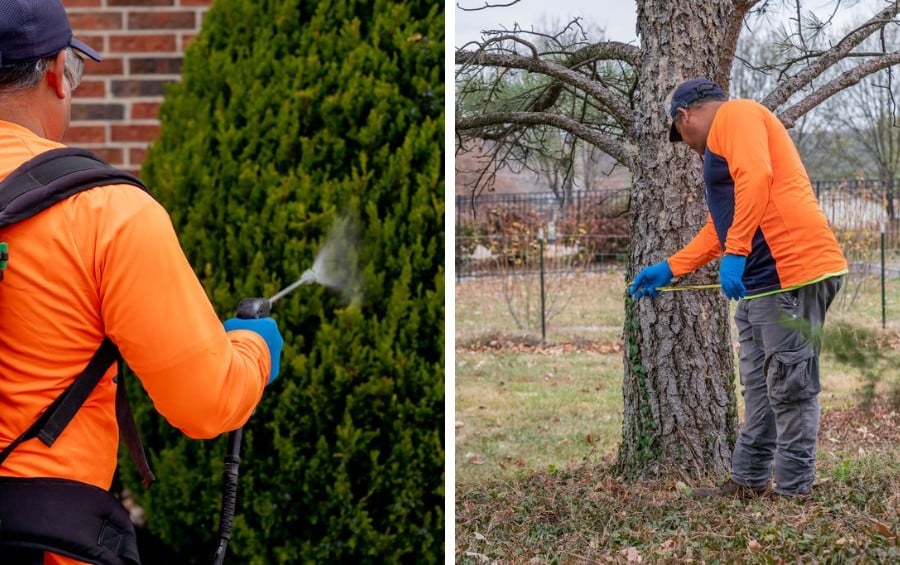
Two approaches to tree care—a broad foliar spray on the left, and an Arbor Masters arborist measuring a tree as part of a diagnostic assessment on the right.
What’s the Difference Between Plant Health Care and Cover Spraying?
Plant health care treats only what’s present and needed; cover spraying applies pesticides on a fixed calendar schedule whether pests are present or not. From the curb, the two approaches can look similar, but what they’re doing to your trees, soil, and surrounding ecosystem is fundamentally different.
Broad-spectrum, calendar-based pesticide applications can disrupt beneficial insects and other natural controls that help keep pest populations balanced. That includes predators, parasitoids, and naturally occurring organisms that suppress pests over time.
When those beneficial controls are reduced, certain pest populations can rebound more quickly, which may lead to heavier infestations and more frequent treatment needs later on.
Why Oklahoma Trees Need More Than Routine Spraying
In Cleveland and Canadian Counties, the combination of clay soils, drought stress, ice damage, and a specific set of regional pests and diseases make targeted, monitored care more effective than calendar-based spraying.
This includes concerns like:
- Oak Wilt: Devastating to red oaks; demands precise, species-specific treatment timing.
- Hypoxylon (Biscogniauxia) Canker: An opportunistic fungal pathogen that takes hold in oaks already weakened by drought, construction damage, or other stress.
- Bacterial Leaf Scorch: Chronic, progressive, and often misdiagnosed without lab confirmation.
- Pine Wilt: Fatal to Austrian, Scotch, and Japanese black pines.
- Bagworms, Webworms, and Borers: Predictable in pressure but variable in timing year to year.
Treatment programs generally run much less than the cost of removing and replacing a mature tree. For a homeowner with two or three established post oaks anchoring the front yard, a program designed to preserve mature trees isn’t the more costly option; it’s the cheaper one over the tree’s lifetime, and by a wide margin.
When Are Tree Treatments Done Throughout the Year?
In Cleveland and Canadian counties, most professional tree treatment programs include three to five visits throughout the year, timed to when specific pests and diseases are emerging and their growth windows.
Late Winter/Early Spring
- Conduct the assessment for the year
- Apply dormant-season treatments before bud break
- Do soil work while the ground is workable
Spring brings foliar disease monitoring for problems like anthracnose and leaf spots, plus targeted treatment for emerging pests, like bagworms. If you aren’t sure what to watch for, our guide to spring tree care in the OKC metro is a good resource.
Summer
- Heat and drought stress
- Borer activity
- Deep root watering recommendations when rainfall doesn’t deliver
Fall
- Deep root fertilization is typically performed heading into dormancy
- Root zone care is finalized heading into winter
- The arborist does a follow-up assessment to inform next year’s plan
How Do You Evaluate a Tree Treatment Provider?
A professional tree treatment program should be built around diagnosis and monitoring, not automatic spray visits. When evaluating a provider, focus on three things:
- Whether an ISA Certified Arborist is diagnosing the trees
- Whether you’ll receive written assessments and treatment records
- Whether treatments are based on actual findings or a preset schedule
After the initial assessment, you should receive documentation identifying the trees under care, their condition, any pests or diseases present, and the treatments being recommended. Ongoing visits should also be documented so you know what was applied and why.
Before signing up, ask how treatment decisions are made. A reputable provider should explain how monitoring and tree condition determine whether treatment is necessary instead of automatically applying products on a fixed calendar schedule.
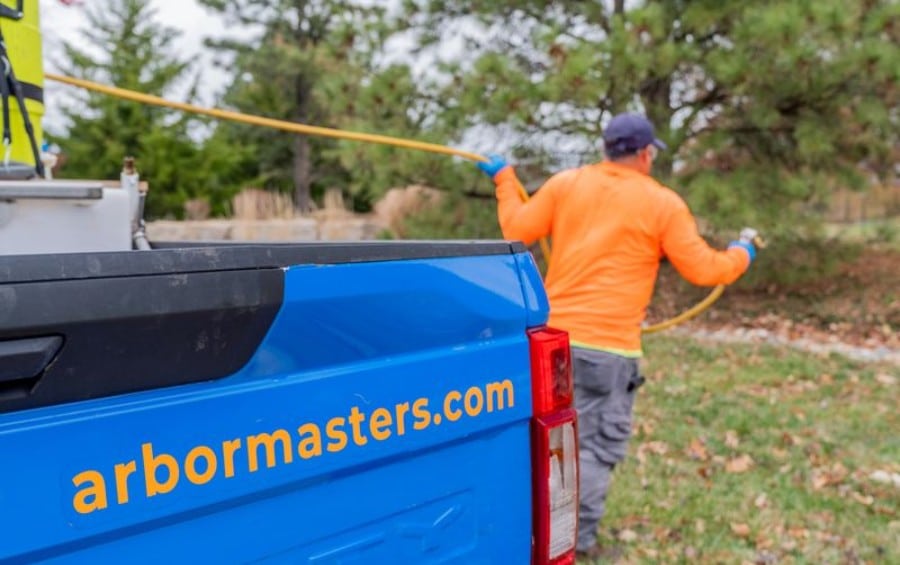
An Arbor Masters technician applies a targeted treatment from the company’s plant health care truck.
Frequently Asked Questions About Professional Tree Treatments
What is a plant health care program?
A plant health care program (PHC) is an ongoing, diagnosis-driven plan to keep trees and shrubs healthy through targeted treatments and regular monitoring by a Certified Arborist. It contrasts with reactive, one-off pest spraying by treating the underlying conditions that put trees at risk in the first place.
How often are trees treated in a professional program?
Most programs in Cleveland and Canadian counties include three to five scheduled visits per year, timed to seasonal pest and disease pressures. The exact frequency depends on:
- The trees on your property
- The conditions they’re growing in
- What the initial assessment finds
Are tree treatment programs safe for pets and pollinators?
When designed around integrated pest management principles, yes, treatments are targeted to specific problems and applied only when monitoring shows they’re necessary. Cover-spray programs that apply pesticides on a fixed calendar are much more likely to harm beneficial insects and pollinators.
How much does a professional tree treatment program cost?
Costs vary based on:
- The number and size of trees on your property
- The conditions arborists find during the assessment
- Which treatments are recommended
As a benchmark, treatment programs typically run a fraction of what it would cost to remove and replace a mature tree.
What’s the difference between fertilization and a full treatment program?
Fertilization is one aspect of a treatment program, typically deep root fertilization to address specific nutrient deficiencies confirmed by soil testing. A full program includes:
- Diagnostic assessment
- Soil testing
- Pest and disease monitoring
- Targeted treatments
- Ongoing visits throughout the year
Can I just spray my own trees for pests and disease?
Sometimes on small ornamental shrubs, but mature shade trees are much harder to treat correctly. Effective treatment often requires professional-grade equipment, accurate diagnosis, and products that aren’t available to homeowners.
The bigger challenge is identifying the actual problem. Many pests, diseases, and stress conditions produce similar symptoms, and treating the wrong issue wastes time while the tree continues declining.
Get a Tree Treatment Program Built Around Your Property from Arbor Masters
The best tree treatment programs aren’t built around selling the most applications—they’re built around keeping valuable trees healthy long-term. That means understanding what’s actually stressing the tree, monitoring how conditions change throughout the year, and adjusting treatments based on what the tree needs instead of following a one-size-fits-all schedule.
An Arbor Masters ISA Certified Arborist can assess your property, deliver a written plan, and design a treatment program specific to your trees, soil, and pressures unique to central Oklahoma. When you’re ready to get going, request a quote online or call us at 405-495-8746.
Learn More With These Related Articles
Want More Like This?
Get the latest local news, tree care tips, special offers, and company updates directly to your inbox! It's easy to subscribe and there's no spam - we promise.
"*" indicates required fields
