
Why Wood-Boring Beetles Are Attacking Your Oklahoma City Trees
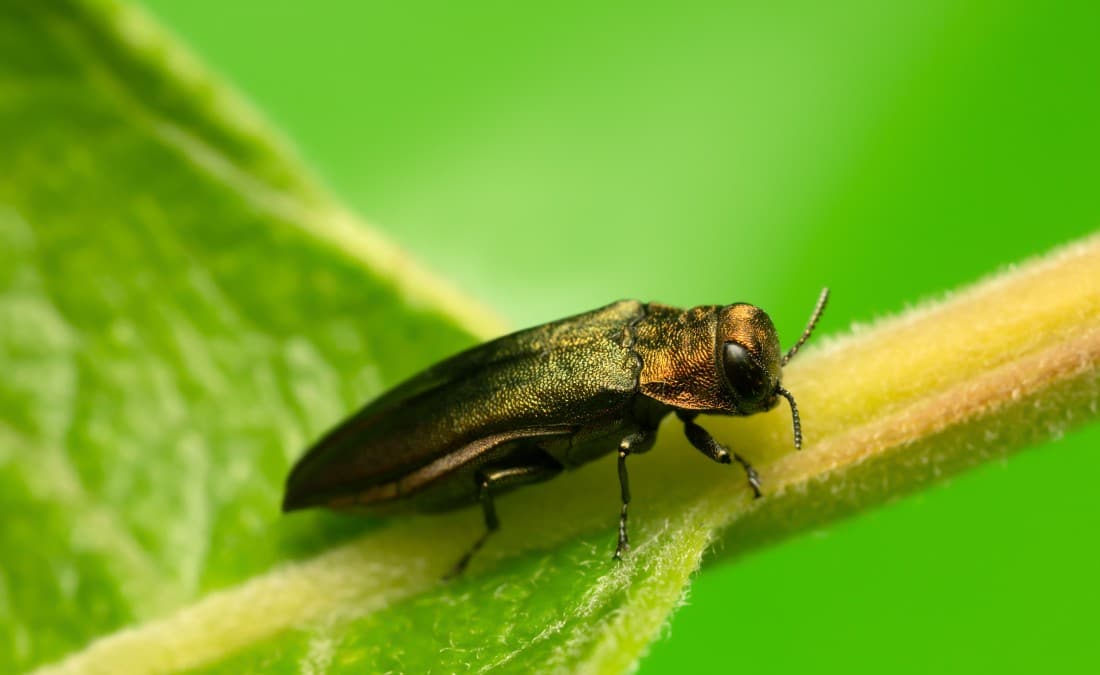
Drought, storm damage, and other stress can attract wood-boring beetles. Learn how to spot an infestation early and protect your trees before irreversible damage occurs.
Wood-boring beetles are becoming an increasing concern for Oklahoma homeowners. As invasive pests like the emerald ash borer continue spreading across the state, and hot, dry summers leave more trees under stress, protecting your landscape has never been more important.
The good news is that wood-boring beetles rarely attack healthy trees. They target trees weakened by drought, storm damage, disease, or other stress. Recognizing the warning signs early—and addressing the underlying problem—can often mean the difference between treating a tree and removing it.
Key Takeaways
- Wood-boring beetles rarely attack healthy trees, instead targeting trees weakened by heat, drought, transplant shock, or other forms of stress.
- Oklahoma’s mild winters allow many wood-boring beetles to remain active year after year, making regular monitoring and preventative care especially important.
- Small exit holes, sawdust-like frass, and thinning canopies are some of the earliest signs of a wood-boring beetle infestation.
- A professional arborist can identify both the wood-boring beetle species and the underlying stress that made the tree vulnerable.
- When caught early, systemic insecticide treatments can often protect lightly infested trees and prevent further damage.
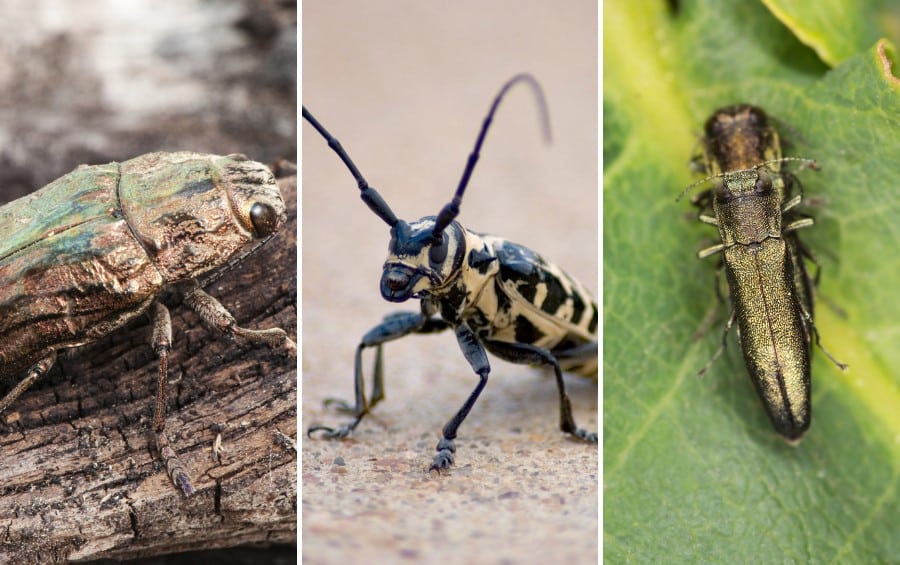
Not all wood-boring beetles pose the same threat to trees. Correct identification is essential because treatment options, host trees, and potential damage vary significantly between species.
What Are Wood-Boring Beetles?
Wood-boring beetles are insects whose larvae tunnel beneath bark, disrupting water and nutrient transport. Adult beetles range from one-third inch to over 2 inches long depending on species. When females lay eggs on stressed trees, larvae bore under bark and create tunnels. Eventually, the tree cannot support its canopy and sections die.
Which Wood-Boring Beetles Threaten Oklahoma Trees?
Several types of wood-boring beetles are found throughout Oklahoma. Although they all damage trees by tunneling beneath the bark and disrupting the flow of water and nutrients, they differ in the trees they attack, the symptoms they create, and how they’re managed.
Flatheaded Borers
Flatheaded borers (metallic wood-borers) are boat-shaped, iridescent beetles ranging from one-third to 1 inch long. The flatheaded appletree borer is most destructive to Oklahoma’s shade and ornamental trees. According to Oklahoma State University Extension, these shade tree borers kill scores of recently-transplanted trees annually.
Key characteristics include:
- S-shaped galleries under bark
- Preference for south and west (sunny) sides of trunks
- Damage concentrated on one side initially
Roundheaded Borers
Roundheaded borers (longhorned beetles) are named for their long antennae and cylindrical bodies. Unlike flatheaded borers, they create larger, coarser tunnels that extend deeper into the wood, making infestations more difficult to detect and treat. They attack a wide range of hardwood and ornamental trees, especially those weakened by drought, storm damage, or other stress.
Key characteristics include:
- Large, round or oval exit holes
- Deep, coarse tunnels through the wood
- Long antennae on adult beetles
- Infestations that often go unnoticed until branches begin to die back
Emerald Ash Borer
Emerald ash borer (EAB) is an invasive beetle that attacks all species of ash trees and continues to spread across Oklahoma. Unlike most native wood-boring beetles, which typically target stressed trees, EAB can infest and kill healthy ash trees. Without treatment, infestations are almost always fatal.
Key characteristics include:
- Distinctive D-shaped exit holes in the bark
- S-shaped galleries beneath the bark
- Thinning canopy that begins in the upper branches
- Increased woodpecker activity as birds feed on larvae
- Vertical bark splits that expose the galleries beneath
Why Are Stressed Trees Targets for Borers?
Healthy trees have powerful chemical and physical defenses that repel beetles and resist larval tunneling. Stressed trees lose these defenses.
When trees are stressed, they release chemical signals that adult beetles recognize as ideal egg-laying targets. A weakened vascular system cannot compartmentalize damage caused by feeding larvae, turning a minor problem into a fatal one.
Heat and Drought Stress in Oklahoma City
Established trees in mature Oklahoma City neighborhoods face intense summer heat and drought cycles. Visible drought symptoms include light green to yellow foliage, leaf scorch, early leaf drop, and noticeably thinner canopies. Trees remain vulnerable for one to two years after water availability returns, even if they appear to recover.
Transplant Shock in Yukon
Newly planted trees in Yukon’s post-construction neighborhoods often struggle with root damage during transport and exposure to extreme heat and wind. Construction typically disrupts soil, compacts root zones, and removes topsoil. Young trees in compacted construction soil may take years to recover, remaining vulnerable throughout establishment.
According to Oklahoma State University Extension, most wood-boring beetle infestations occur in trees stressed by transplant shock, drought, poor soil conditions, dirt fill over roots, or age-related decline. Protecting trees from beetles means managing these stress factors first.
How Can You Identify If Your Tree Is Infested?
Early identification is critical because it determines your treatment options. Fresh beetle activity may be saved; a tree infested for years is often too far gone.
Bark and Trunk Indicators
Look for these signs on the trunk and larger branches:
- Small, round exit holes (flatheaded borers are one-eighth to one-quarter inch; roundheaded are larger and irregular)
- Fine, powdery dust (frass) at the base or in bark crevices
- Sunken or discolored patches, especially on south and west sides
- Peeling or separating bark with winding galleries (tunnels) underneath
- Hollow-sounding trunk when tapped lightly
Canopy Symptoms
In the crown, watch for:
- Canopy dieback starting at the top or on one side
- Branch wilting despite adequate water
- Reduced foliage density and smaller, paler leaves
- Flatheaded borers often kill the sunny side first
Timing of Beetle Activity
Most exit holes appear late spring through early summer (May-July) when adults emerge. Look for holes with clean, light-colored edges—those are fresh. Older holes may have bark growing over them.
Early identification requires good documentation—photos of fresh exit holes and canopy damage help your arborist diagnose the exact beetle species and severity, which determines treatment options.
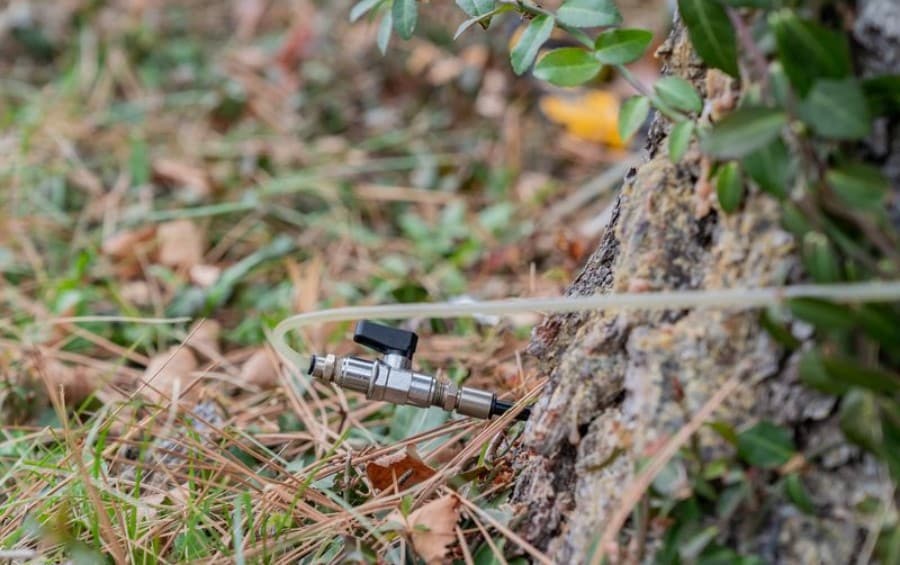
Systemic insecticides used to control emerald ash borer are injected directly into a tree’s vascular system, where they move throughout the canopy and target feeding larvae beneath the bark.
How Do You Treat and Prevent Wood-Boring Beetles?
The best approach depends on whether you’re trying to prevent an infestation or save an already infested tree.
Protect Healthy and At-Risk Trees
- Maintain proper watering during Oklahoma summers and for newly planted trees in their first year
- Use deep, thorough watering to encourage deep root growth
- Remove dead and dying branches promptly (preferred egg-laying sites for beetles)
- Never top trees, which creates attractive dead wood
- Avoid root disturbance and protect transplants from extreme wind and sun during establishment
- Monitor soil moisture carefully, especially for trees in Yukon developments
Treat Infested Trees
For light to moderate infestations, systemic insecticides offer proven results. Imidacloprid is the most widely used option for wood-boring beetle management. It’s applied as a soil drench or trunk injection, then distributed through the tree’s vascular system.
Key points about systemic treatment:
- Spring application (April to early May) is most effective, killing larvae before egg-laying begins
- Applications throughout the growing season (May-September) also work as trees actively transpire
- One application provides roughly 12 months of protection
- Ongoing applications may be needed if stress factors persist
- Professional assessment determines if treatment is worthwhile for your tree
Remove Trees That Can’t Be Saved
As beetle populations grow and canopy decline accelerates, treatment success decreases. Trees with extensive dieback or long-term infestations often have irreversible damage that limits recovery potential. In these cases, removal may be the more practical and cost-effective option. A professional evaluation can determine the best path forward.
When Should You Monitor and Treat for Borers?
Oklahoma’s mild winters keep beetle populations viable year-round, unlike freezing climates. This means continuous pressure—but also an opportunity for spring prevention.
Inspect and Treat Trees in Spring
Flatheaded borers are most active from May through September, with peak egg-laying beginning in April and early May. Roundheaded borers follow a similar timeline, making spring the ideal time to inspect vulnerable trees and begin preventative treatments. To stay ahead of an infestation:
- Schedule professional tree assessments in April
- Apply systemic insecticides in early May or throughout the growing season for at-risk trees
- Monitor for fresh exit holes and canopy changes
Continue Monitoring Through Summer
Continue monthly inspections for fresh exit holes, new canopy symptoms, and declining vigor. Catching infestation early expands treatment options dramatically. Waiting until the canopy is half-dead narrows options significantly.
Frequently Asked Questions About Wood-Boring Beetles
What tree species are most at risk?
Flatheaded borers prefer maples, fruit and nut trees, and shade ornamentals. Roundheaded borers attack a wider range, including softwoods in newer construction. Emerald ash borer targets only ash species. A professional assessment can identify which trees on your property are at highest risk.
Can I use an over-the-counter borer treatment from a garden center?
Homeowners have limited options. DIY soil drenches with imidacloprid require precise mixing and application timing to be effective. Trunk injection (the most reliable method) requires professional equipment and expertise. Timing matters enormously—a treatment applied in fall won’t protect against spring emergence. Professional application ensures correct dosage, placement, and monitoring.
How long does a treated tree stay protected?
One application provides roughly 12 months of protection. If the underlying stress persists (chronic drought, poor soil), annual treatments may be recommended. A professional can design a customized protection schedule based on your tree’s risk level and environment.
What if my tree is already heavily infested?
Trees with 50% or greater canopy loss rarely recover even with treatment. Systemic insecticides work best on healthy or lightly infested trees. A professional assessment determines whether your tree is a candidate for treatment or removal.
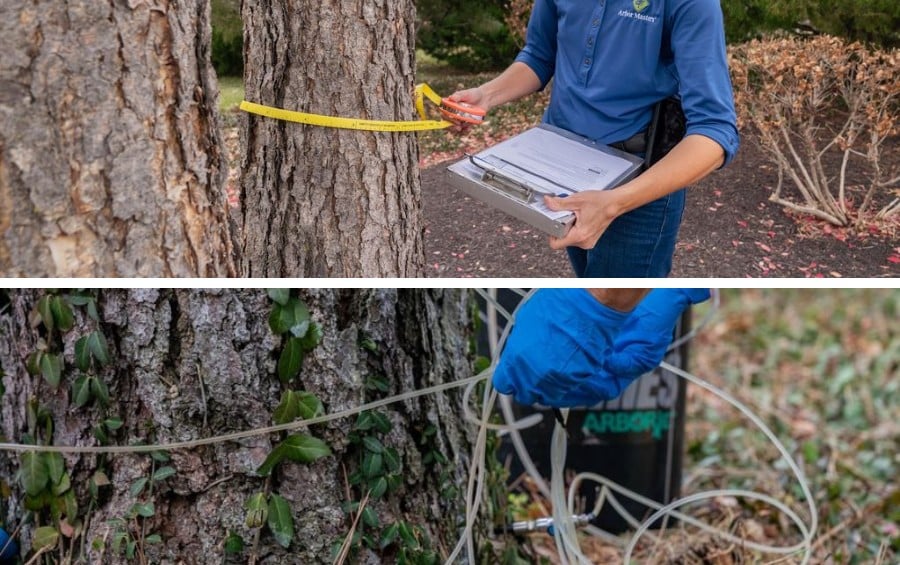
Determining whether an ash tree should be treated or removed begins with a professional assessment. Arborists evaluate tree size, canopy condition, and overall health before recommending an emerald ash borer management plan.
Protect Your Trees Before Beetle Damage Spreads
Wood-boring beetles are a serious threat to Oklahoma trees, but early action can prevent costly losses. These pests target trees weakened by heat, drought, transplant shock, and other stress factors. The sooner beetle activity is identified, the better the chances of successful treatment.
Schedule a free tree health assessment with a Certified Arborist today. Whether you have a mature shade tree in Oklahoma City or a newly planted tree in Yukon, professional diagnosis and treatment can often save a tree for far less than the cost of removal and replacement.
Call Arbor Masters at 405-495-8746 today to identify the pest, assess the damage, and determine the right treatment plan for your tree.
Learn More With These Related Articles
Want More Like This?
Get the latest local news, tree care tips, special offers, and company updates directly to your inbox! It's easy to subscribe and there's no spam - we promise.
"*" indicates required fields
