
What North Texas Spring Bloomers Need Before Summer Heat
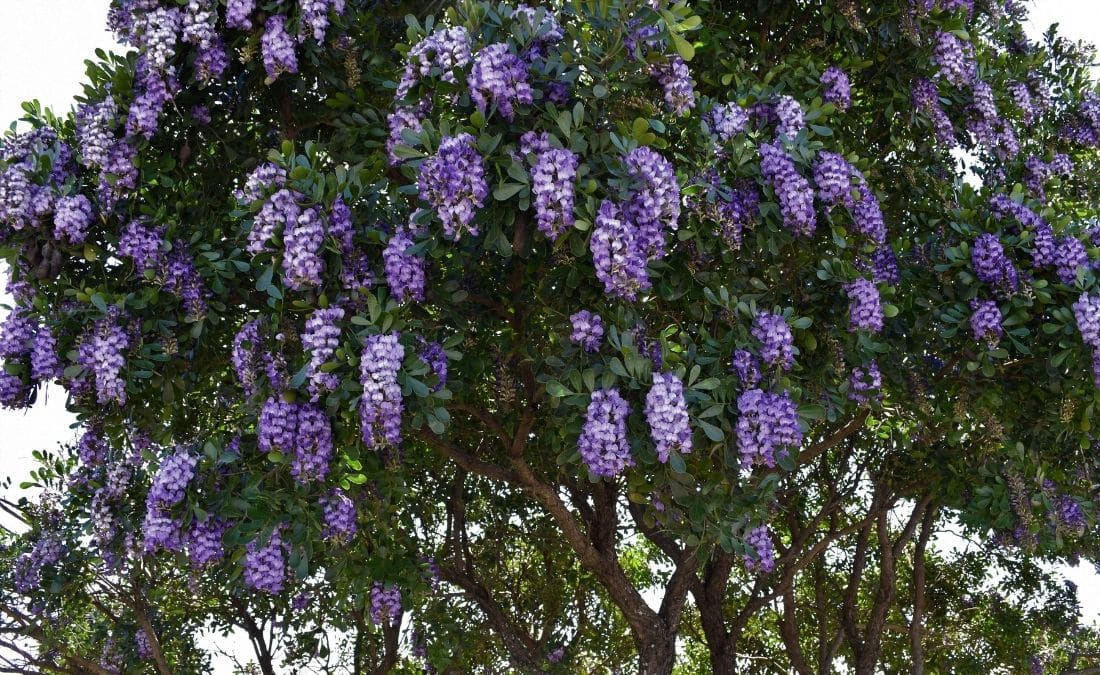
Spring blooms are fading across Dallas. What your flowering trees need now can determine how they handle summer heat, drought, and disease pressure.
The streets of Lakewood and Kessler Park have been showing off pink redbuds, white Mexican plum, and fragrant purple mountain laurel for weeks. But once the flowers fade, many homeowners stop paying attention to the trees entirely until the next spring bloom season arrives. The weeks after flowering are when many North Texas trees begin showing early signs of drought stress, nutrient deficiencies, insect pressure, and canopy decline. It’s also when they begin storing energy for next spring’s blooms, which means what happens now can directly affect how those trees perform next year.
Key Takeaways
- Eastern redbud, Mexican plum, Texas mountain laurel, and possumhaw holly are the four trees driving spring color in Dallas’ older neighborhoods.
- Late spring—right after bloom—is when stress signs first show up on these species, well before summer heat masks or compounds them.
- Dallas’ alkaline Blackland Prairie clay causes iron chlorosis that appears first on freshly leafed-out spring bloomers.
- Pruning opportunities for these species are limited after bloom, but summer inspections and proactive plant health care still help protect canopy health and next year’s flowering performance.
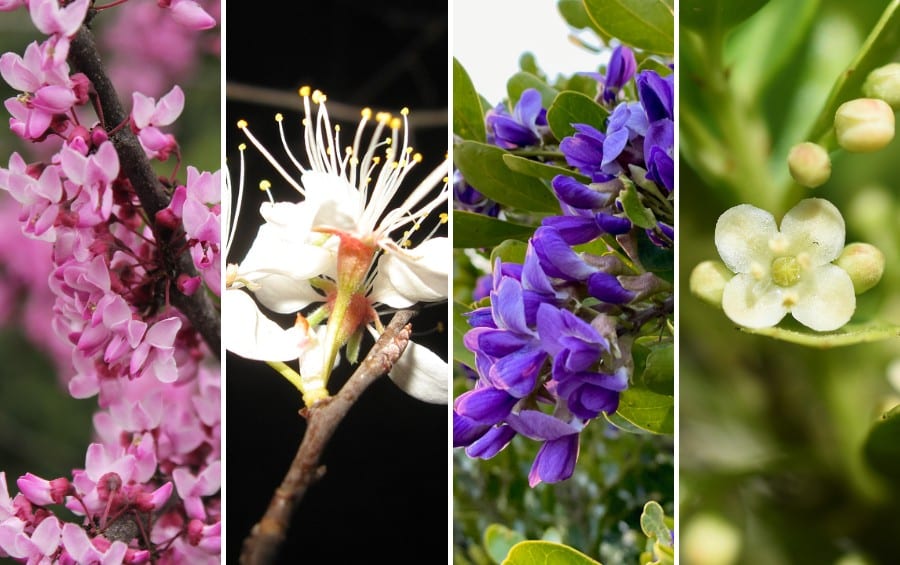
Left to right: Eastern redbud, Mexican plum, Texas mountain laurel, and possumhaw holly—the four trees behind most of Dallas’ spring color.
What’s Blooming Across Dallas This Spring
Some of the most common spring-flowering trees in Dallas neighborhoods include eastern redbud, Mexican plum, Texas mountain laurel, and possumhaw holly. These species are widely planted throughout older areas like Lakewood and Kessler Park because they tolerate North Texas soils and provide strong seasonal color during spring bloom.
Eastern Redbud (Cercis canadensis)
Eastern redbud is the small understory tree throwing pink-purple, pea-shaped flowers along bare branches from mid-February through mid-March. The bloom comes before the leaves, which is what makes it so remarkable. That said, Texas redbud (Cercis canadensis var. texensis) is the better long-term performer in Dallas. Texas redbud has:
- Waxier leaves built to handle heat and reflect light
- Smaller stature
- Noticeably more drought tolerance than the standard eastern type
The Native Plant Society of Texas doesn’t recommend eastern redbud for Central or North Texas. A well-sited Texas redbud in a Dallas yard can outlast a stressed eastern redbud by decades.
Watch for Branch Dieback and Cankers
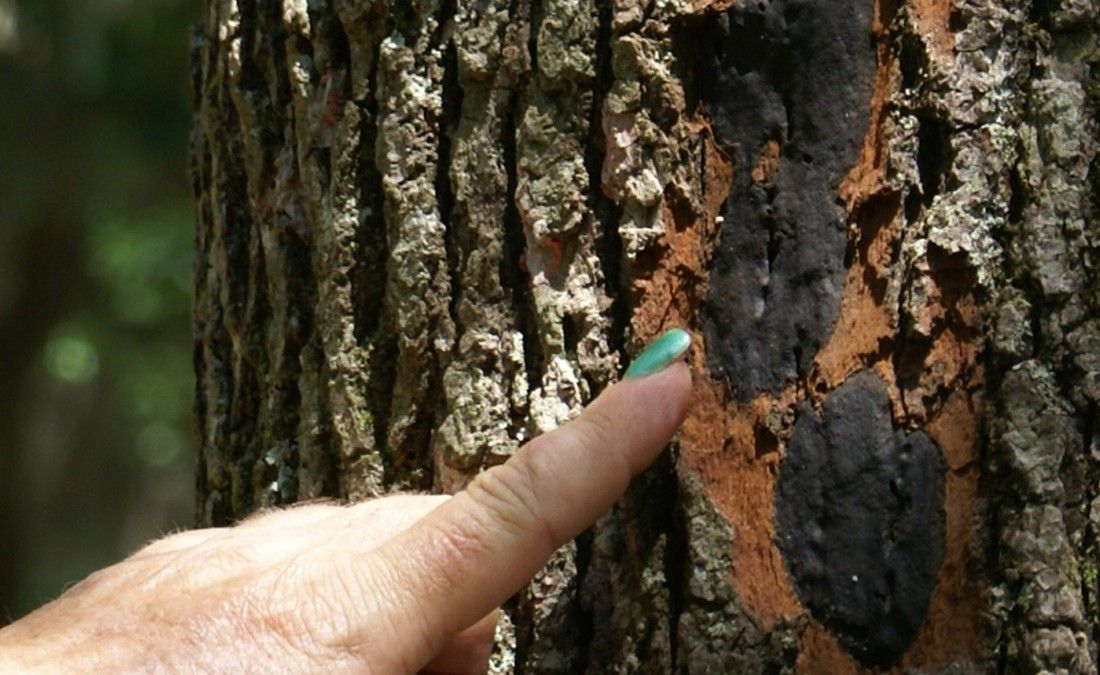
Branch dieback, dark sunken bark patches, or sudden wilting on a single section of the canopy can point to canker diseases or stress-related decline. Eastern redbuds are less heat- and drought-tolerant than Texas redbuds, which is part of why they often struggle in exposed Dallas landscapes over time.
Mexican Plum (Prunus mexicana)
Mexican plum is the small native tree that puts up clouds of fragrant white flowers from late February into early March, typically the earliest to bloom. Trees range from 15 to 35 feet, with bark that develops dark horizontal striations and a peeling character as it matures. It’s well-suited for Dallas because it’s:
- Drought-tolerant
- Alkaline-tolerant
- At home in heavy clay
Mature specimens are scattered throughout Lakewood and the older streets near White Rock Lake.
Watch for Signs of Borer Activity
Small round holes in the trunk, sawdust-like frass near the base, and sap weeping from entry points can indicate borers. Mexican plum is generally pest-resistant, but stressed trees become more vulnerable to attack during hot, dry periods or after root disturbance.
Texas Mountain Laurel (Dermatophyllum secundiflorum)
Texas mountain laurel is the evergreen shrub-tree that produces pendulous purple flower clusters from February through April, and the famous grape Kool-Aid fragrance you can smell from across a yard. It’s a glossy evergreen with a slow growth habit. A mature one is a landscape investment because they:
- Grow slowly
- Taproot deeply
- Shrug off drought better than almost any tree in the region, once established
Every part of the plant is poisonous if it is ingested. Not a tree concern, of course, but also worth knowing if you have small children or pets.
Watch for Webbing and Chewed Foliage
Loose silken webbing tangled through the foliage alongside chewed leaves often points to caterpillar feeding activity. While established Texas mountain laurels are highly drought-tolerant, dense evergreen foliage can still hide developing insect pressure during warm months.
Possumhaw Holly (Ilex decidua)
Possumhaw holly is the native deciduous holly commonly tucked into older East Dallas and Kessler Park landscapes as an understory tree or patio specimen. Its spring flowers are small, greenish-white, and easy to overlook, especially compared to the brighter blooms of redbuds or Mexican plum. The tree’s biggest display comes later in the year. After leaves drop in fall, female possumhaws produce bright red berries that often persist well into winter, adding color to otherwise bare landscapes. Because possumhaw is dioecious, berry production only occurs when a female tree has a nearby male available for pollination.
Watch for Leaf Spot and Iron Chlorosis
Wet spring weather can encourage fungal leaf spot diseases, while Dallas’ alkaline soils frequently contribute to iron chlorosis on susceptible hollies. Chlorosis typically appears as yellowing leaves with darker green veins as new foliage matures through late spring and early summer.
What Do Spring-Flowering Trees Need Before Dallas Summer Heat Arrives?
The weeks immediately after bloom are one of the most important management windows for Dallas flowering trees. By May, these species have already spent significant stored energy on flowering and are transitioning into full canopy growth just as heat and drought stress begin building across North Texas. That timing matters even more in Dallas’ Blackland Prairie soils. The region’s alkaline clay frequently limits iron and micronutrient availability, which is why chlorosis and other stress symptoms often begin showing up on fresh spring foliage before summer even arrives. Once prolonged stretches of 100°F weather settle in, stressed trees lose the ability to recover as easily. This is typically the best time for:
- Arborist inspections to identify early stress, decline, or structural concerns
- Soil health treatments and iron management before heat intensifies symptoms
- Targeted pest and disease treatments while problems are still manageable
- Monitoring spring growth to evaluate overall canopy recovery after bloom
Pruning timing is more limited. Most shaping and structural pruning on spring bloomers should happen shortly after flowering ends in order to avoid sacrificing next year’s blooms. By late spring, that ideal pruning window has mostly closed for the season, though dead, damaged, or diseased wood can still be removed when necessary.
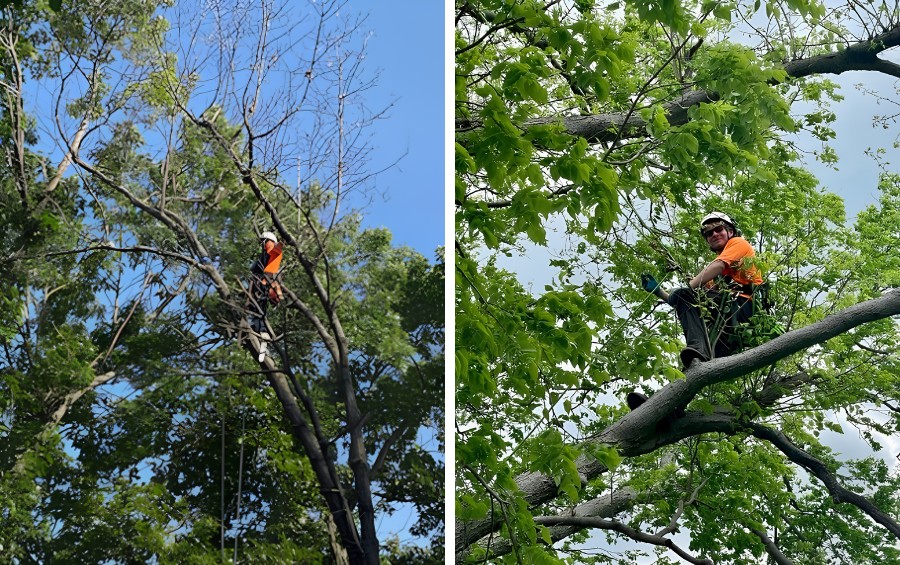
Spring inspection and pruning work in Dallas often takes a climber into the upper canopy—full PPE and proper rigging required.
Frequently Asked Questions About North Texas Spring Bloomers
Why didn’t my redbud bloom this year?
There are several reasons your redbud didn’t bloom this year, including:
- Late freeze damaged the buds
- The tree is stressed from prior-year drought
- Botryosphaeria canker is girdling branches from the inside
If the tree also has sunken bark patches or branch dieback, get it inspected.
What’s eating my Texas mountain laurel?
Almost certainly Genista caterpillars (Uresiphita reversalis) are eating your Texas mountain laurel. They form loose silken webbing and feed on the leaves. Mature, healthy mountain laurels tolerate substantial defoliation without lasting harm, so treatment is typically only warranted for heavy infestations or high-value specimens.
Why does my redbud have yellow leaves with green veins?
That distinct yellow leaves with green veins pattern is iron chlorosis, caused by alkaline soil locking up the iron the tree needs. It’s extremely common across Dallas because of our Blackland Prairie clay. Chelated iron treatments and soil pH management can correct it.
Can I still prune my spring bloomers in May?
Of the four species, Texas mountain laurel can still tolerate light shaping in early May. For redbud, Mexican plum, and possumhaw, hold off on structural pruning until next year. Dead or damaged branches can be removed at any time, though.
Why do spring-flowering trees struggle once heat arrives?
Spring-flowering trees enter summer already under stress from flowering and pushing out new canopy growth. In Dallas, that transition becomes even harder because prolonged heat, drought, and alkaline clay soils all begin intensifying at the same time. Blackland Prairie soils commonly limit iron and micronutrient availability, which is why chlorosis and canopy thinning often begin appearing in late spring before the hottest weather even arrives. Once temperatures settle into long stretches above 100°F, trees already dealing with nutrient stress, root problems, or insect pressure lose the ability to recover as easily.
Is it normal for flowering trees to look stressed after blooming?
Some mild stress after bloom is normal, especially during dry springs or sudden temperature swings. Trees have just spent a significant amount of stored energy on flowering and are transitioning into full leaf and canopy production. What is not considered normal is severe yellowing, branch dieback, canopy thinning, sudden wilting, or large sections of sparse foliage developing shortly after bloom season ends. Those symptoms often point to underlying issues like iron chlorosis, drought stress, canker disease, root problems, or insect activity that become more noticeable as summer approaches.
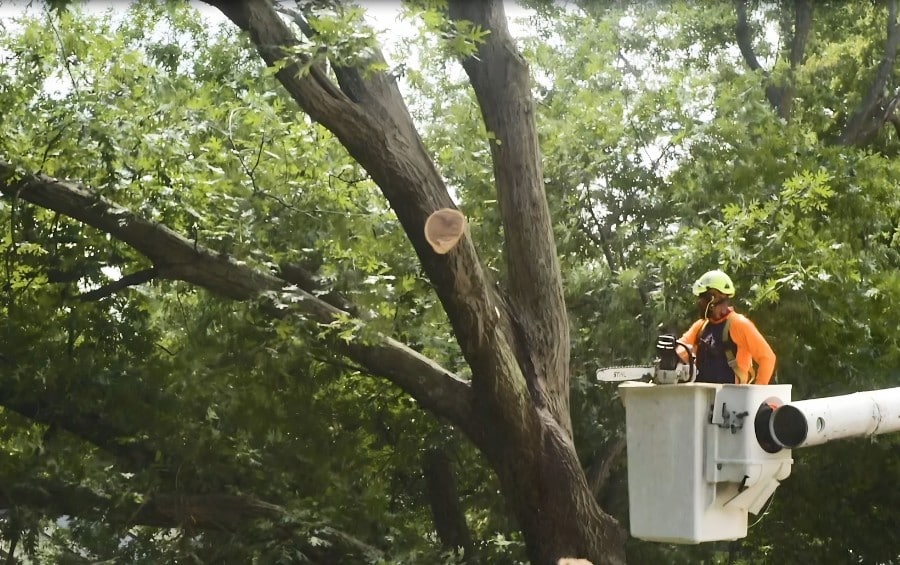
Bucket-truck access lets arborists inspect upper canopy structure and reach problem branches that are unsafe to access from the ground.
Get Ahead of Summer Stress on Dallas’ Flowering Trees
Redbud, Mexican plum, Texas mountain laurel, possumhaw holly make up most of Dallas’ older neighborhoods. Right now, with the new canopy filling in, each one is telling you something about its roots, access to nutrients, diseases pressing on it, and how it’s likely to handle the coming summer. While pruning for these species is largely out of season, inspections aren’t. The Arbor Masters Dallas team—including Certified Arborists working Lakewood, Kessler Park, and the surrounding neighborhoods—is set up to do an in-depth evaluation before the heat takes over. Call us today at 214-620-0475 or reach out to us online.
Want More Like This?
Get the latest local news, tree care tips, special offers, and company updates directly to your inbox! It's easy to subscribe and there's no spam - we promise.
"*" indicates required fields
