Should You Prune Storm-Damaged Tree Branches Yourself?
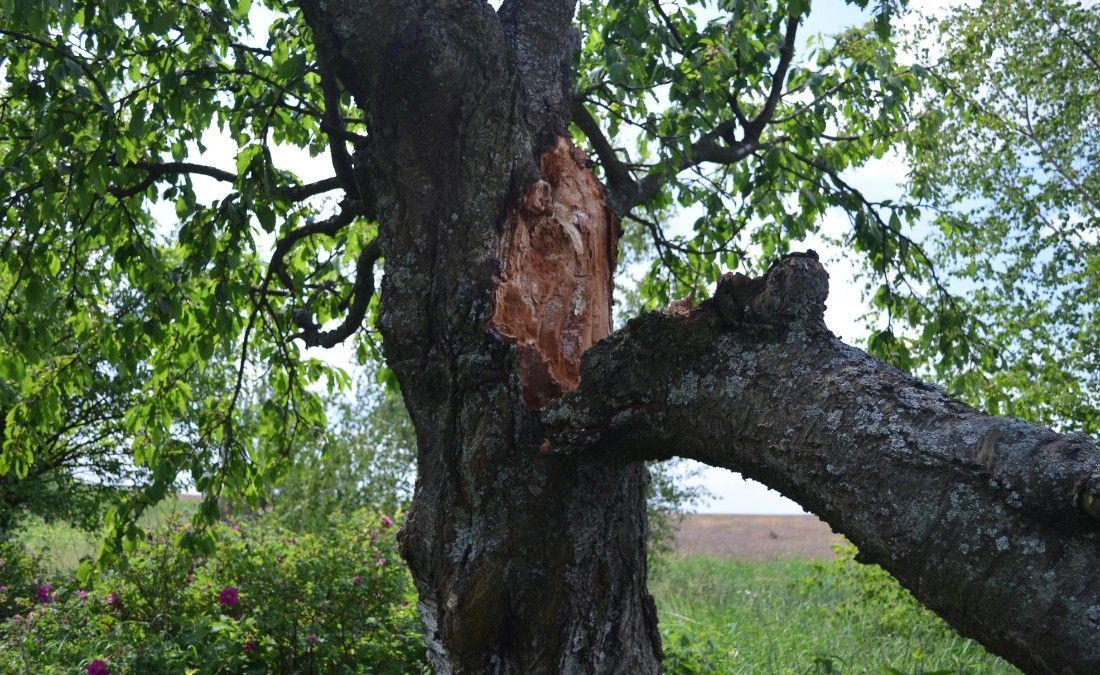
Wondering if you should prune broken tree branches yourself after a Quad Cities storm? A Certified Arborist serving Davenport and Moline explains the risk.
Severe storms are nothing unusual in the Quad Cities, and it doesn’t take long for high winds to leave behind cracked limbs, hanging branches, and damage that isn’t always obvious from the ground. One recent storm brought wind gusts up to 80 mph in Davenport and widespread tree damage across eastern Iowa and northeast Illinois. When that happens, homeowners are often left with the same question: Should I prune storm-damaged branches myself, or call a professional?
The answer depends on more than whether you can reach the broken branch with a saw. A damaged limb may still be under tension, caught in another part of the canopy, or connected to a larger crack that extends farther into the tree than you can see from the ground. Before you start cutting, it’s important to know which storm-damaged branches are reasonable to handle yourself and which ones can put you (or the tree) at greater risk.
Key Takeaways
- A storm-damaged branch can hold stored tension you can’t see, even on branches that look small or simple to cut.
- A Certified Arborist assesses how a damaged branch is loaded and what it’s resting against before making a single cut.
- Preserving the branch collar and the tree’s remaining canopy protects its ability to recover from storm damage.
- Pruning done incorrectly after a storm, through torn bark, overpruning, or topping, makes a tree more likely to fail in the next one, not less.
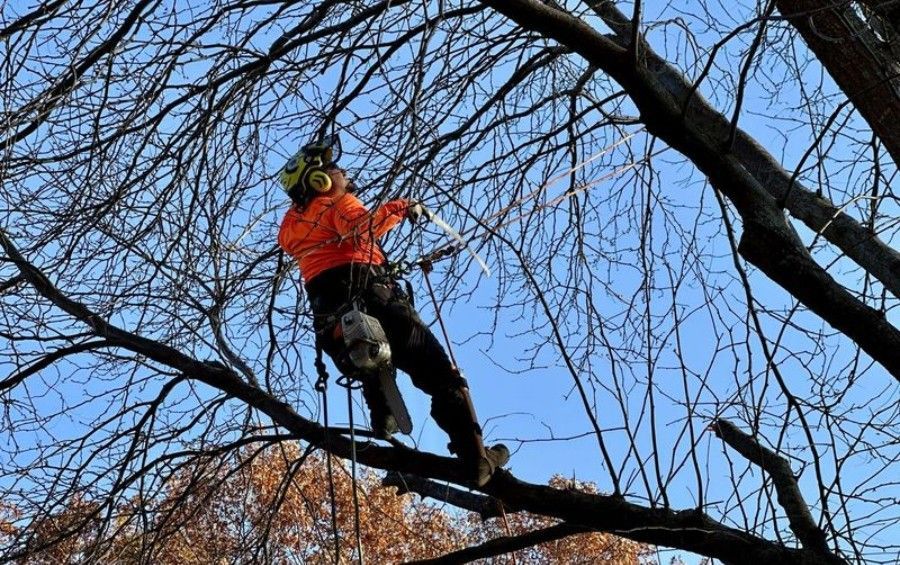
Controlled rigging brings cut branches down safely instead of letting them fall or swing unpredictably.
Why Shouldn’t You Prune Storm-Damaged Branches Yourself?
There are risks associated with storm-damaged branches that you can’t see from the ground, typically having nothing to do with size or how easy it looks to reach:
- A bent or partially broken branch can still be holding stored energy from the moment it cracked, and cutting into that tension can cause it to snap back or swing with unexpected force.
- A damaged limb resting on another branch below it can suddenly shift that branch’s load once it’s removed, setting off movement somewhere else in the tree.
- The direction a branch is hanging isn’t necessarily the direction it moves once it’s cut, since the release of tension can behave differently than the branch’s resting position suggests.
- Damage where a branch meets the trunk is often worse than what’s visible, extending further into that union than a homeowner on the ground, or even on a ladder, can assess.
Regardless of whether you’re in an older neighborhood in Moline or Davenport, mature silver maples and oaks carry the same hidden risks. A Certified Arborist evaluates that unpredictable, internal damage before a single cut is made. If a broken branch shows any of these signs, treat it as a hazard and contact a professional instead of trying to handle it yourself.
How Does an Arborist Safely Prune a Storm-Damaged Tree?
A Certified Arborist safely prunes a storm-damaged tree by controlling a few things most homeowners can’t:
- Load Assessment : Where tension and compression are sitting in the branch, what it’s resting against, and how removing it will shift the weight around it, worked out before any tool touches the tree.
- Controlled Rigging : Professional equipment brings the weight down deliberately instead of letting a cut branch fall or swing wherever gravity takes it.
- Cutting Order : Determining which piece of damaged material needs to come out first so that removing it doesn’t destabilize whatever is still attached.
Those decisions become even more important when storm damage involves power lines, multiple broken limbs, or damage near a home, driveway, or other structure. What looks like one branch that needs to come down may involve several pieces of damaged wood reacting to each other. When the damage is severe enough to create an immediate hazard, it may require an emergency tree response rather than routine pruning.
How Does Proper Pruning Help a Storm-Damaged Tree Recover?
Proper pruning helps a storm-damaged tree recover by removing what can’t be saved without creating unnecessary additional damage. That means making careful decisions about where to cut, how to remove damaged wood, and how much of the canopy the tree can afford to lose at one time. An arborist considers several things before and during that work:
- Preserving the branch collar, the slightly swollen tissue at the base of a branch that contains what a tree needs to seal a wound, keeps a cut from becoming larger and slower-healing than necessary.
- Controlling how bark tears during removal keeps the wound limited to what the cut actually requires, rather than stripping bark well beyond the branch itself.
- Weighing how much canopy the storm already removed determines how much more the tree can safely lose during pruning without being pushed past what it can recover from.
- Staging structural correction over multiple visits, rather than resolving the whole canopy in one session, gives the tree room to recover between rounds of work.
Such an approach is central to tree preservation and recovery pruning, regardless of whether it’s a mature tree along the Le Claire riverfront or a storm-damaged shade tree in a backyard in Moline.
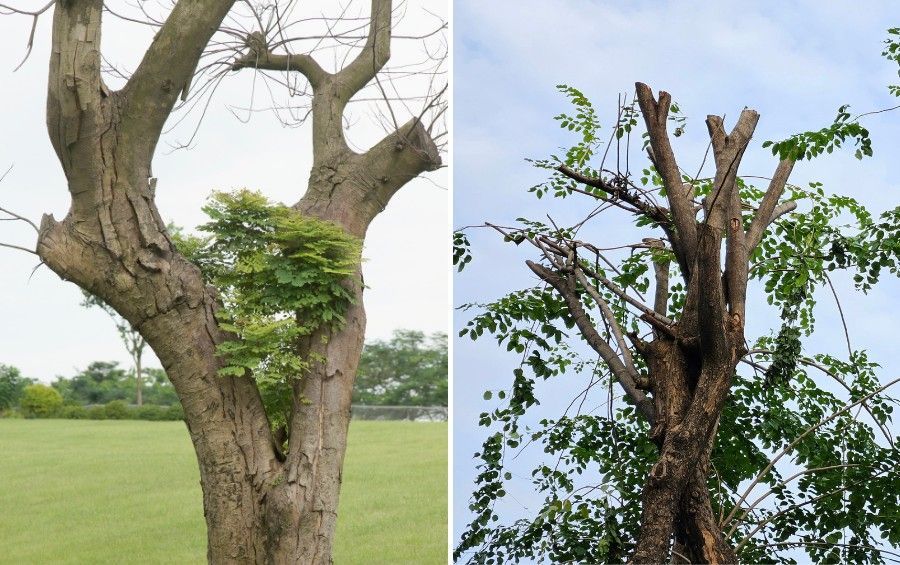
Topping forces weak, fast-growing regrowth that’s more likely to fail in the next storm — the opposite of what proper pruning is meant to prevent.
What Happens If Storm Damage Is Pruned Incorrectly?
Incorrect pruning leads to lasting structural issues. Arbor Masters sees the same patterns on storm-damaged trees across both sides of the Quad Cities:
- Overpruning : Removing more live canopy than a storm-stressed tree can afford weakens it further instead of helping it recover.
- Topping : Cutting main limbs back to stubs forces weak, fast-growing regrowth that’s poorly attached and more likely to fail in the next storm.
- Torn or Ragged Cuts : Leaving bark stripped beyond the wound gives decay a larger opening and slows the tree’s ability to seal it off.
Iowa State confirms that improperly pruned or neglected trees sustain more damage in later storms than those that were pruned correctly. Getting your tree’s health assessed prior to pruning can limit that risk.
Frequently Asked Questions About Pruning Storm-Damaged Trees
Should I put wound sealant on a pruning cut?
No. Trees seal their own wounds through natural callus growth over the cut surface, and wound paint or sealant can trap moisture underneath and slow that process rather than speed it up.
Should I try to prop up or secure a hanging branch until help arrives?
No. A hanging or suspended branch, also referred to as a “widowmaker,” can fall without warning even if it looks stable, and propping it up or tying it off puts you directly underneath the hazard. Keep people, pets, and vehicles clear of the area and treat it as off-limits until a professional arrives.
Is it safe to clean up ground debris myself while I wait for a professional?
In most cases, yes. Leaves, twigs, and smaller pieces that have already fallen and separated from the tree don’t carry the same risk as a branch still attached to or resting against damaged wood, so raking and general yard cleanup is fine while you wait.
Will a professional try to save a storm-damaged tree?
Yes, when the tree still has enough sound trunk, root support, and healthy canopy to remain structurally stable and recover from the damage. A Certified Arborist will look at whether major limbs have split from the trunk, cracks extend into the main stem, roots have lifted or failed, and how much live canopy remains.
If the tree’s main structure is still sound, corrective pruning and follow-up care may allow it to recover. Severe trunk splits, major root failure, or extensive loss of the tree’s primary structure can make removal necessary.
Does homeowners insurance cover storm-related tree work?
Sometimes. Homeowners insurance is more likely to cover tree work when a storm causes a tree or branch to damage an insured structure, such as your home, garage, or fence. Cleanup or removal of a fallen tree that doesn’t damage covered property may be treated differently, and coverage limits vary by policy.
Before authorizing non-emergency work, contact your insurance company to find out what’s covered and whether they need photos, an estimate, or other documentation of the damage.
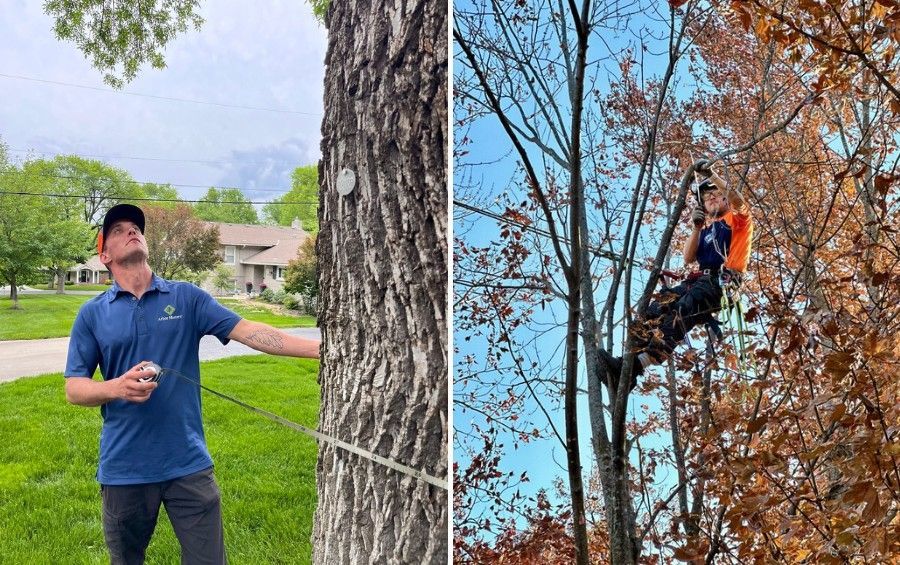
From measuring trunk diameter to inspecting the canopy, a full assessment is the first step before any storm damage pruning begins.
Get Storm-Damaged Branches Pruned Without the Risk
Storm-damaged branches don’t always behave like ordinary pruning cuts. A partially attached limb can be under tension, shift as weight is removed, or tear farther into the tree if it’s cut incorrectly. When the damage involves large limbs, overhead work, compromised branch unions, or anything you can’t safely reach from the ground, it’s a job for an experienced tree care crew.
For expert storm damage pruning without taking those risks yourself, call Arbor Masters. We serve Davenport, Moline, Bettendorf, and Le Claire and can remove damaged branches while protecting the healthy structure that remains. Call 563-219-7188 to schedule professional pruning or request a quote today!
Learn More With These Related Articles

Want More Like This?
Get the latest local news, tree care tips, special offers, and company updates directly to your inbox! It's easy to subscribe and there's no spam - we promise.
"*" indicates required fields