
How to Care for a Mature Bur Oak in Eastern Iowa
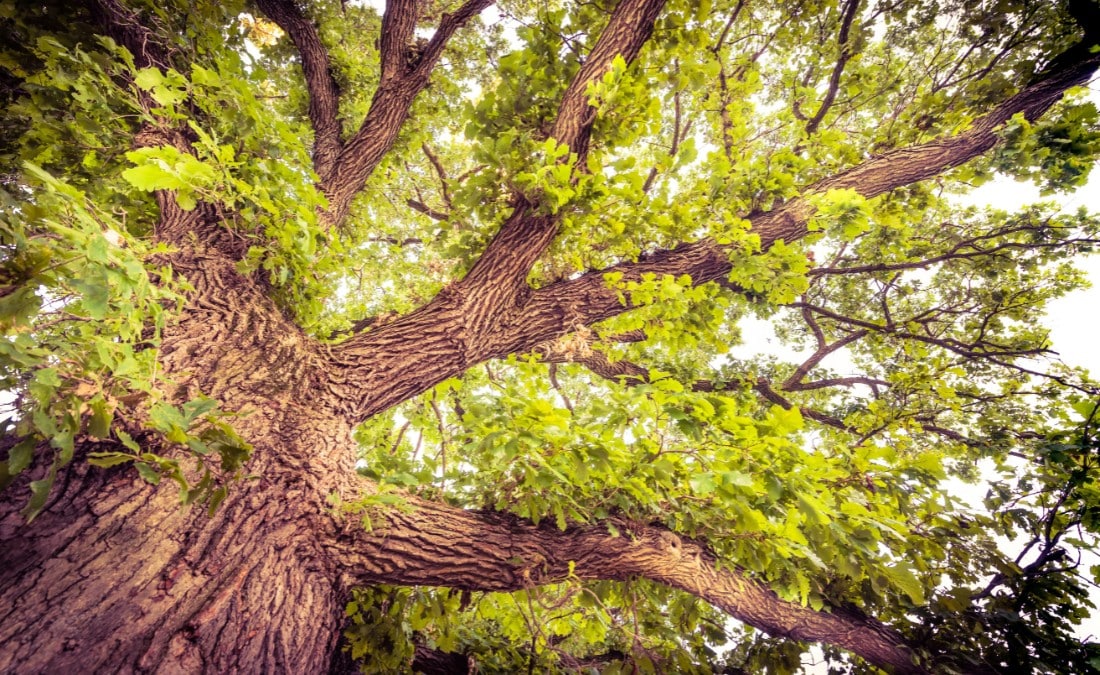
Did your bur oak survive the 2020 derecho? Learn how to identify hidden storm damage, prevent decline, and care for mature bur oaks in Eastern Iowa.
In 2020, a derecho destroyed over 65% of Cedar Rapids’ tree canopy. In Robins and across Eastern Iowa, many mature bur oaks withstood the storm better than other species, making them some of the most valuable trees left in the landscape.
But surviving a major storm doesn’t always mean a tree fully recovered. Hidden structural damage, lingering stress, and disease can take years to appear. Knowing what to watch for — and when to call an ISA Certified Arborist — can help keep a manageable problem from becoming a tree that needs to be removed.
Key Takeaways
- Mature bur oaks are among the most valuable, hardest-to-replace trees in many Eastern Iowa landscapes.
- Trees that survived the 2020 derecho may still have hidden structural damage or lingering stress years later.
- Bur oak blight is the most common disease affecting bur oaks in Eastern Iowa, while oak wilt and two-lined chestnut borer are important threats to recognize.
- Mature bur oaks need relatively little routine care, but they benefit from monitoring, thoughtful pruning, root protection, and periodic inspections.
- Cracks, canopy dieback, thinning foliage, and unusual leaf symptoms are all good reasons to have a bur oak evaluated by an ISA Certified Arborist.
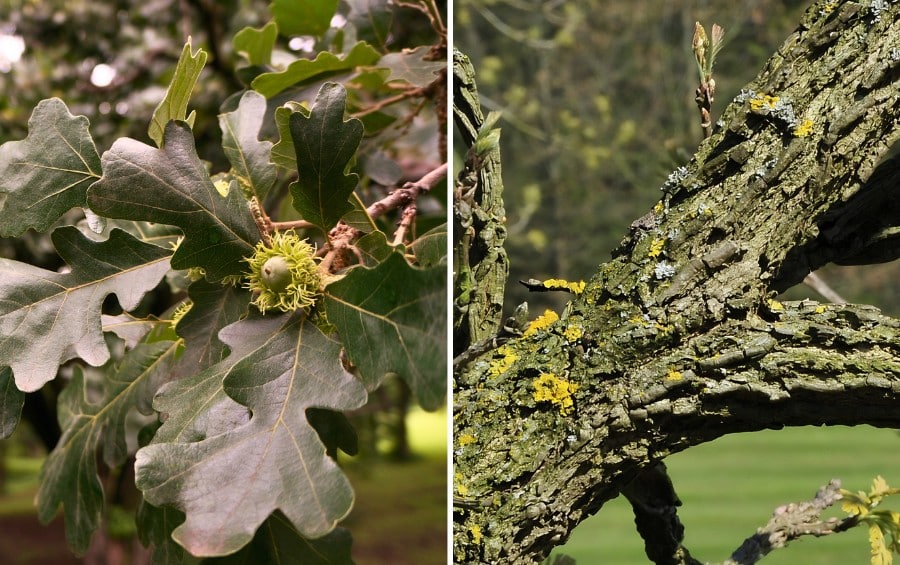
Two of the easiest ways to recognize a bur oak—the fringed “mossy cup” acorn tucked among rounded leaf lobes, and the rugged, deeply furrowed corky bark. (left image – Homoarborea, CC0, via Wikimedia Commons)
How Did the Derecho Affect Bur Oaks in Eastern Iowa?
Bur oaks are among Iowa’s toughest native trees, which is why many survived the 2020 derecho when other species were lost. But surviving the storm doesn’t mean they all escaped without damage.
Major storms place trees under significant stress. Broken limbs, torn bark, shifted root systems, and internal cracks can take years to affect a tree’s health. Even after the canopy fills back in, hidden structural damage may continue to weaken the tree while the added stress leaves it more susceptible to decay, insects, disease, drought, and other environmental pressures.
That’s why arborists are still finding derecho-related problems years later.
What Problems Affect Bur Oaks in Eastern Iowa?
Although resilient, bur oaks aren’t immune to disease or other health issues. Some problems can threaten the long-term health of your tree, while others may look alarming but are largely cosmetic. Knowing the difference can help you avoid unnecessary treatments and catch serious issues before they become more difficult to manage.
Bur Oak Blight
Bur oak blight is the species’ signature local disease, caused by the fungus Tubakia iowensis and first described right here in Iowa. It works gradually and from the bottom of the canopy up, and the fungus overwinters on leaf stems that stay attached to the branches through winter, so it re-infects new growth every spring rather than clearing on its own.
Left unchecked, repeated defoliation drains a tree’s reserves and opens the door to secondary killers like the two-lined chestnut borer and armillaria root rot. On a high-value oak, though, it’s very manageable:
- Confirm the diagnosis first, since the symptoms can mimic other leaf problems.
- Treat with a trunk injection of propiconazole, applied after the leaves fully expand in spring.
- Expect one injection to provide protection for several years rather than just one growing season.
The Iowa State University guide to bur oak blight is the definitive reference on it.
Oak Wilt
Oak wilt is less of a threat to bur oak than to red oaks, but it isn’t zero. As a member of the white oak group, bur oak is better at resisting the disease, but it can still be infected. As a homeowner, pruning timing is the most important thing you can control. Don’t prune oaks from April through July, when sap-feeding beetles can carry the fungus into fresh cuts — save structural and deadwood pruning for the dormant season.
If you suspect it, our Cedar Rapids insect and disease control team can confirm it and walk through treatment options.
Two-Lined Chestnut Borer
Two-lined chestnut borers rarely attack healthy bur oaks. Instead, they target trees already weakened by disease, drought, storm damage, or other stress. The larvae tunnel beneath the bark, disrupting the tree’s ability to move water and nutrients and causing branch dieback that often begins in the upper canopy.
Because this insect is usually a secondary problem, treatment starts with addressing whatever weakened the tree in the first place. An ISA Certified Arborist can confirm whether two-lined chestnut borer is present and recommend the best treatment plan based on the tree’s overall health.
Galls
Galls are small bumps or unusual growths that sometimes develop on bur oak leaves, leaf stems, or twigs. They’re caused by tiny insects, such as gall wasps or midges, that stimulate the tree to form extra tissue around their eggs.
While they may look alarming, galls are almost always cosmetic and rarely harm an otherwise healthy bur oak. Treatment is usually unnecessary, and insecticide sprays are generally ineffective once galls have formed. If you’re unsure whether a growth is a gall or something more serious, have it evaluated by an ISA Certified Arborist before considering treatment.
How Do You Care for a Mature Bur Oak?
A mature bur oak doesn’t need much routine input. The real work comes down to four things:
- Monitoring: Look the tree over through the growing season so you know its normal baseline, as knowing what’s typical for your oak is what lets you or an arborist catch a change early.
- Pruning: Remove dead, damaged, or poorly attached branches as needed, but avoid unnecessary thinning. Bur oaks naturally develop broad, dense canopies, and excessive pruning can create stress without improving the tree’s health.
- Watering: Mature bur oaks are drought tolerant once established, but they still benefit from deep watering during prolonged dry spells. Slow, deep soaking helps reduce stress and supports root health better than frequent, shallow watering.
- Root Protection: The biggest threat to a mature bur oak is often below ground. Soil compaction, trenching, grade changes, and construction within the root zone can damage roots that took decades to establish. Protecting the area beneath the canopy is one of the best ways to preserve your tree’s long-term health.
- Soil Care: Healthy soil is more important than routine fertilization. If a bur oak shows signs of nutrient deficiency or declining vigor, an arborist may recommend soil testing, fertilization, or other treatments to improve root health.
- Inspections: Schedule periodic inspections with an ISA Certified Arborist to catch problems before they become safety hazards. Internal decay, structural defects, and root damage often aren’t visible from the ground, especially in older trees that have weathered major storms.
When Should You Have a Bur Oak Evaluated?
You should have a bur oak evaluated whenever it shows health or structural warning signs because, on a tree of this size, the issues that matter are easy to miss and costly when unaddressed. Catching them early is the difference between a treatment or a cable and a removal, so you should call for an assessment if you notice:
- Cracks: In the trunk or in major limbs, especially on a tree that took storm damage
- Dieback: Bare, leafless branches in the upper canopy or scattered through the crown
- General Decline: A canopy that’s thinning year over year, smaller-than-normal leaves, or sparse growth
- Disease Symptoms: Browning that spreads through the lower canopy, leaves that cling through winter, or any sudden wilting in summer
On a mature bur oak, any of these are worth a professional look. Tree preservation can help protect a mature bur oak that’s weathered decades of Iowa storms.
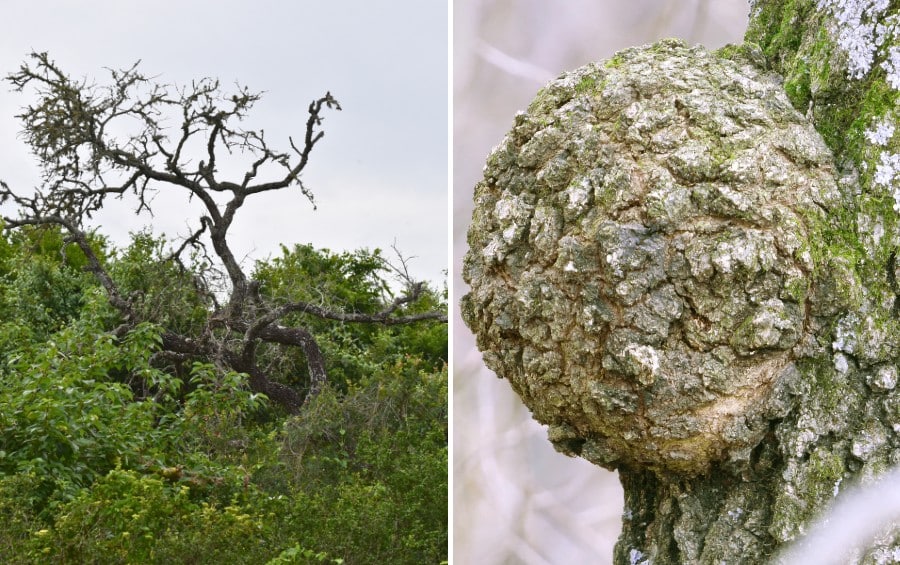
Worth a closer look: canopy dieback like the bare branches at left can signal disease or decline, while a woody burl like the one at right is usually harmless—an arborist can tell you which you’re dealing with.
Frequently Asked Questions About Bur Oak Trees
How long do bur oak trees live?
Bur oaks routinely live 200 to 300 years, and exceptional specimens reach well beyond that.
Can bur oaks get iron chlorosis?
Unlike pin oaks and some other oak species, bur oaks are well adapted to Eastern Iowa’s alkaline soils and rarely develop iron chlorosis. If your bur oak has yellowing leaves, iron deficiency is unlikely to be the cause. More often, yellowing points to drought stress, disease, insect activity, or another underlying health issue. An ISA Certified Arborist can diagnose the cause and recommend the appropriate treatment if needed.
Is the bur oak Iowa’s state tree?
Iowa’s official state tree is the oak in general. That said, the bur oak is the one most Iowans picture when they think of a native oak.
Can bur oak blight be cured?
There’s no cure, since the fungus can’t be eradicated once a tree is infected. However, it can be suppressed and kept in check over time, so an infected tree is generally managed instead of lost.
Will bur oak blight spread to my other trees?
No. Bur oak blight only infects bur oaks. It moves slowly between bur oaks through rain-splashed spores, so one affected tree doesn’t put a whole yard at risk.
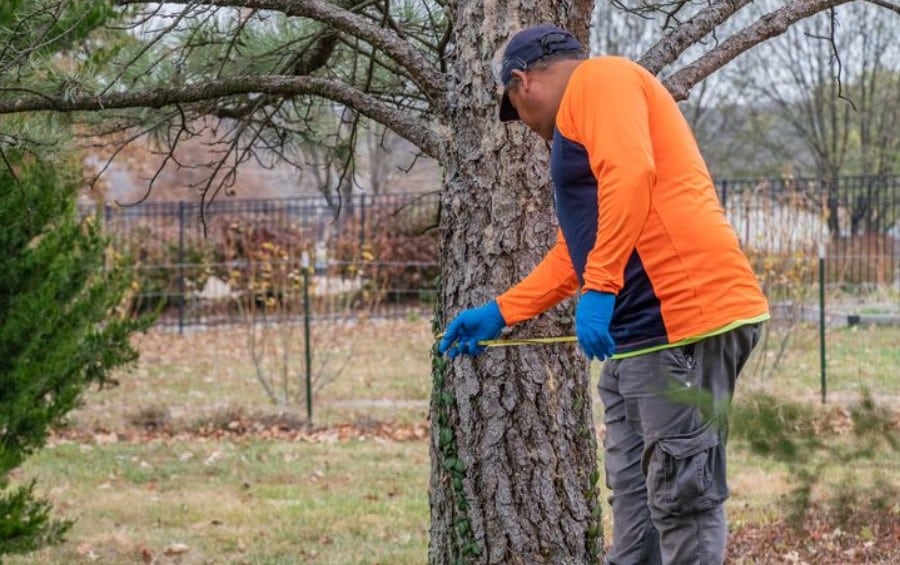
A professional assessment is the best way to catch hidden storm damage early—an ISA Certified Arborist can inspect your bur oak and tell you whether it needs attention.
Get Expert Help Caring for Your Bur Oak from Arbor Masters
Mature bur oaks are built to last, but they’re not maintenance-free. Hidden storm damage, disease, and structural defects are much easier to manage when they’re caught early.
Whether your tree needs a routine health assessment or you’re concerned about signs of decline, Arbor Masters’ ISA Certified Arborists can evaluate your bur oak and recommend the right care to keep it healthy for years to come.
Request a quote or call 319-359-6135 to have your surviving tree looked at.
Want More Like This?
Get the latest local news, tree care tips, special offers, and company updates directly to your inbox! It's easy to subscribe and there's no spam - we promise.
"*" indicates required fields
