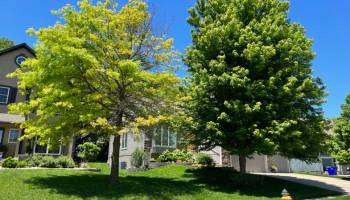
There’s Web All Over My Pecan Tree—Is My Tree Dying?
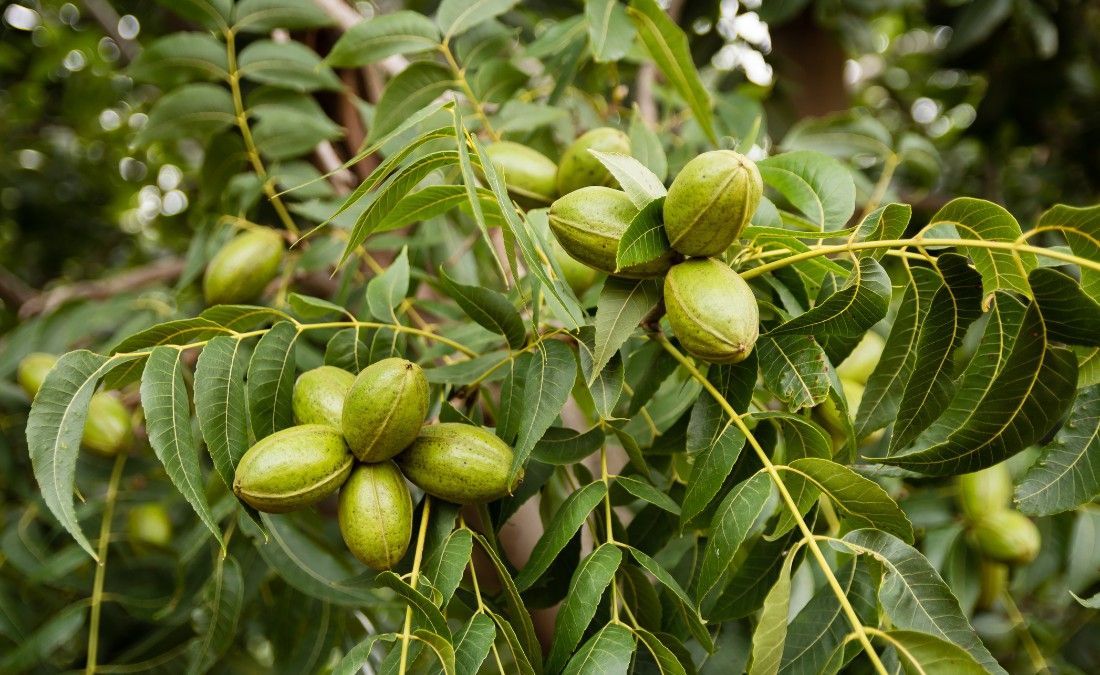
Fall webworms create alarming webs in Dallas pecan trees. Learn what they are, why they're usually not emergencies, and when professional care makes sense.
If you’ve noticed white, silky webs spreading across the ends of your pecan tree branches, you’re probably dealing with fall webworms. Their tents can make a healthy tree look like it’s being taken over, but appearances are often worse than reality. Before you assume your pecan tree is in serious trouble, it’s worth understanding how these pests feed and when they’re actually cause for concern.
Key Takeaways
- Fall webworms are harmless caterpillars that feed inside silky webs but rarely kill healthy trees or damage the wood itself.
- They show up consistently in late summer (August–September in Dallas) as part of a predictable North Texas lifecycle, which means you can plan around them.
- The biggest mistake is confusing fall webworms with spring webworms (Eastern tent caterpillars), which require different treatment timing.
- Most healthy, established trees survive webworm defoliation without intervention, especially when damage occurs near the end of the growing season.
- A free insect and disease inspection helps you decide whether your tree can handle webworms on its own or if treatment makes sense.
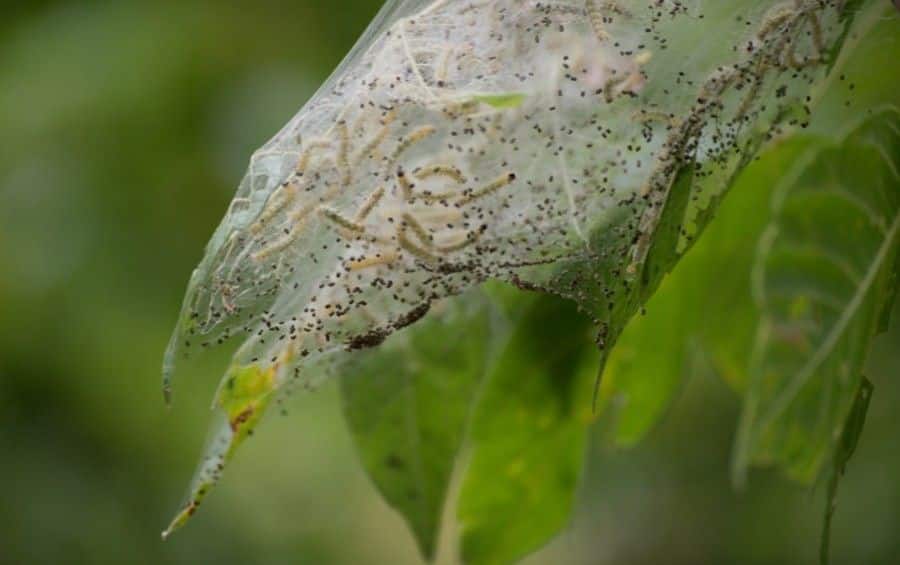
Fall webworm caterpillars feed on leaves inside protective silk webs. While the webbing looks dramatic, healthy trees usually recover without lasting damage.
What Is That Web All Over My Pecan Tree?
That’s likely a fall webworm infestation—and yes, it looks intimidating, but fall webworms rarely kill trees. Fall webworms are caterpillars of a moth called Hyphantria cunea that hatch in mid-to-late July and feed on tree leaves while spinning protective silky webs.
The webs look alarming because they’re messy and conspicuous, filled with dead leaves, droppings, and debris. They often envelop entire branch tips, making it look like something is seriously wrong with your tree.
The caterpillars feed on leaves inside the webs, but they don’t damage branches or kill the tree. Your trunk and main branches are completely unharmed. Most Dallas homeowners panic because the webs look catastrophic, but fall webworms are fundamentally a cosmetic problem with temporary impact.
Why Do Fall Webworms Only Show Up in Late Summer?
Fall webworms appear in late summer because warm temperatures trigger multiple generations throughout the growing season. In Dallas, we typically see 2 to 3 generations per year, with the fall generation being the largest and most visible because caterpillars are feeding heavily to build energy reserves before winter.
The Webworm Lifecycle in North Texas
- May: Adult moths from overwintered pupae emerge
- Late May–June: First-generation eggs laid on leaf undersides (400–1,000 eggs per mass)
- June–July: First-generation caterpillars feed and pupate
- Mid-to-late July: Second-generation eggs hatch; caterpillars begin feeding
- Mid-July through early October: Larval feeding period (4–8 weeks per generation); webs are largest mid-August onward
- Late September–October: Third-generation (if temperatures allow); caterpillars pupate in soil to overwinter
Which Dallas Trees Are Most at Risk for Fall Webworms?
Fall webworms feed on more than 100 species of deciduous trees, but homeowners in Preston Hollow, Bluffview, and other mature Dallas neighborhoods tend to see them on the same handful of trees each summer.
- Pecan :The most common host in North Texas. Heavy feeding can reduce nut production when infestations occur year after year.
- Cedar Elm :A common Dallas shade tree that frequently develops webworm tents in late summer.
- Mulberry: Often attracts webworms because of its tender foliage.
- Black Walnut: Another favored host that may develop multiple web-covered branch tips.
- Hickory: Susceptible during late summer feeding periods.
- Sweetgum: Occasionally develops noticeable webworm tents near branch ends.
- Ash: Can host localized infestations but usually recovers well.
- Live Oak : Less commonly affected than pecans or elms but still a potential host.
Fall webworms feed on broadleaf trees, not conifers, so pines, firs, and other needle-bearing evergreens aren’t at risk.
Even if you have one of these tree species, an infestation isn’t guaranteed every year. Weather, natural predators, and local populations all influence how active fall webworms are from one neighborhood—and one season—to the next.
How Do I Tell Fall Webworms Apart from Other Pests?
The biggest mistake Dallas homeowners make is confusing fall webworms with spring webworms (Eastern tent caterpillars). Getting the ID right matters because treatment timing is completely different.
Fall Webworm
- Caterpillar: Hairy, 1 to 1.5 inches long, pale yellow or orange-tinted
- Web: Loose, messy, located at branch ends
- Timing: Mid-July through September (peak August–early October)
Eastern Tent Caterpillar (Spring Webworm)
- Caterpillar: Dark (black or brown), 1.5 to 2 inches long, with white or gold stripe down the back
- Tent: Dense, organized, located in branch crotches (where two branches meet)
- Timing: April through June
When in doubt, take a photo and reach out to an Arbor Masters arborist.
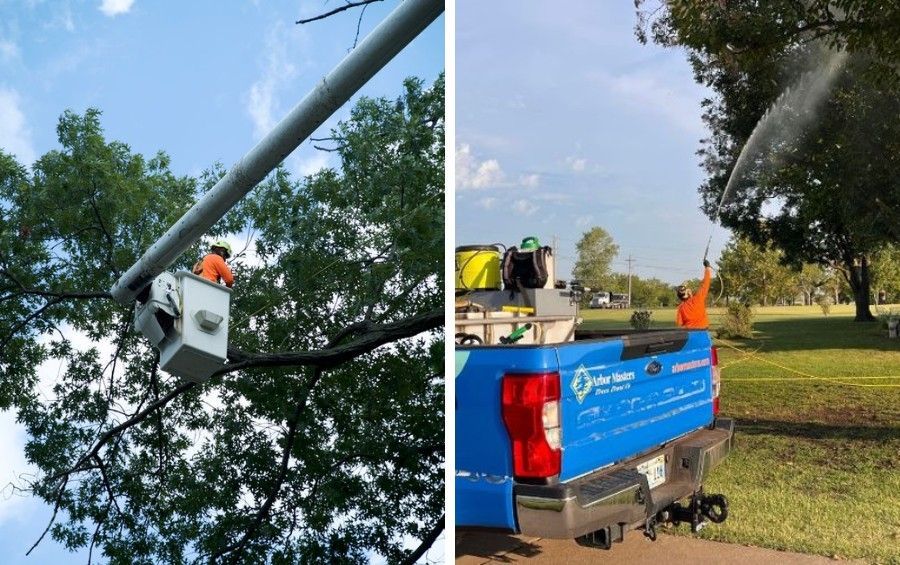
Professional treatment options for fall webworms include early pruning of webbed branches and targeted applications when infestations threaten young or stressed trees.
Should I Treat My Tree or Just Monitor It?
That depends on your tree’s health, infestation severity, and your budget. But most Dallas homeowners don’t need to do anything.
When Monitoring Is the Right Choice
Most healthy, established trees don’t need treatment. Healthy trees withstand 40% defoliation without significant harm, especially when it occurs in mid-to-late summer. Single-generation webworm defoliation happens near the end of the growing season, when your tree is already preparing for dormancy.
Natural enemies do the heavy lifting. Over 50 parasitoid wasp species and 30+ predators (yellow jackets, paper wasps, birds, spiders) actively hunt webworm caterpillars. Once the web is disrupted by wind or predation, larvae are exposed and populations crash rapidly.
While you monitor your tree, there are a few things you can do to support its resilience to common tree pests:
- Water deeply and regularly if it’s hot and dry (common in August).
- Avoid over-fertilizing, which stimulates tender growth that attracts pests.
- Monitor for other stressors like construction damage, soil compaction, or disease that might be weakening your tree independently of webworms.
When Treatment Is Worth Considering
Treatment makes sense if your tree:
- Is a high-value mature pecan with significant nut production
- Has been hit 2 or more times in the same summer
- Is young or already stressed (can’t afford more foliage loss)
- Is already compromised by drought, poor soil, or disease
Timing matters. Treatment is most effective on young larvae in mid-to-late July. By late August, larvae are larger and harder to reach inside dense webs.
How to Treat Fall Webworm
- Mechanical Removal: Hand-pruning or knocking webs down with a rake. Labor-intensive but chemical-free and most effective early in the season.
- Biological Spray (Bt): Safe for beneficial insects but requires good coverage.
- Chemical Sprays Broader-Spectrum Options: Kill beneficial insects and aren’t recommended for landscapes with existing natural predator pressure.
The real question isn’t “Should I spray?” It’s “Is my tree healthy enough to handle this on its own, or does it need help?” That’s exactly what a professional assessment answers.
What Happens If I Do Nothing with a Fall Webworm Infestation?
In most cases, doing nothing won’t harm a healthy tree. Your tree will almost certainly survive, and recovery happens faster than you’d think.
Why Most Healthy Trees Recover
By late summer, your tree has already spent months building energy reserves in the trunk, roots, and branches. It can easily afford to lose leaves in August and September without long-term harm. Trees naturally slow growth in mid-to-late summer as they prepare for dormancy, so webworm defoliation happens when your tree is already in a “wind-down” phase.
The Damage Is Temporary
Webworm larvae feed for 4 to 8 weeks, then pupate in the soil and disappear by late fall. Affected branches don’t die, and the tree produces a new canopy the following spring. It’s like a temporary haircut—unsightly for a few months, but not permanent.
What to Expect Next
Next year, webworms may return, but healthy trees and their natural predators usually keep populations at manageable levels. Beneficial insects and birds help suppress webworm outbreaks in Dallas landscapes without any intervention from you.
When Should I Call an Arborist?
Call if you’re uncertain whether your tree can handle webworms on its own, if your tree is already stressed (visible drought damage, sick appearance, previous storm damage), if the infestation looks severe (50%+ of canopy is webbed), if your tree has been hit 2 or more times this summer, or if the tree is young, valuable, or in a high-visibility location.
A free insect and disease inspection includes:
- Confirmation of the pest
- Evaluation of your tree’s overall health and resilience
- Assessment of infestation severity
- Observation of natural predator activity
- Honest recommendation on whether to monitor, use mechanical removal, or consider professional treatment
An arborist can also spot other problems while they’re there—disease, pest damage, structural issues, or soil compaction that might be weakening your tree independently of webworms. Whether you decide to treat or monitor, the decision should be based on your tree’s actual health and your property’s priorities.
Frequently Asked Questions About Webworms
Should I remove the webbed branches myself?
If the webs are within reach, you can prune out affected branch tips or knock down the tents to expose the caterpillars to birds and other natural predators. However, avoid climbing ladders or attempting to reach high branches. If the infestation is widespread or the webs are high in the canopy, it’s safer to have a Certified Arborist assess the tree and recommend the best course of action.
What’s the difference between webworm damage and other tree problems?
Webworm damage is usually confined to the webbed branch tips and is rarely a serious threat to a healthy tree. If you’re seeing symptoms beyond the webs, such as widespread leaf discoloration, branch dieback, bark damage, or decline throughout the canopy, another pest, disease, or environmental problem may be involved. An arborist can determine the underlying cause.
Can I prevent webworms from coming back next year?
Not completely. Adult moths can fly in from surrounding areas each year. Raking up fallen leaves in fall removes some overwintering pupae, and keeping your tree healthy with proper watering, soil care, and regular monitoring improves its resilience. A spring arborist inspection can also identify potential problems before webworm season begins.
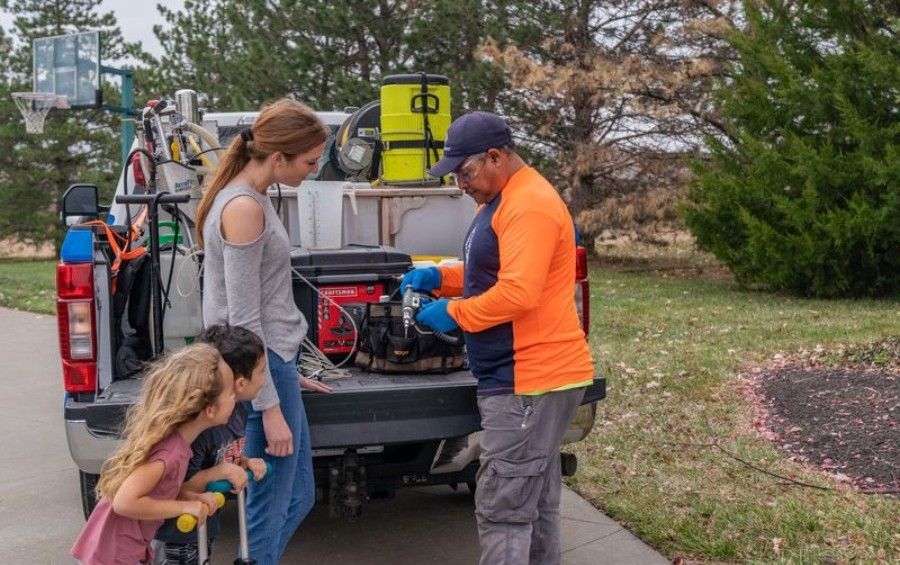
Every webworm infestation is different. An Arbor Masters inspection evaluates your tree’s health, confirms the pest, and recommends the most appropriate next step.
Get Professional Guidance—Before Webworms Take Over Your Trees
Fall webworms are unsettling to look at, but they’re rarely the tree killers homeowners fear. If you’ve spotted those dramatic webs in your Preston Hollow or Bluffview pecan tree, you now know what you’re looking at, why it’s usually not an emergency, and when professional help makes sense.
If you’re unsure whether your tree needs treatment, contact Arbor Masters for a free insect and disease inspection. Our Certified Arborists will evaluate your tree’s overall health, confirm what you’re dealing with, and give you an honest recommendation on the appropriate next step. Call us today at 214-851-1090 or request an estimate.
Want More Like This?
Get the latest local news, tree care tips, special offers, and company updates directly to your inbox! It's easy to subscribe and there's no spam - we promise.
"*" indicates required fields