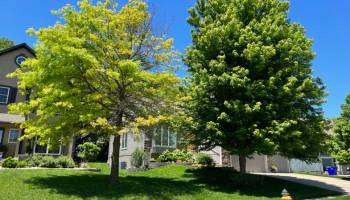
How to Identify Bagworms, Webworms, and Spider Nests on Your Norman Trees
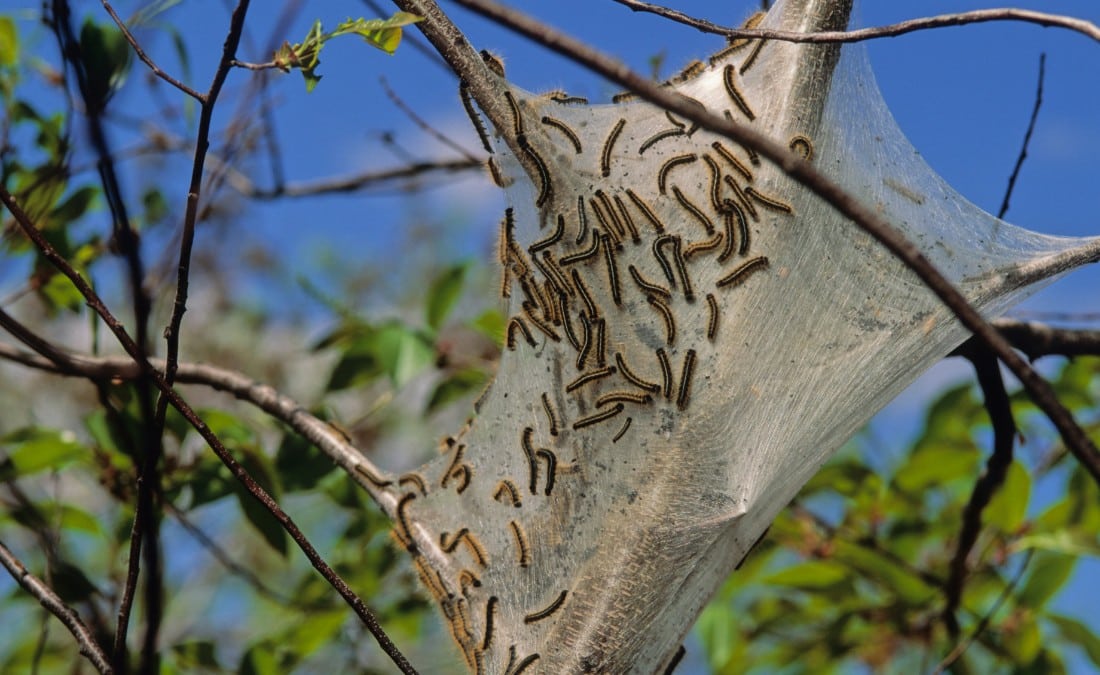
See fuzzy bags, white tent webs, or fine silk on your Norman trees? Learn to identify bagworms, webworms, and spider nests—and when to call a professional.
Hanging bags, white webs, and spider silk all start appearing on Norman trees during the summer, but they don’t all mean the same thing. Bagworms, fall webworms, and spider nests each leave behind distinct signs and affect trees in very different ways. Knowing which one you’re seeing can help you decide whether your tree needs treatment or whether it’s safe to leave it alone.
Key Takeaways
- Fuzzy bags on evergreens mean bagworms—the serious threat that needs professional attention if spotted in July.
- White tent webs on deciduous trees usually indicate webworms, which cause cosmetic damage and rarely harm mature trees.
- Fine silk sheets indicate beneficial spiders, not pests—these are allies in your yard that eat other insects.
- July is peak visibility for all three, but for different reasons related to their lifecycles and tree preferences.
- Visual identification is the first step; it empowers you to decide whether professional treatment is urgent, worth considering, or completely unnecessary.
How Can You Quickly Identify Bagworms, Webworms, and Spider Nests?
These three pests are completely different despite looking vaguely similar at first glance. Each one has a distinct appearance, targets different trees, and a different threat level to your Norman landscape. Use this visual framework to identify what’s on your trees:
| Pest | Appearance | Location | Size | Threat Level |
|---|---|---|---|---|
| Bagworms | Dark brown, bag-shaped structures | Evergreen trees | Small, about 1.5–2 inches | Serious and urgent |
| Webworms | White or cream silken tents | Deciduous trees | Large, can grow to 3+ feet | Usually cosmetic |
| Spider Nests | Fine silk sheets | Any tree type | Delicate and varied | Harmless and beneficial |
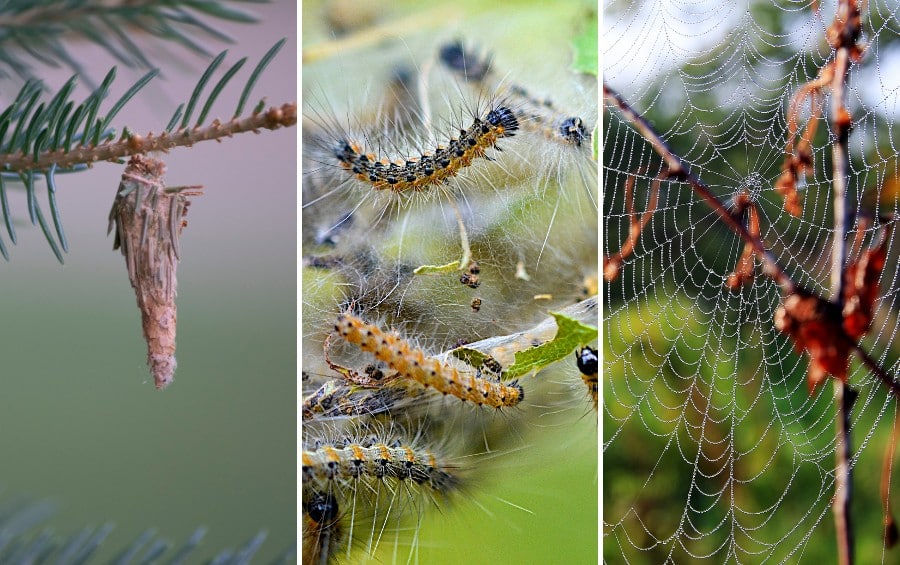
Not all tree webs are a problem. Bagworms require prompt attention, webworms rarely harm mature trees, and spider webs help control insect pests.
Why Is July Peak Visibility for These Pests?
July and August are peak visibility months because Oklahoma’s heat and humidity accelerate pest activity, making all three most visible during mid-summer through August. This is exactly when Norman homeowners start noticing canopy damage and searching for answers. The timing differs by pest:
- Bagworm bags show accumulated damage from months of feeding (hatched in April or May, feeding ever since).
- Webworm tents are just appearing and becoming visible as populations grow (hatch late June, visible by early July).
- Spider webs are mature and catching debris, making them more noticeable as the summer progresses.
Understanding this timing helps you self-diagnose without panic.
How Do I Identify Bagworms on My Trees?
Bagworms are the serious threat in this trio. They’re the pest where early action matters most.
Look for dark brown, fuzzy bags hanging like ornaments from evergreen branches. Bagworm bags have these distinctive features:
- Size 1.5 to 2 inches long
- Made of silk and plant material
- Blend in with evergreen foliage
- Often mistaken for pine cones or natural debris
- Caterpillars live inside the bags, feeding on needles
The bags themselves are the giveaway—if you see them on an eastern red cedar, juniper, arborvitae, spruce, or pine, you have bagworms.
Can Bagworms Kill a Tree?
Unlike deciduous trees, evergreens cannot regrow needles once consumed. This is why bagworm damage is permanent and compounds over time. A heavily infested tree loses needles entirely, and if left untreated year after year, the tree dies.
July-spotted bags mean months of accumulated damage already—treatment becomes urgent, not optional. Early June is the ideal treatment window when larvae are small, but by July, larvae are larger and harder to control with sprays.
If you’re seeing bags in July, a Certified Arborist can assess whether treatment is still viable or whether you’re looking at next year’s prevention strategy.
How to Identify Webworm in Your Trees
Webworm tents may look alarming, but the damage they cause is usually cosmetic rather than serious.
Webworms have these identifying characteristics:
- White or cream-colored silken tents
- Loosely woven appearance (like tulle fabric)
- Can grow to 3 feet or larger
- Appear at branch tips of deciduous trees
- More visible in late July and August as populations grow
Common Norman targets include pecans, hickories, walnuts, sweetgum, sycamore, elm, oak, and maple.
Are Webworms Dangerous to Your Trees?
Usually not. While webworms feed on the leaves inside their tents, established shade trees rarely suffer lasting damage. The defoliation can look dramatic, but healthy trees typically recover without long-term problems.
Young or recently planted trees are more vulnerable and may benefit from a professional assessment if the infestation is severe. By late summer, the caterpillars pupate and disappear, leaving mature trees to recover and produce healthy new growth the following season.
Are Spider Webs in Trees Harmful to Tree Health?
Spider webs are not a threat to your trees. Unlike bagworms and webworms, spiders don’t feed on foliage. They hunt flying insects and build webs wherever food is plentiful, making them beneficial predators in your landscape. Don’t confuse them with spider mites, which also produce fine webbing but are damaging tree pests.
How Can You Tell the Difference Between Spider Webs and Webworms?
Spider webs have these characteristics that set them apart:
- Fine, delicate silk (not thick or cottony)
- Precise and orderly structure
- Sheets draped under branches
- Individual orb-weaver webs or sheet-web designs
- Stark contrast to the thick appearance of webworm tents
Why Spiders Are Good for Your Trees
Spiders are beneficial predators that control many pests—they eat bagworm larvae, hunt webworms and other flying insects, control mosquitoes, and maintain natural pest balance in your yard. Their presence indicates a healthy ecosystem on your property.
Spider nests can be found in almost any tree type. If the web is fine and delicate rather than thick and tent-like, relax. You’re looking at a spider, and your tree is benefiting from a natural pest-control ally.
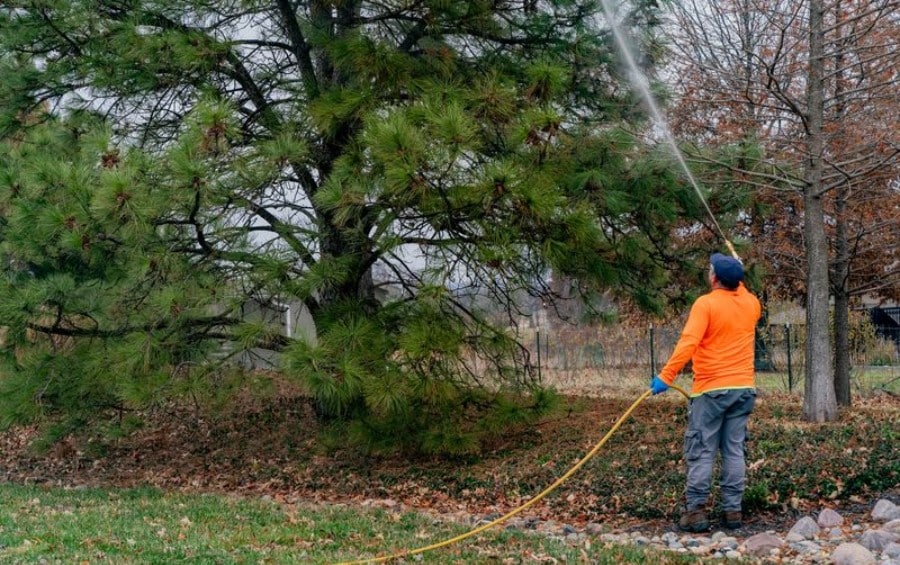
Preventive insecticide treatments protect healthy evergreens by killing bagworm larvae before they can cause significant damage.
When Should You Call a Professional?
Knowing when to seek professional help for bagworms and webworms prevents unnecessary treatment and catches genuine threats before they cause permanent damage.
For Bagworms
Bagworms warrant professional attention if you spot them in July because:
- The infestation is already weeks old (hatched in spring)
- Hand-picking individual bags is labor-intensive for large infestations
- Professional insecticide treatments are most effective at this stage
- Early June is the ideal window (but July treatment is still possible)
- Winter hand-picking also breaks the cycle for next year
For Webworms
Call a professional if any of these apply:
- The infestation covers multiple branch zones
- The affected tree is young or valuable
- You’re unsure whether the tent is webworm or tent caterpillar (a different species)
- Fire removal is being considered (fire should be avoided—improper burning damages bark and structure)
For Spider Webs
Spider webs do not require professional intervention. These are allies, not adversaries. Finding spider webs on your trees is actually a sign your yard is healthy and balanced.
Are You Still Uncertain About What Is on Your Trees?
A Certified Arborist can quickly identify what’s on your trees and recommend whether treatment or simple monitoring is the best approach. If you’d like to learn more, explore our guide to common Oklahoma tree pests before scheduling an assessment.
Frequently Asked Questions About Summer Tree Pests
What’s the best time of year to treat bagworms?
While early June is the ideal treatment window, professional treatment in July can still be effective. A Certified Arborist can recommend the most effective approach based on the size of the infestation. For smaller infestations, hand-picking bags in winter helps prevent next year’s hatch.
Can webworms spread from one tree to another?
Webworms move within a tree on foot and via the wind when they’re airborne as moths. They don’t spread rapidly from tree to tree during a single season, but heavy populations can infest multiple nearby deciduous trees the following year if conditions are favorable.
How long do bagworm bags stay on trees after the caterpillars are gone?
Bagworm bags remain on trees even after pupation and winter dormancy. They can overwinter and hatch the following spring, which is why winter hand-picking is an effective control method. Removing the bags prevents next year’s infestation from starting.
Will my tree recover after webworm damage?
Most mature trees recover fully from webworm damage since the damage is primarily cosmetic. Young trees may require more recovery time if heavily defoliated. Trees will regrow leaves the following spring, and established shade trees show remarkable resilience.
Are there natural predators that control bagworms and webworms?
Yes. Parasitoid wasps and birds naturally prey on both bagworm and webworm larvae. Maintaining a diverse landscape with native plants and avoiding broad-spectrum pesticides encourages these beneficial predators to help manage pest populations naturally.
How long does it take to see results after bagworm treatment?
Visible results appear within 1–2 weeks as the spray disrupts feeding and kills larvae. Over the following 3–4 weeks, you’ll notice fewer active bags and reduced defoliation. Full canopy recovery depends on damage severity—heavily infested evergreens may take several weeks to stabilize.
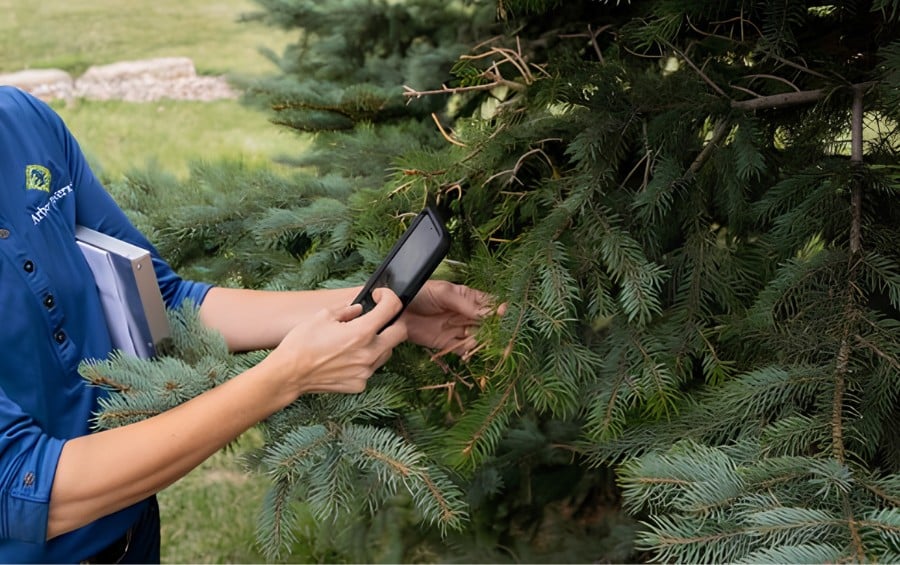
A professional tree assessment helps identify early signs of pests like bagworms, disease, and environmental stress before damage becomes severe.
Need a Second Opinion? Arbor Masters Can Help!
Not every web or nest requires treatment, but correctly identifying what you’re seeing is the first step. If you’re unsure whether you’re dealing with bagworms, webworms, or harmless spiders, Arbor Masters OKC offers free assessments for homeowners in Norman and the greater Oklahoma City area. Call us today at 405-495-8746, and we’ll identify the problem and recommend the right next step.
Learn More With These Related Articles

Want More Like This?
Get the latest local news, tree care tips, special offers, and company updates directly to your inbox! It's easy to subscribe and there's no spam - we promise.
"*" indicates required fields