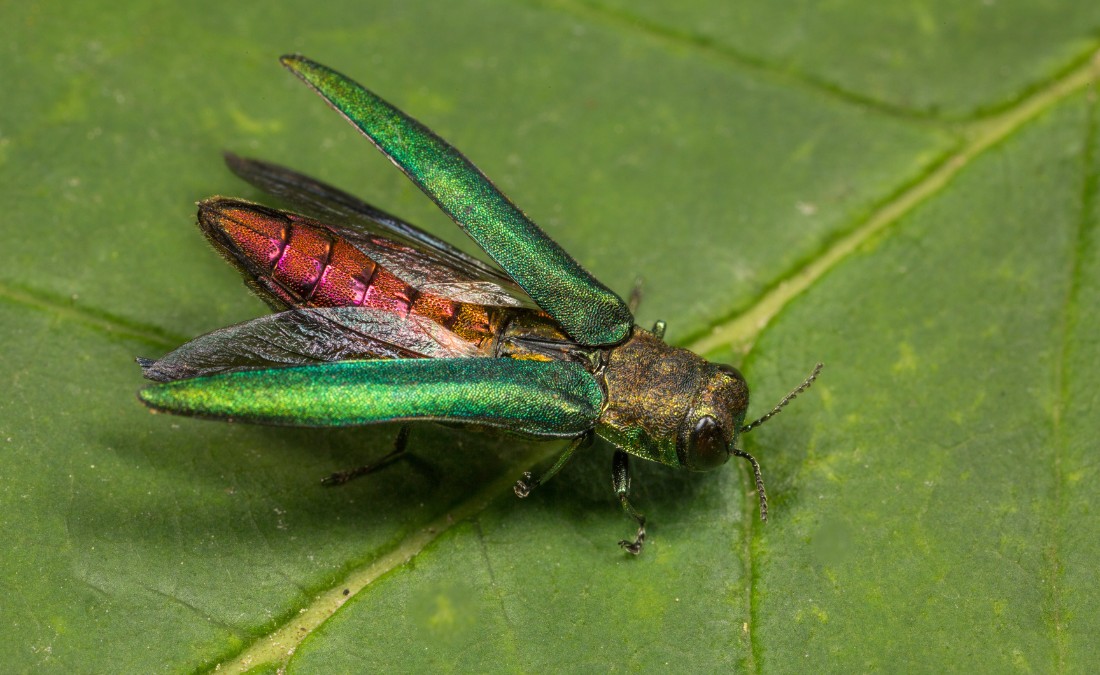
Should You Prune Dead or Dying Oak Branches in Late Summer in Tulsa?
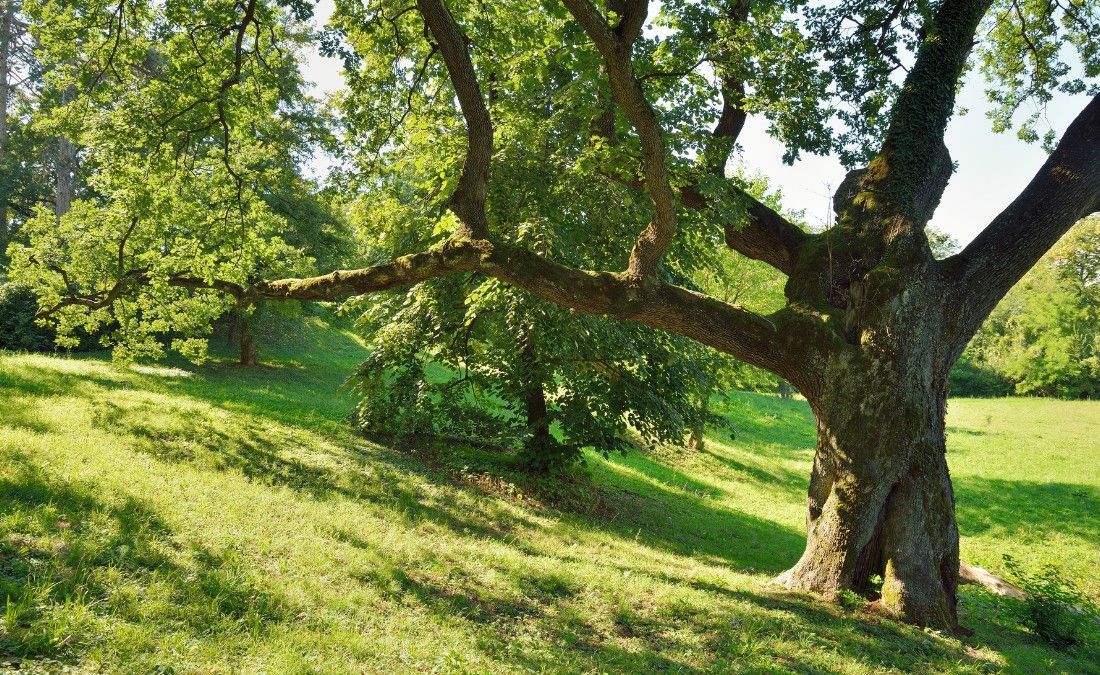
Dead branches on your oak may make pruning feel urgent, but timing matters. Learn why you may need to wait for dormancy and when your tree needs attention now.
Dead or browning branches showing up on your oak in late summer can make pruning feel like the obvious next step. Removing the damaged growth may seem like the best way to help a struggling tree recover. But with oaks, cutting at the wrong time can create a new problem while you’re trying to fix the first one.
Before you reach for a saw, it’s important to understand why the branches are declining and whether they actually need to come off now. Some problems can wait for Oklahoma’s dormant pruning season, while hazardous branches, storm damage, or certain diseases may require attention sooner. An assessment can help determine what’s affecting the tree and whether pruning is the right response.
Key Takeaways
- Have dead or dying oak branches assessed before pruning to determine what’s causing the decline and whether they can safely wait for dormancy.
- Late fall through winter is generally the best time to prune Oklahoma oaks because the trees are dormant and insect activity is lower.
- Drought, root problems, insects, and disease can all cause branch dieback, and pruning alone won’t address the underlying cause.
- Broken, hanging, unstable, or hazardous branches may need to be removed before the dormant pruning season.
- While waiting to prune, appropriate watering, mulch, and root-zone protection can help reduce additional stress on a declining oak.
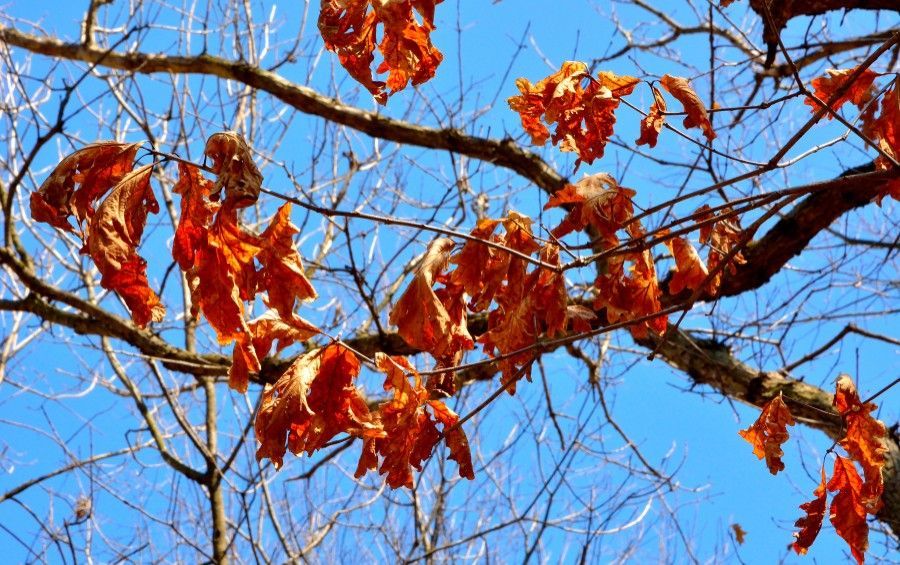
Late-summer oak decline can show up unevenly, with brown foliage and dieback appearing on individual branches before affecting larger portions of the canopy.
What Should You Do First When Your Oak Has Dead or Dying Branches?
If your oak is browning, dropping leaves, or developing dead-looking branches in late summer, the first step is to determine why the tree is declining rather than cutting away everything that looks unhealthy.
For routine structural pruning, Oklahoma’s dormant season is generally the better window. Oklahoma State University Extension recommends late fall through winter for pruning oaks and most other deciduous trees and shrubs.
That doesn’t mean every branch has to stay until winter. A broken limb hanging over your driveway is a different situation from a branch that appears dead while the tree is under drought stress. Hazardous, storm-damaged, or disease-affected branches may need attention sooner, but the cause of the decline and condition of the branch should determine what happens next.
Why Is Dormant-Season Pruning Better for Oak Trees?
Fresh pruning cuts leave an oak temporarily vulnerable. During spring and summer, insects are much more active, and some beetles are attracted to fresh wounds. Waiting until dormancy reduces that exposure instead of creating new entry points while pest activity is high.
This matters even more when an oak is already struggling. OSU Extension notes that several wood-boring beetles are active during the summer and are more likely to attack trees weakened by drought or other stress. If an oak is already showing late-summer decline, unnecessary pruning can add another source of stress rather than solving the underlying problem.
Dormant pruning also has a few advantages for the tree and the arborist:
- The tree is better positioned to respond to pruning cuts: Pruning late in dormancy avoids removing live growth while the tree is actively supporting a full canopy. As growth resumes in spring, the tree can direct resources toward compartmentalizing the pruning wounds.
- The tree’s structure is easier to evaluate: Without leaves blocking the view, an arborist can more clearly identify deadwood, crossing branches, weak attachments, and other structural concerns.
- There’s time to diagnose the decline first: Symptoms that appear in late summer may be caused by drought, root problems, insects, disease, or a combination of stressors. Assessing the tree before dormant pruning helps determine which branches actually need to be removed and whether pruning will address the problem at all.
Does Deadwood on an Oak Need to Be Removed Right Away?
Not necessarily. Whether a dead or declining branch should come off now depends on its condition, location, stability, and the risk it presents. If the cause of dieback isn’t obvious, diagnosis should come before pruning.
Large, hanging, broken, diseased, or poorly attached branches can become hazards, especially over homes, driveways, or walkways. Those branches should be assessed promptly rather than automatically waiting for dormancy.
Why Are Branches Dying on My Oak Tree?
If branches are dying on your oak, pruning removes the visible damage but doesn’t address what caused the branch to die. Before deciding what needs to come off, it helps to understand what may be affecting the tree.
Late-summer branch dieback in Owasso oaks can be tied to drought and heat stress, root or soil problems, insects, disease, or several stressors working together. The pattern of dieback and other symptoms on the tree can help narrow down the cause.
| Possible Cause | What You May Notice |
| Drought and Heat Stress | Thinning foliage, early leaf drop, scorched leaves, and dieback on stressed branches |
| Root or Soil Problems | Canopy thinning, early fall color, reduced growth, and progressive branch dieback |
| Bacterial Leaf Scorch | Scorched leaf margins followed by progressive decline on affected branches |
| Oak Decline | Dieback beginning at branch tips, sparse foliage, and sprouts along the trunk or larger branches |
| Borers or Other Secondary Pests | Branch dieback accompanied by exit holes, loose bark, or sawdust-like material |
Drought Stress and Heat Accumulation
By late summer, months of Oklahoma heat and inconsistent rainfall can take a visible toll on an oak. Leaves may develop brown or scorched edges, wilt, drop early, or change color well before fall.
Drought can also contribute to problems that aren’t immediately obvious. OSU Extension explains that oak decline often begins with environmental stress such as drought, with weakened trees becoming more susceptible to insects and disease afterward.
That’s one reason cutting off declining branches isn’t necessarily helping the tree. If lack of water is driving the problem, reducing the tree’s stress is more important than changing the shape of its canopy.
Root and Soil Problems
What’s happening underground can also show up as decline in the canopy. Compacted soil, construction around the root zone, changes in grade, poor drainage, or root damage can interfere with the tree’s ability to take up the water and oxygen it needs.
Oaks are particularly sensitive to soil disturbance. According to OSU Extension’s guidance on site disturbance and tree decline, affected trees may develop early fall color, premature leaf drop, smaller leaves, and dieback that progresses through the crown.
If those symptoms sound familiar, pruning the branches won’t correct what’s happening around the roots.
Insects and Disease
A stressed oak can become more vulnerable to secondary problems. Most woodborers, for example, are more likely to attack trees already weakened by drought, poor soil conditions, construction damage, or other stress. OSU Extension lists exit holes, loose or damaged bark, and small piles of sawdust or wood material among the signs that can indicate borer activity.
Diseases can produce their own patterns of browning and dieback. Some, such as anthracnose, may even change the pruning recommendation. That’s why identifying the cause matters before deciding that every brown or bare branch needs to be removed.
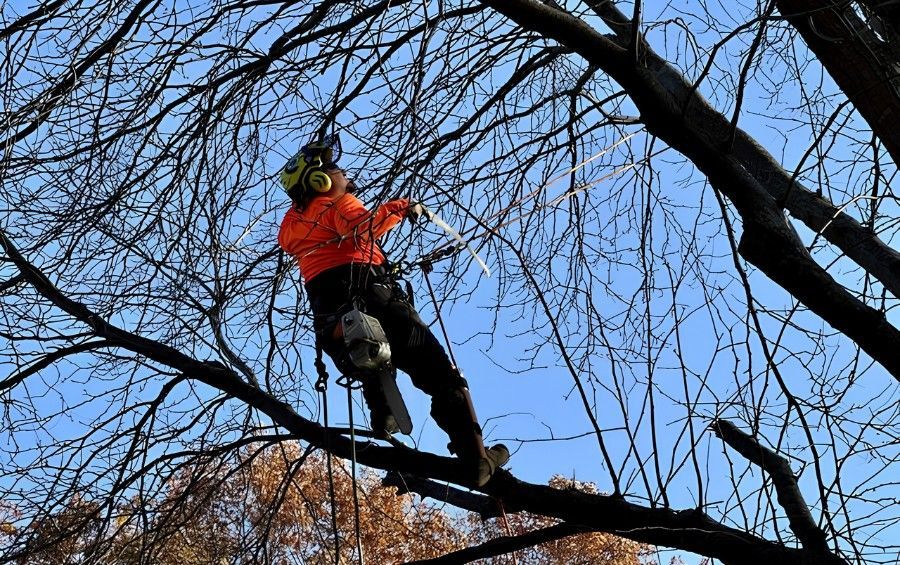
Proper oak pruning combines the right timing with the right technique. Certified Arborists make targeted cuts during the recommended dormant-season window to support long-term tree health.
What Can You Do for a Declining Oak Until Dormant Pruning Season?
Waiting to prune doesn’t mean you have to watch your oak struggle until winter. If there isn’t an immediate hazard or a diagnosed problem that calls for pruning sooner, focus on reducing stress and figuring out what’s causing the decline.
- Check the Soil Before Watering: Don’t assume brown leaves automatically mean the tree is dry. Check moisture several inches below the surface first so you don’t add water to soil that’s already saturated.
- Water Deeply During Dry Periods: If the soil is dry, apply water slowly over the root zone rather than concentrating it around the trunk.
- Maintain Mulch Around the Root Zone: A layer of mulch can help conserve soil moisture and moderate soil temperatures, but keep it pulled away from the trunk.
- Avoid Additional Root-Zone Stress: Don’t pile soil around the tree, trench through its roots, or repeatedly drive or park heavy equipment beneath the canopy.
- Take Photos of the Symptoms: Photograph the entire tree as well as affected leaves, branches, bark, or other unusual symptoms. That gives an arborist more information about how the problem is progressing.
Late summer is also a good time to have the tree assessed because the symptoms that concerned you are still visible. You can find out what’s happening now and, if pruning can wait, plan the appropriate work for dormancy.
What Happens After Your Oak Is Assessed?
An arborist assessment determines whether the dying branches are something that can wait for dormant-season pruning or whether the tree needs attention sooner. It can also reveal when pruning isn’t the primary solution because drought stress, root problems, insects, or disease are contributing to the decline.
If pruning is appropriate and there isn’t an immediate safety concern, the arborist can identify which branches should be removed and plan the work for the dormant season. Other findings may lead to changes in watering or soil care, pest or disease management, or tree preservation through a Plant Health Care program.
Branches that are broken, hanging, structurally unstable, or creating an immediate risk around your home or property are different. Those conditions may need to be addressed before dormancy rather than waiting for the routine pruning window.
Frequently Asked Questions About Declining Oak Trees
Can a declining oak recover without pruning?
Yes, depending on what’s causing the decline and how advanced it is. If drought, soil compaction, root stress, or another environmental problem is responsible, improving those conditions may be more important than removing branches. An assessment can help determine whether pruning is part of the solution at all.
What should I do if a large limb falls off my oak tree during summer?
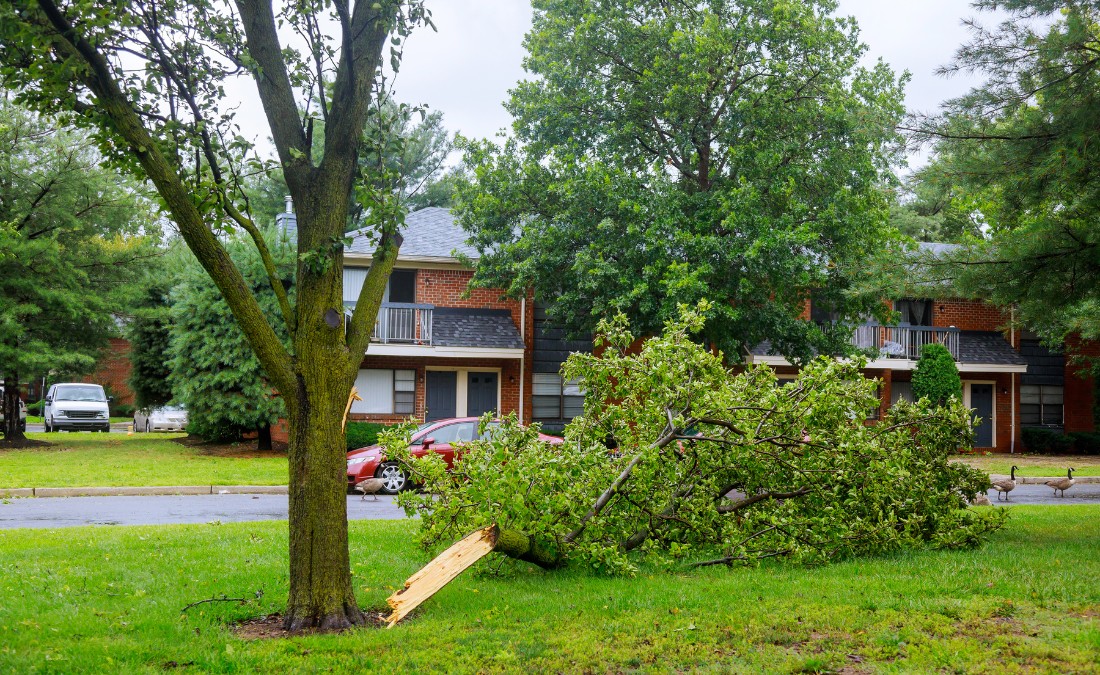
A fallen limb is a different situation than elective pruning. If the break leaves a ragged wound on the tree, contact an ISA Certified Arborist to evaluate the damage, assess the structural integrity of the remaining attachment, and determine whether any corrective work is needed.
Does oak tree decline spread to other trees in my yard?
Drought, soil compaction, and other environmental stresses don’t spread from tree to tree, although the same site conditions can affect multiple trees. Bacterial leaf scorch can spread between susceptible plants through xylem-feeding insects.
What time of year is best to prune oak trees in Oklahoma?
Late fall through winter is generally the best time to prune oak trees in Oklahoma, when the tree is dormant and insect activity is lower. The exception is damaged or hazardous branches that need attention sooner; those should be evaluated rather than left in place just to wait for the preferred pruning season.
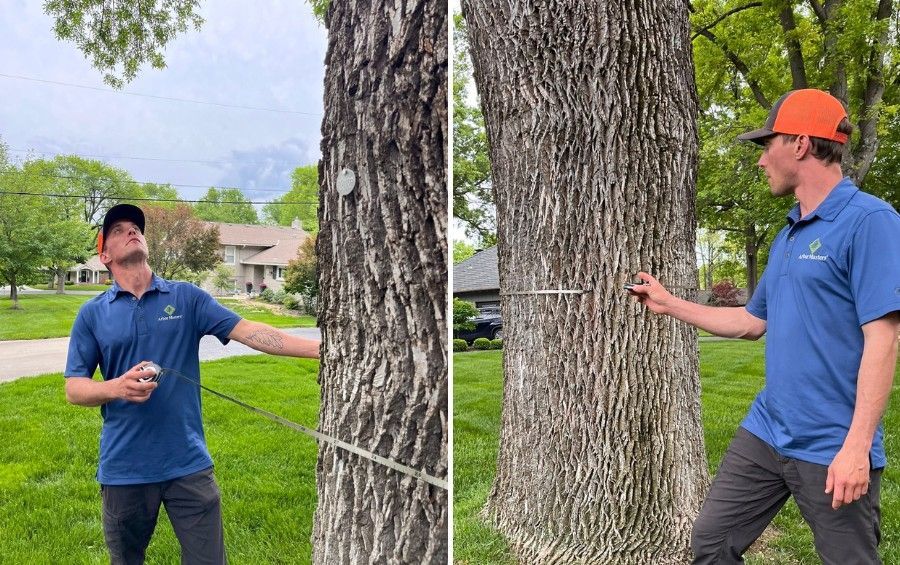
A professional assessment evaluates tree size, structure, and overall health to identify the cause of decline before recommending pruning or treatment.
Your Oak Deserves a Plan, Not a Panic Prune
Late-summer symptoms are your oak’s way of telling you something is wrong. The instinct to act on that signal is right. For most oaks, routine pruning can still wait. Reduce stress with deep watering and mulching, document the symptoms, and save nonessential cuts for the dormant season. What you do between now and the dormant window can meaningfully affect where your tree stands when the right time comes.
Our ISA Certified Arborists assess declining oaks throughout the Owasso, Tulsa, and Sand Springs area. An assessment now identifies what’s causing the decline and provides a pruning plan before the November window opens. Call us at (913) 308-3791 or request an assessment to help protect your oak’s long-term health.
Learn More With These Related Articles

Want More Like This?
Get the latest local news, tree care tips, special offers, and company updates directly to your inbox! It's easy to subscribe and there's no spam - we promise.
"*" indicates required fields