Why a Tree Health Assessment Matters Before Storm Season in Fort Worth
Storm season in Fort Worth puts extra stress on trees. Learn how an arborist assessment helps identify risks early and guide smart decisions for your property.
As Fort Worth enters another tornado season, the mature oak trees that add thousands to your property value could become expensive liabilities without proper storm preparation. When severe weather strikes with 60+ mph winds, healthy-looking trees can transform into projectiles that destroy homes, cars, and landscaping in seconds.
Tree health assessments conducted by ISA Certified Arborists identify weak trees and structural problems before storms turn them into catastrophes. The cost of an assessment and preventive care pales in comparison to emergency cleanup costs that often run into the thousands. The mature trees that define Fort Worth neighborhoods need expert evaluation to protect both your property investment and your family’s safety before storms arrive.
Key Takeaways
- Professional tree health assessments conducted by ISA Certified Arborists before Fort Worth’s tornado season identify hidden structural weaknesses, internal decay, and storm vulnerability factors that could fail when severe weather strikes.
- Fort Worth’s clay soil conditions and location in Tornado Alley create unique storm risks where healthy-looking trees can fail during 60+ mph winds.
- Emergency tree removal and storm cleanup costs thousands more than preventive assessment and care.
- ISA Certified Arborists use specialized equipment and techniques to detect problems homeowners cannot see, then provide strategic treatments, like pruning, cabling, and disease management, that preserve valuable trees.
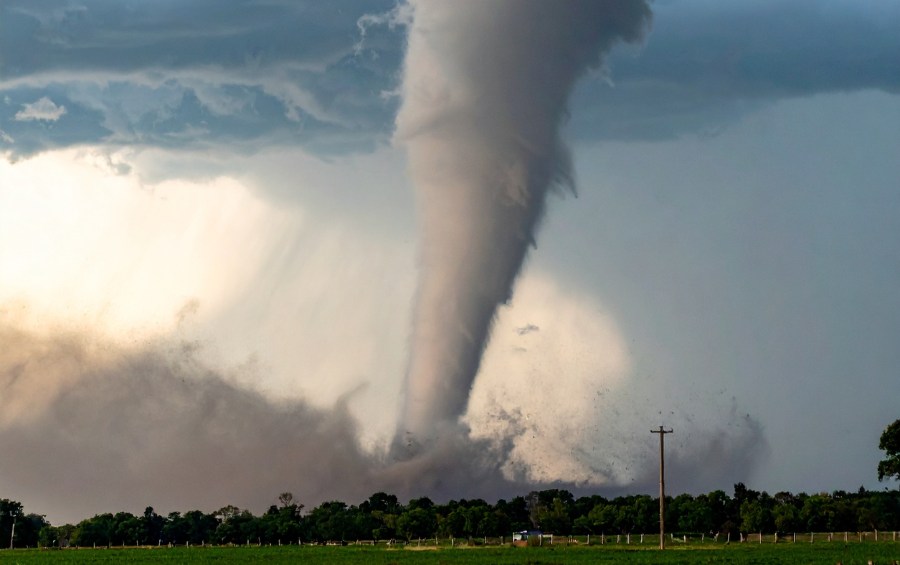
Fort Worth’s location in Tornado Alley creates severe weather conditions that can generate winds exceeding 70 mph, turning healthy-looking trees into dangerous projectiles without proper assessment and preparation.
How Does Storm Season Threaten Fort Worth Trees and Property?
Fort Worth’s severe weather reality creates unique challenges for homeowners with mature trees. Early spring represents peak tornado season, bringing high winds, severe thunderstorms, and unpredictable weather that can turn valuable landscaping assets into dangerous liabilities.
High Winds Exploit Structural Weaknesses in Trees
Strong winds put pressure on a tree’s canopy and structure. Trees with weak branch attachments, internal decay, or unbalanced growth are more likely to break or lose large limbs during storms. Even healthy-looking trees can have structural issues that only become apparent under wind stress.
Saturated Clay Soil Reduces Root Stability
Fort Worth’s clay soil holds water, and during heavy rain, it can become saturated and unstable. When that happens, roots lose their grip in the soil, increasing the risk of uprooting — especially in larger trees with dense canopies.
Repeated Storms Weaken Trees Over Time
Storm damage isn’t always immediate. Small cracks, root disturbance, and minor limb loss can weaken a tree over time, making it more vulnerable in future storms. Each event adds stress, even if the damage isn’t obvious right away.
Tree Failures Can Lead to Property Damage and Higher Costs
When trees or large limbs fail, they often impact nearby structures, driveways, or utilities. Emergency removals during storms are also more complex and costly, especially when access is limited or conditions are unsafe.
The City of Fort Worth’s forestry department oversees tree regulations that may apply even to storm-damaged trees, potentially complicating cleanup efforts. Lost property value from destroyed mature tree canopy represents a long-term cost that takes decades to restore.
How Does a Professional Tree Assessment Help Reduce Risk and Avoid Unexpected Costs?
Professional tree health assessment transforms storm preparation from reactive crisis management to proactive protection. ISA Certified Arborists use systematic evaluation methods to identify problems before they become emergencies.
Early Problem Detection Saves Trees and Money
Professional arborists identify structural problems that will fail during 60+ mph winds, catching issues before they fail during a storm, such as:
- Co-dominant stems
- Weak branch attachments
- Internal decay
- Damage from pests and diseases
Targeted Recommendations Preserve Tree Health
Professional tree health assessments lead to targeted recommendations that address specific vulnerabilities and strengthen trees against future storm damage:
- Strategic Pruning: Arborists remove weak, dead, or poorly attached branches that could become projectiles during storms, while reducing overall wind load on the tree canopy without compromising the tree’s health or attractive appearance.
- Cabling and Bracing Systems: Professional arborists install steel cables or braces to provide structural support for valuable mature trees with weak branch unions or co-dominant stems.
- Root Zone Management: Tree care specialists improve soil conditions through decompaction, mulching, and drainage improvements to strengthen root anchoring systems that keep large trees stable during high winds.
The type of care your arborist will recommend depends on the extent of the damage and the type of tree. For instance, a live oak that sustained significant winter damage will require much different work than a bald cypress with a few broken branches.
Documentation That Supports Insurance and Compliance
Pre-storm assessment provides insurance documentation necessary for coverage claims when storm damage occurs. These professional reports also satisfy municipal permit requirements if removal becomes necessary, avoiding potential complications during emergency situations.
What Do ISA Certified Arborists Look for During Tree Health Assessments?
Professional tree health assessment involves a systematic evaluation using specialized techniques that homeowners cannot replicate. ISA Certified Arborists examine trees using proven methodologies that identify problems before they become dangerous.
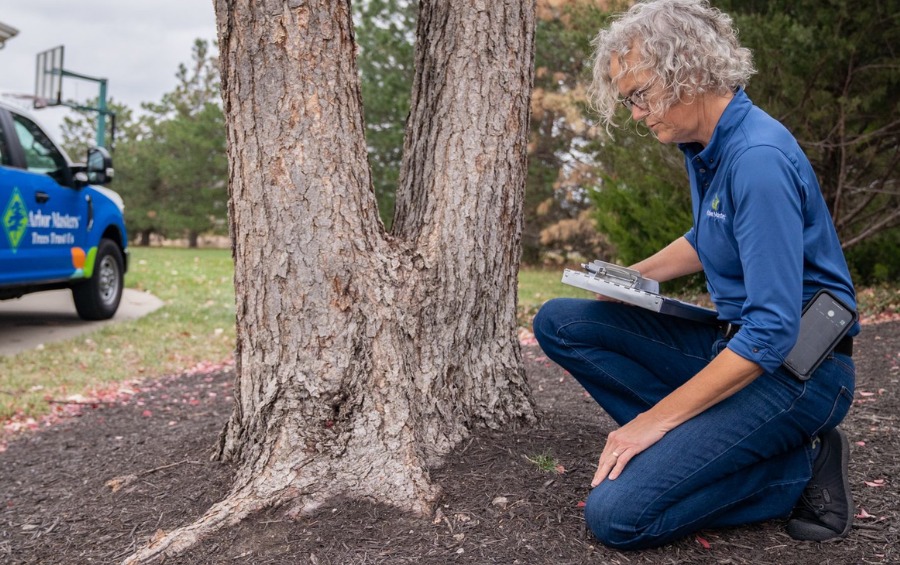
ISA Certified Arborists document structural problems such as co-dominant stems, which create weak points susceptible to storm failure.
Structural Weak Points That Fail During Storms
Co-dominant stems and weak branch attachments are primary failure points in mature trees, creating V-shaped unions that split under wind load. Internal decay in trunk and major limbs is common in older trees, but invisible without professional assessment equipment.
Additionally, root system integrity and soil stability around large specimens determine whether trees remain anchored during severe storms.
Proximity to Vulnerable Areas
A professional assessment of a tree takes into account where the tree is. A massive oak that has branches tangled up in power lines or near a home is a much bigger concern than an ornamental tree in an empty field. Arborists will change their recommendations depending on how much the tree threatens structures or walkways.
Signs of Pest Infestation and Disease That Weaken Tree Structure
ISA Certified Arborists examine trees for early indicators of pest damage and disease that compromise structural integrity before symptoms become visible to homeowners. These problems can slowly damage a tree over several years and lead to it developing weaknesses that will finally break in a storm.
By identifying these issues early, arborists can guide treatment strategies to support the tree’s health — or recommend removal when recovery is no longer realistic.
Frequently Asked Questions About Tree Health Assessments
When is the best time to get a tree inspection?
Late winter or early spring is optimal for structural assessment before storm season, but assessments are valuable year-round. Schedule after storms for damage evaluation or anytime you notice changes in tree health.
What if my large trees survived last storm season without problems?
Previous survival doesn’t guarantee future safety. Hidden damage from past weather can weaken trees that appear healthy, and their size makes failure more catastrophic.
Can assessment really prevent storm damage to my property?
While assessments can’t prevent storm damage entirely, they help identify trees and structural issues that are more likely to fail, so you can take action ahead of time.
Is storm preparation worth the cost for valuable mature trees?
Absolutely. Assessment and preventive care costs substantially less than storm damage cleanup while ensuring proper compliance with local regulations.
What is a tree assessment used for besides storm damage prevention?
In addition to storm preparation, tree assessments help identify pest and disease problems, evaluate trees during construction projects, provide documentation when needed, and support long-term care planning.
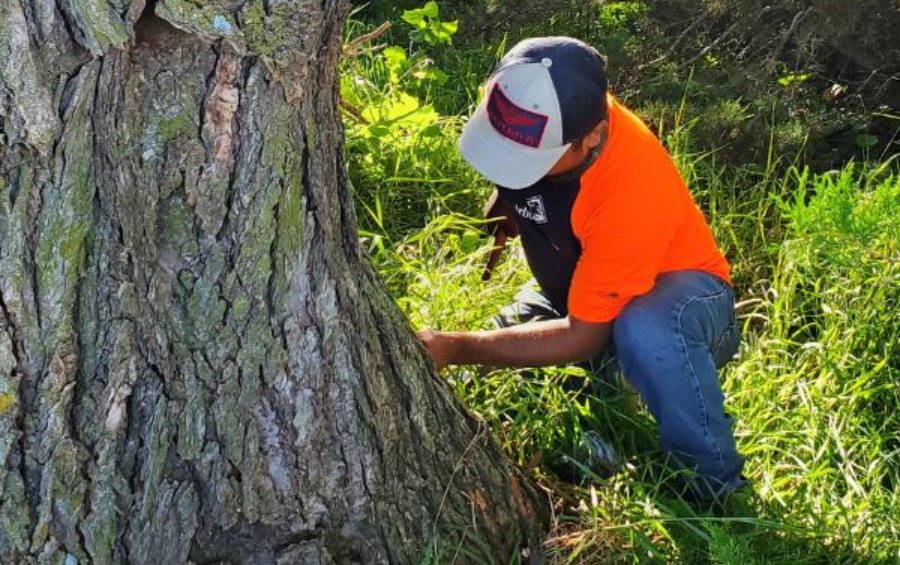
Specialized diagnostic equipment allows arborists to detect internal decay and structural weaknesses that could cause tree failure during storms.
Protect Your Fort Worth Property Before Storms Blow Through
When spring arrives, so does Fort Worth’s storm season window. The risks these storms pose make tree assessments vital. An inspection of your trees can save you a substantial amount of money and headaches from failing trees in a storm.
If you’re ready to get an inspection of your trees before or after a storm, the team at Arbor Masters of Fort Worth is ready to help. Our arborists have extensive experience in catching early warning signs of dangerous trees. Call us today at 469-586-5829 or request a quote online for a tree inspection.
Learn More With These Related Articles

Want More Like This?
Get the latest local news, tree care tips, special offers, and company updates directly to your inbox! It's easy to subscribe and there's no spam - we promise.
"*" indicates required fields