
Why Some Bixby and South Tulsa Trees Survive Storms and Others Don’t — The Role of Structural Pruning
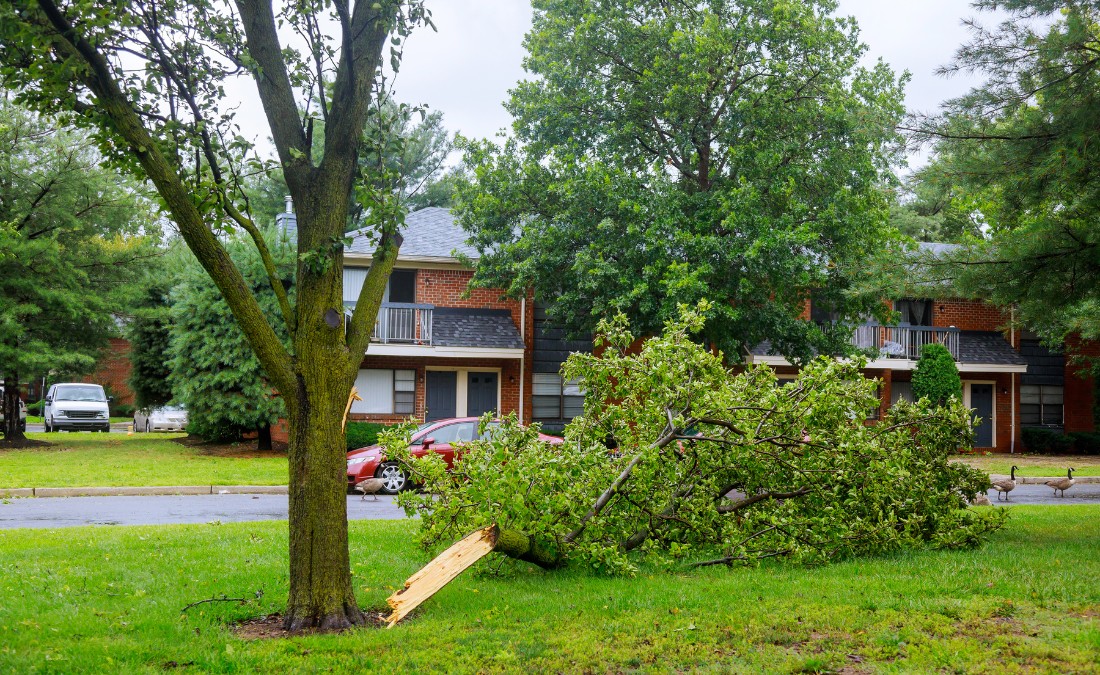
Some Bixby and South Tulsa trees survive May storms. Others don't. The difference is usually structural pruning — here's what it is and why it matters.
When the EF2 tornado tore through north Tulsa on March 6, 2026, it stripped the roof off Tulsa Tech’s Peoria campus and left a trail of downed trees from Collinsville to Owasso.
But even in powerful storms like that, some trees fail catastrophically while others hold together far better than expected. Often, the difference comes down to structure: weak branch unions, codominant stems, unbalanced canopy weight, and other defects that make a tree more vulnerable under wind stress. Structural pruning is designed to address those problems before a storm exposes them.
Key Takeaways
- Most storm limb failures come from predictable structural defects — codominant leaders, included bark, and overextended branches — not freak wind events.
- Structural pruning is a preventive pruning technique designed to reduce the risk of failure by correcting weak structure before storms put the tree under stress.
- Young trees respond to structural training, but mature trees need targeted pruning to reduce stress on weak branch unions and heavy limbs.
- Late winter is typically best for structural pruning in Oklahoma, especially for oaks, but structural problems can be evaluated year-round.
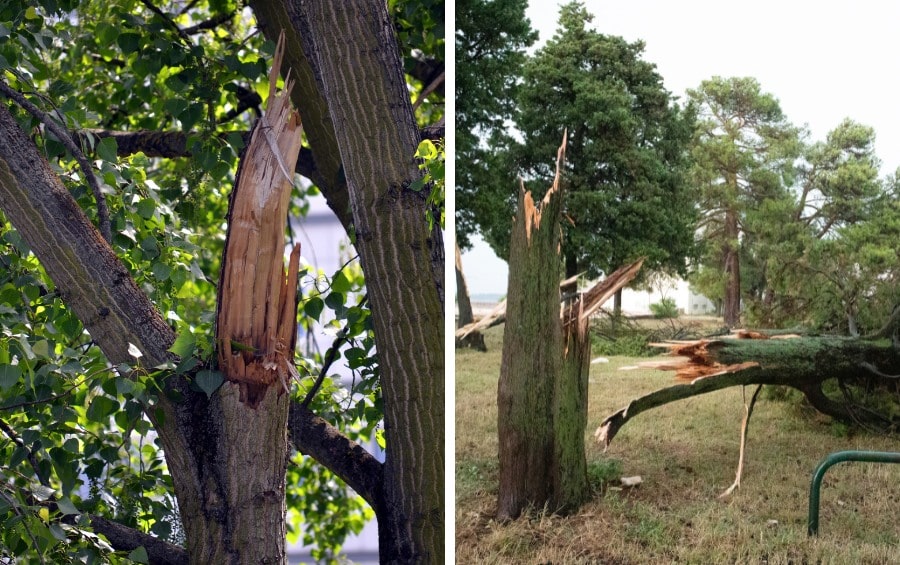
Included bark and weak branch unions increase the risk of splitting and storm breakage in mature shade trees.
Why Do Some Trees Lose Limbs in Storms While Others Don’t?
When a tree fails during a Tulsa storm, the problem usually started years earlier. After severe wind events, it’s common to see similar trees on the same street with completely different outcomes: one may lose a major limb or split apart, while the other comes through with minor damage. In many cases, the difference comes down to structural defects hidden in the tree’s architecture long before the storm arrived.
Some of the most common structural problems arborists look for include weak trunk unions, oversized lateral limbs, and dense canopies that place excessive stress on the tree during high winds.
Codominant Leaders and Included Bark Create Weak Trunk Unions
A codominant leader forms when a tree develops two or more main stems of similar size instead of one dominant trunk. The narrow V-shaped union between those stems often traps included bark, preventing the wood from forming a strong attachment.
Over time, that union becomes a major failure point. Under storm pressure, codominant stems can split apart suddenly, sometimes taking down half the tree.
Oversized Branches Put Excessive Stress on Attachment Points
Branches that grow too large relative to the trunk create significant leverage during wind events. As the limb lengthens and gains weight, the attachment point experiences increasing stress, especially during heavy rain, saturated soil conditions, or strong wind gusts.
Dense, Unthinned Canopies Catch Wind Like a Sail
A dense, overcrowded canopy catches and holds more wind during storms. Instead of allowing air to move through the tree naturally, the canopy transfers that force into branches, trunk unions, and the root system.
This is especially important in mature shade trees with heavy upper canopies, where most storm stress develops high above the ground rather than on lower limbs.
What Is Structural Pruning?
Structural pruning is a targeted, long-term approach that shapes a tree’s architecture to eliminate the weak points that cause storm failures. The goal is to establish one dominant leader, suppress competing leaders with small reduction cuts, and keep every branch below about half the trunk’s diameter.
The work is done with intent. Each cut is chosen to redirect growth or remove a specific defect, and the smaller and earlier those cuts are, the better the tree responds. That’s why structural pruning is usually planned across multiple visits over several years rather than handled in a single appointment — you’re working with a living system that has its own pace.
PRO TIP: Structural pruning helps reduce the risk of future storm failure, but it can’t undo damage that has already occurred. If a storm has already taken a major limb off your tree, the next step is often restoration pruning — a multi-year process focused on rebuilding structure, managing regrowth, and helping the tree recover safely over time.
Can Mature Trees Still Benefit from Structural Pruning?
Yes, mature trees still benefit from structural pruning — but the goals are very different than they are on young trees.
On younger trees, structural pruning is focused on guiding future growth before major defects become permanent. Arborists work to establish one dominant trunk, reduce competing leaders, and space major scaffold limbs properly while the cuts are still small and easy for the tree to recover from.
That early training matters because many serious storm defects start when a tree is young. Correcting a codominant stem or oversized branch early can prevent major structural problems decades later.
On mature trees, the approach shifts from training to risk reduction. By that stage, weak branch unions, overextended limbs, and canopy imbalances are usually already established, so the goal becomes reducing stress on those existing weak points rather than fully correcting them.
Structural pruning on mature trees may include:
- Reduction pruning on long, heavy limbs
- Weight reduction on codominant stems
- Selective thinning in dense upper canopies
- Cabling and bracing for additional support on high-value trees
Mature trees often require a gradual, multi-year approach because removing too much live canopy at once can create additional stress. The earlier structural problems are identified, the more options arborists usually have to help reduce future storm risk.
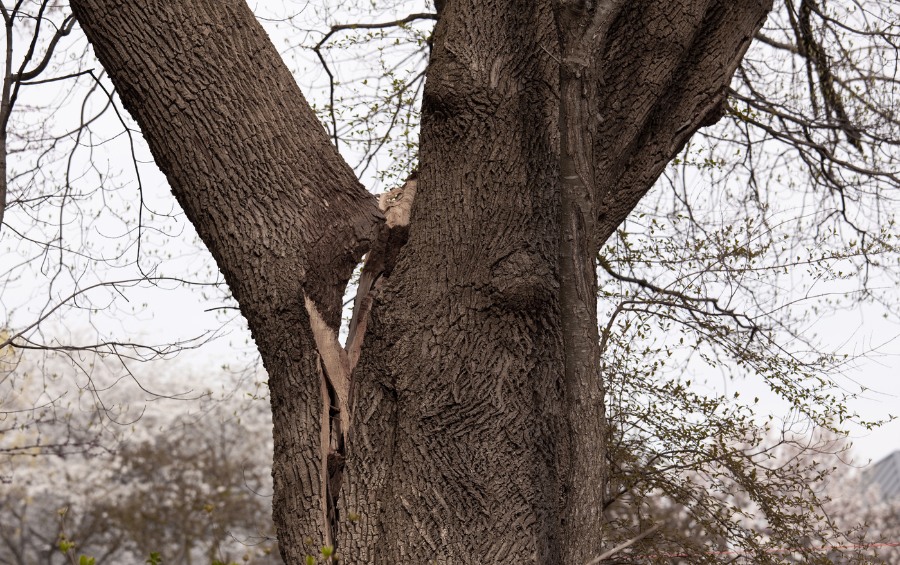
Structural pruning helps reduce stress on weak branch unions before cracks and splits develop in mature trees.
What Are the Signs Your Tree Has Structural Defects Worth Addressing?
You don’t need a trained eye to spot the most common structural problems, as most are visible from the ground on a slow walk around the tree. Here’s what to look for:
- Codominant Trunks Splitting from a Low Point: Two or more trunks of similar size meeting in a tight V rather than a wide, open U.
- Dark Seam Running Down the V: A crease or seam where two stems meet signals included bark, the single biggest red flag on a mature tree.
- Overly Long or Heavy Branches: A limb that’s noticeably longer or heavier than the others nearby, especially if it’s starting to droop, crack, or show stress at the attachment point.
- Oversized Branches Relative to the Trunk: Any branch that’s pushing past about half the trunk’s diameter is a structural concern.
- Dense, Tangled Canopy: Foliage so thick that light barely passes through, common on silver maples, Bradford pears, and neglected ornamentals.
- Concentrated Dead Wood on One Side: Dead branches clustered in one part of the canopy rather than scattered, often pointing to an underlying problem on that side of the tree.
- Past Failure Scars: Old jagged breaks, missing limbs with no clean cut, or tears running down the trunk from earlier failures.
Spotting one of these issues doesn’t automatically mean the tree is unsafe or needs removal. It means the tree has a structural weakness worth evaluating before severe weather puts it under stress. A professional tree assessment from an ISA Certified Arborist can determine whether the defect is manageable through structural pruning, support systems, monitoring, or other risk-reduction measures.
Frequently Asked Questions About Structural Pruning
When is the best time to structurally prune trees in Oklahoma?
Late winter, roughly January through early March in the Tulsa area, is the best window for structural pruning, when trees are still dormant. Dormant work puts less stress on the tree and gives the arborist a clearer view of the branch architecture. However, there is never a bad time to remove dead or dangerous branches to remove an immediate threat to your home and family.
How long does a structural pruning visit actually take?
It depends on the size and complexity of the tree. A young tree with a trunk under 20 inches is usually a quick visit, often less than an hour of actual pruning. Mature trees take longer, anywhere from a couple of hours to most of a day, depending on the tree’s size, the access around it, and how much rigging the crew needs to set up.
How often does a mature tree need structural pruning?
Mature trees generally benefit from a structural assessment every 3 to 5 years, with the actual pruning work dictated by what the assessment finds. Young trees in active training need more frequent visits (every 2 to 3 years) during their first two decades.
Is topping a tree the same as structural pruning?
No, and topping is one of the worst things you can do to a tree. It promotes weakly attached regrowth that is more likely to fail in future storms, not less. Every major arboricultural organization advises against it.
Does structural pruning help prevent storm damage?
Structural pruning can’t make a tree completely storm-proof, but it can help reduce the risk of branch failure during high winds and severe weather.
By reducing stress on weak branch unions, managing overextended limbs, and improving canopy structure, structural pruning helps trees handle wind loads more effectively. This is especially important in Tulsa, where strong thunderstorms, straight-line winds, and tornadoes regularly expose hidden structural defects.
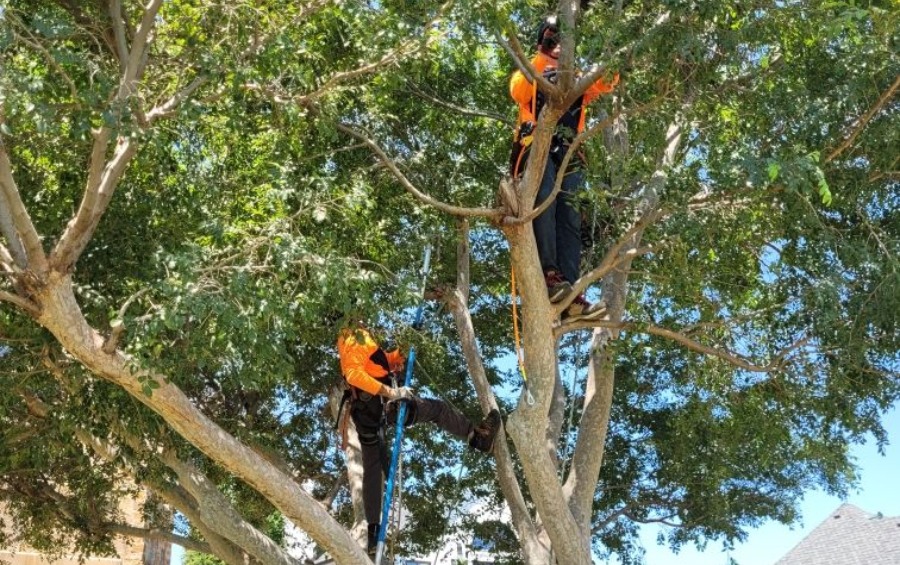
Arbor Masters crews use structural pruning techniques to improve branch spacing, reduce storm risk, and support long-term tree stability.
Schedule a Structural Pruning Assessment with Arbor Masters Today
Storm season doesn’t wait for a convenient time. The structural defects in your trees today are tomorrow’s failures on your driveway, unless someone looks for them first. Pruning before storm season arrives can protect your trees from damage and save you from the headache of cleaning up the mess. But pruning is only effective when it’s done right by trained professionals.
That’s where the team at Arbor Masters comes in. We can inspect your trees, determine what kind of pruning they need, and help make them sturdier during the next Tulsa storm. Call us at 918-258-3444 or request a quote online for structural pruning today.
Learn More With These Related Articles
Want More Like This?
Get the latest local news, tree care tips, special offers, and company updates directly to your inbox! It's easy to subscribe and there's no spam - we promise.
"*" indicates required fields
