Is My Old Tree Safe Before Winter Storms Hit in Wichita?
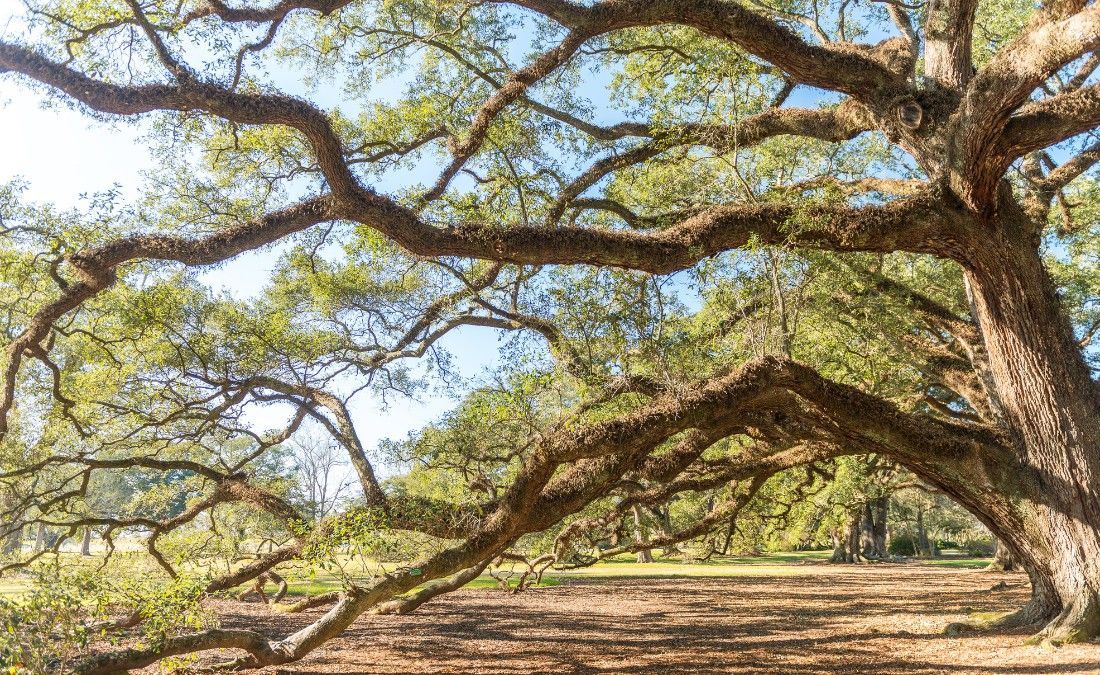
Learn which changes in a mature tree may signal structural concerns, what an arborist looks for, and when a professional assessment makes sense.
Severe weather hasn’t exactly been a rare headline in Wichita this year. Multiple rounds of storms have brought threats of damaging winds, large hail, and tornadoes across south-central Kansas. For homeowners in established neighborhoods like Vickridge, College Hill, and Eastborough, every round of severe weather puts decades-old trees through another test.
A mature tree can make it through those storms without dropping a major limb and still have structural concerns that aren’t obvious from the ground. Cracks, decay, weak branch attachments, root problems, and changes in a tree’s lean can all matter when the next round of wind or ice arrives. Fall is an opportunity to find those concerns before winter weather puts the tree under another round of stress – and determine whether anything actually needs to be done.
Key Takeaways
- Age alone doesn’t make a tree unsafe, but it does raise the odds that decay, cracks, or weak unions have had time to develop.
- A tree that has always leaned isn’t automatically a hazard, but a lean that appears suddenly or keeps getting worse is a warning sign regardless of the angle.
- A hollow or decaying trunk doesn’t automatically mean removal, since what matters is how much sound wood remains and where the decay is located.
- Pruning, cabling and bracing, monitoring, and removal are different risk-management options, and the appropriate response depends on the specific defect, the tree’s overall condition, and what could be affected if part of the tree fails.
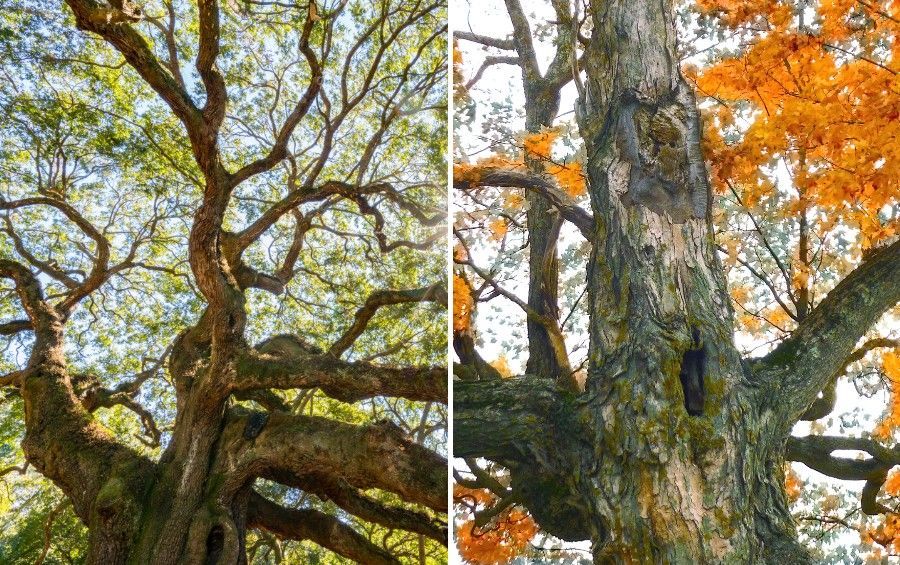
Decades of growth can leave a mature tree with old wounds, heavy limbs, or structural defects that aren’t always obvious from the ground.
Is an Old Tree More Likely to Fail?
Age alone doesn’t determine whether a tree is likely to fail. What matters more is what has happened to the tree over those years and how its structure has changed along the way.
A mature tree may be carrying old pruning wounds, previous storm damage, decay, cracks, root disturbance, or branch unions that have changed as the tree has grown. Its limbs are also larger and heavier than they were decades ago, which can increase the load on an already-weakened attachment.
Some of those concerns are obvious. Others aren’t. A full canopy and healthy green leaves can tell you a tree is still growing, but they don’t necessarily tell you whether the trunk, roots, or major branch attachments are structurally sound.
That’s where an assessment becomes useful. An arborist can look at how the tree is built, what has changed over time, and whether any existing defects actually warrant monitoring or action. Our Butler County tree assessment guide explains what that evaluation involves, while our Wichita tree care page covers the services available locally.
What Makes a Large Branch More Likely to Break in a Storm?
Several structural conditions can make a large branch more likely to fail during a storm, including weak attachments, cracks, decay, previous damage, and overextended or heavily loaded limbs.
Weak Unions and Included Bark
A codominant union, where two stems of similar size compete for the same growing point, isn’t automatically a weak point on its own. Codominant stems deserve closer attention when the union is narrow, poorly formed, or contains included bark.
Included bark happens when two stems grow so close together that bark gets trapped between them instead of the wood fusing solidly. The trapped bark prevents a strong connection, creating a seam that’s more likely to split under wind load.
Overextended, Heavy Limbs
A long limb with most of its foliage concentrated near the tip carries more leverage in the wind than a shorter, evenly loaded limb, increasing the load on its attachment. That makes it a separate risk factor from codominant stems.
If you already have a large dead limb hanging over a structure, driveway, or play area, that’s worth a prompt call rather than waiting for your next routine assessment. Our tree safety questions page covers other warning signs that can help you decide when a tree needs a closer look.
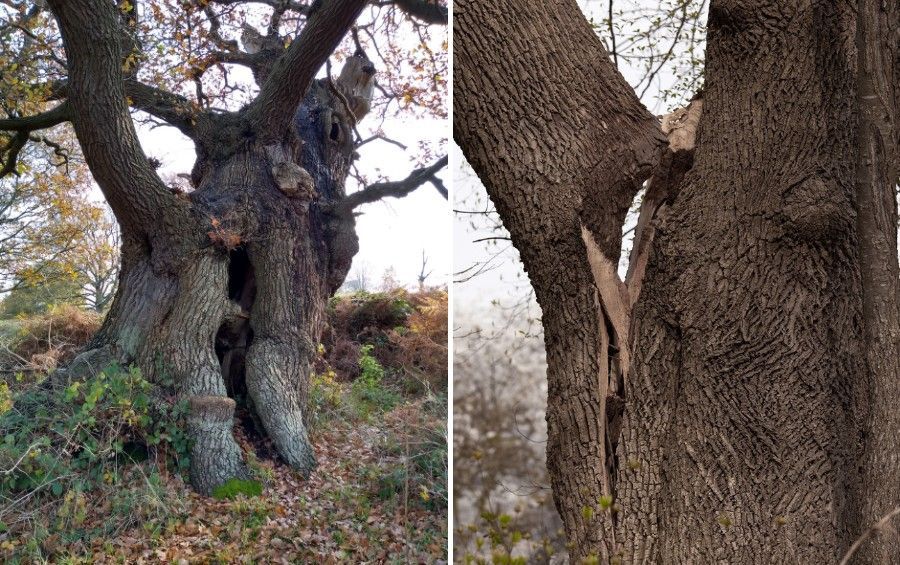
A lean alone doesn’t tell the whole story. Cavities, major cracks, weak unions, and other structural defects can make a closer assessment especially important.
When Should You Worry About a Leaning Tree?
Some mature trees have leaned for decades, and the lean itself doesn’t necessarily mean the tree is unstable. What matters more is whether something has changed. A tree that has recently shifted or begun leaning farther deserves a closer look, particularly after severe weather.
Pay attention to changes around the trunk and root zone as well. Warning signs that can make a lean more concerning include:
- New cracks or buckling bark on the trunk
- Soil cracking, lifting, or heaving around the base
- Exposed or damaged roots
- Decay or cavities near ground level
- A lean that appears to have increased after a storm
A changing lean combined with movement in the soil around the base can indicate a loss of root support and warrants prompt professional evaluation. The arborist can evaluate the roots, trunk, direction of the lean, surrounding targets, and other structural conditions together rather than judging the tree by its angle alone.
Can a Hollow or Decaying Tree Still Be Saved?
In many cases, yes. A tree can have a decayed or hollow center and still retain substantial strength in the outer shell of sound wood. What matters is how much sound wood remains, where the decay is located, and whether other defects such as cracks, weak unions, or root problems are also present.
When visual inspection can’t show the full extent of internal decay, an arborist may recommend additional testing with a tool such as a resistograph. A hollow trunk doesn’t automatically mean removal, but if the extent of decay is unclear or other structural concerns are present, it’s worth scheduling a closer assessment.
What Are My Options If My Mature Tree Has Safety Concerns?
Once an assessment identifies a concern, the recommendation depends on the specific defect, the condition of the tree, and what could be affected if it fails. Monitoring, pruning, cabling or bracing, and removal are different risk-management options, and in some cases, more than one may be recommended.
Pruning Can Reduce Deadwood and Excess Load
On a mature tree where codominant stems or included bark are already established, pruning may be one part of the management approach, but whether it is appropriate or sufficient depends on the structure of the union, the tree’s condition, and the surrounding targets.
Cabling and Bracing Can Support Some Weak Structures
Codominant stems with weak attachments or included bark are among the conditions that may lead an arborist to evaluate whether a support system is appropriate. Not every tree qualifies, and that’s a professional determination, not a guess based on how the tree looks. When Arbor Masters installs a support system, the work follows ANSI A300 standards.
When Removal May Be Recommended
Removal may be recommended when an arborist determines that the level of risk can’t reasonably be reduced through pruning, structural support, monitoring, or other measures. Examples of situations that may lead to removal include:
- Significant decay, particularly when it compromises critical structural areas
- A severe crack or failed branch union that substantially affects the tree’s stability
- Extensive root damage or root failure that compromises the tree’s support
- Structural defects that create an unacceptable risk to a house, driveway, sidewalk, or other frequently occupied area
Frequently Asked Questions About Mature Tree Health
How often should a mature tree be professionally inspected?
Inspection frequency depends on the tree and its surroundings rather than a set schedule. A mature tree with known defects, an installed support system, or a house, driveway, play area, or other important target nearby may warrant more frequent monitoring. A lower-risk tree without known structural concerns may need less frequent assessment. Significant storms or noticeable changes in the tree are also good reasons to have it evaluated sooner.
If my tree looks healthy, is an assessment really worth the time?
Yes, especially for a large mature tree near a house, driveway, sidewalk, or other frequently used area. Healthy leaves and a full canopy tell you something about a tree’s current health, but they don’t tell you whether its structure is sound. Internal decay, cracks, weak branch attachments, root problems, and old storm damage may be present even when the canopy looks healthy.
An assessment gives an arborist a chance to evaluate those structural conditions and determine whether they need attention. In many cases, the recommendation may be to continue monitoring the tree rather than perform any immediate work.
Does a tree losing its leaves in fall make it harder to assess?
Not really. Leaf drop can make branch architecture and some structural features easier to see because foliage no longer obscures the crown, which is part of why a late-season assessment works well.
Does a professional assessment guarantee a tree won’t fail?
No assessment can promise a tree will never fail, but it narrows the guesswork considerably by identifying the specific defects most likely to cause a problem. Extreme enough weather can still bring down a healthy tree, which is why ongoing monitoring matters, too.
Are certain tree species in Wichita more prone to structural problems as they age?
Yes, oaks, maples, and elms can all develop structural defects as they mature, but species alone doesn’t determine whether an individual tree is hazardous. Its structure, condition, growing environment, previous damage, and surrounding targets all matter when evaluating risk.
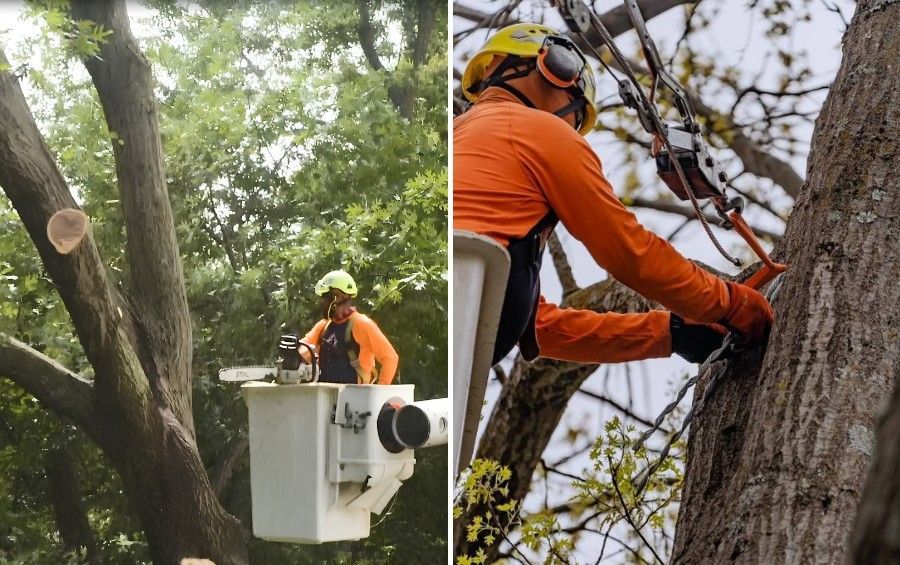
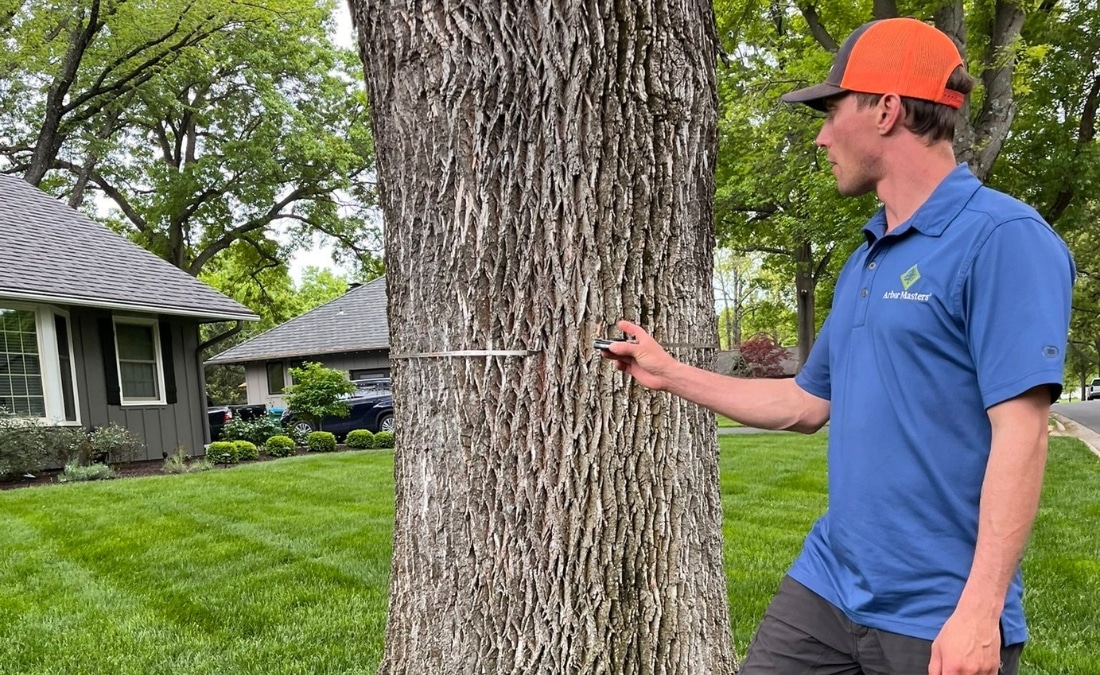
A professional tree assessment looks beyond the canopy to evaluate branch attachments, trunk structure, decay, and other conditions that may affect stability.
Make Sure Your Mature Tree Is Ready for Winter Weather
In many cases, a mature tree doesn’t need to come down. A professional assessment can determine whether there’s reason for concern and whether monitoring, pruning, structural support, or removal is the appropriate next step.
If you’re in Vickridge, College Hill, Eastborough, or elsewhere in the Wichita area, schedule a consultation with an ISA Certified Arborist or call us at 316-234-0056. If a tree on your property is already showing urgent signs, our emergency tree services team can help right away.
Learn More With These Related Articles
Want More Like This?
Get the latest local news, tree care tips, special offers, and company updates directly to your inbox! It's easy to subscribe and there's no spam - we promise.
"*" indicates required fields