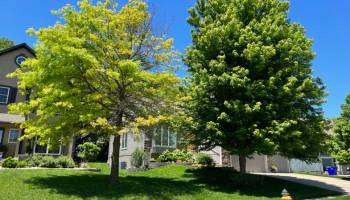
Why Are There Webs in My Tree in East Polk County?
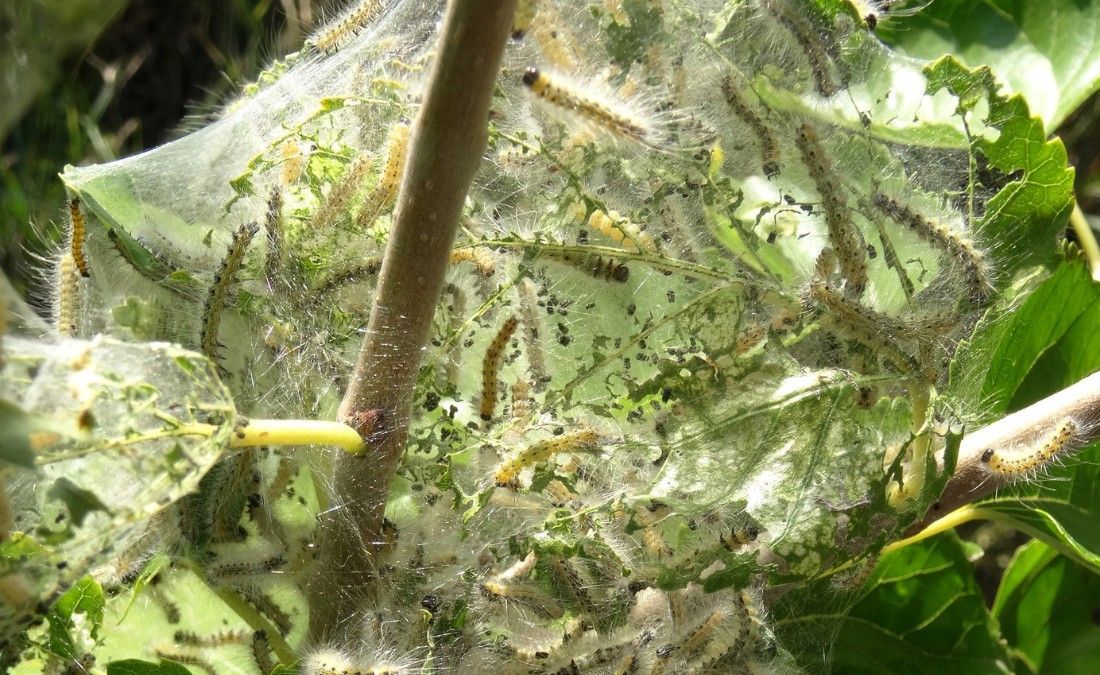
Silk nests on your branch tips around Pleasant Hill? It's likely fall webworm. Learn what it is, whether it harms your tree, and when to call an arborist.
In late summer across the east Des Moines metro, from Pleasant Hill and Altoona out through east Polk County, loose gray webs at the tips of tree branches begin to show up, most commonly on a backyard black walnut. It makes people ask the same question: Why are there webs in my tree? It’s almost always fall webworm.
For most established, healthy trees, fall webworm is a mere cosmetic issue that runs its course without any help. The trees that need a closer look are young ones, newly planted ones, and any already stressed by drought or disease, where losing leaves this late in the season comes with a hefty cost.
Key Takeaways
- Webs covering the ends of tree branches in late summer are usually caused by fall webworms, not spiders or a dying tree.
- The location and time of year can help you tell fall webworms apart from tent caterpillars and other web-building pests.
- In central Iowa, fall webworms most commonly infest black walnut trees and are most active from mid-August through fall.
- Fall webworm damage is usually cosmetic on healthy, established trees but can stress young, newly planted, or already weakened trees.
- Never burn fall webworm webs out of a tree, as the heat can cause far more damage than the caterpillars themselves.
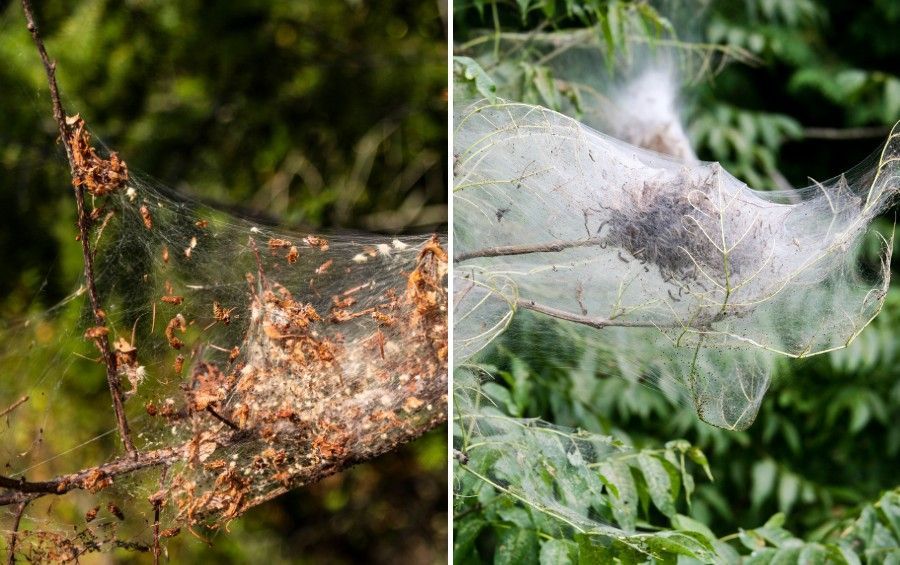
Up close, a fall webworm nest holds pale, hairy caterpillars along with chewed leaf fragments and frass—the mess packed inside the silk.
What Are the Webs in My Tree?
Those webs come from fall webworm (Hyphantria cunea), a native caterpillar that feeds late into the growing season. It’s not a spider nor a disease that will kill a mature tree.
Here’s what you’re looking at:
- The Web : A loose, messy, grayish silk tent wrapping the outer tips of a branch and the leaves inside it
- The Mess Inside : Chewed leaf fragments and dark specks of frass (caterpillar droppings) packed into the webbing
- The Caterpillar : About an inch long, pale tan to yellow, covered in fine hairs, with a row of orange-brown dots down its back
- The Adult : A mostly-white moth you’ll rarely notice
It’s a common pattern in our region, so a guide to identifying webworms across the Midwest will match what’s on your tree.
Which Central Iowa Trees Do Fall Webworms Attack?
In Iowa, the caterpillar’s favorite is black walnut, especially trees growing out in the open or along the edge of a woodlot. The classic picture in the east metro is a lone walnut in a backyard or fencerow with webs at the branch tips.
Beyond walnut, fall webworm feeds on a wide range of central Iowa hardwoods, including:
- Hickory
- Birch
- Cherry
- Willow
- Crabapple
- Maple
- Elm
What’s the Difference Between Fall Webworms and Tent Caterpillars?
Because both pests build webs, they’re often confused with one another. Fortunately, you can usually identify which one you’re seeing by looking at where the web is located and when it appeared.
- Web Location : Fall webworm wraps the ends and tips of branches, while Eastern tent caterpillar builds in the forks and crotches where branches split.
- Timing : Fall webworm appears in late summer, roughly July through September, while tent caterpillars show up in spring.
- Texture : Fall webworm’s tent is loose, gray, and littered with leaf bits, while a tent caterpillar’s spring nest is tighter and denser.
Do Fall Webworms Hurt Your Tree?
For most established trees, the honest answer is no, and the damage looks a lot worse than it actually is.
When Webworm Damage Is Only Cosmetic
If your tree is established and healthy, fall webworm feeding is nothing more than cosmetic. They arrive late in the season, after the leaves have already spent the summer making and storing food. Losing some foliage in August or September costs the tree little, so these trees aren’t killed and treatment usually isn’t needed.
When to Worry About Webworms
There are a few trees that don’t have such an easy time. The webs deserve a closer look in cases involving:
- Young or newly planted trees, which can be heavily defoliated and set back because they have less stored energy to fall back on
- Trees hit hard year after year, which carry a cumulative stress load that builds over time
- Trees already weakened by drought, wounds, or disease, which have little reserve left to absorb another hit
Even on these trees, timing is important if treatment is an option. After mid-September, spraying does little good, since the feeding is almost finished and a late application mostly harms birds, predators, and parasites that keep webworm numbers in check.
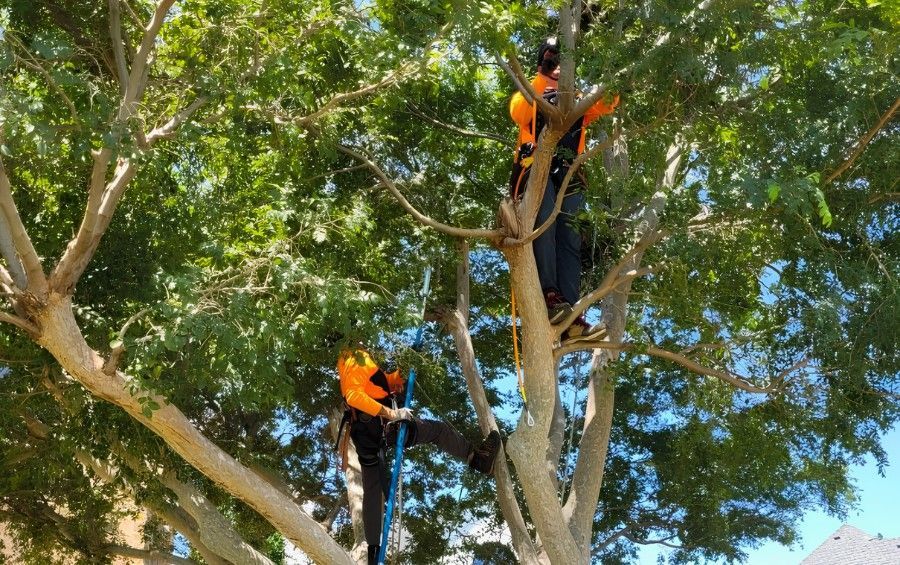
Low, reachable webworm nests can be pruned out—work an Arbor Masters Des Moines crew can handle without disfiguring the tree.
What Should You Do About Webworm Nests?
For most trees, the simplest response is the best one: leave the nests alone and let the season run its course. Overall, you have three options:
- Leave It : On an established, healthy tree, doing nothing is the right call. The caterpillars finish feeding, the tree drops its leaves on schedule, and the empty web weathers away over winter.
- Prune It : Low, reachable nests can be clipped out, or the web opened up with a pole so birds and other predators can get at the caterpillars. High-canopy nests usually aren’t worth the risk of disfiguring the tree to reach them.
- Call an Arborist : Heavy or repeated infestations—or any webs on a young or stressed tree—are worth a professional look.
You should never burn the webs out, as torching a nest scorches living bark and branch tissue much worse than the caterpillars ever would.
Frequently Asked Questions About Fall Webworms in East Polk County
Are webworms dangerous to people or pets?
No. Fall webworms don’t bite or sting, and their hairs aren’t venomous, so they pose no risk to people, pets, or the lawn. The only real nuisance is the webbing and the chewed leaves left behind on the tree.
What’s the difference between fall webworms and bagworms?
They’re separate pests that often get mixed up. Fall webworms spin loose, communal silk webs over the tips of branches, while bagworms each live inside a small spindle-shaped bag of silk and foliage, usually on evergreens like juniper and arborvitae. Webbing at the branch tips points to webworm, not bagworm.
Why are spiky caterpillars crawling on my deck and siding?
That’s the tail end of the fall webworm cycle. Once the caterpillars finish feeding, they leave the tree in search of sheltered spots—bark crevices, leaf litter, even decks and house siding—to pupate for the winter. They’re harmless and won’t damage the structure; they’re simply passing through.
Do fall webworms come back to the same tree every year?
Sometimes. Because they overwinter as pupae in bark, leaf litter, and soil near the host, a tree that had them one year can see them again the next — though how heavy the webbing gets swings widely from season to season. A tree hit hard several years running is the one worth having a professional assess.
When do fall webworms go away?
Feeding winds down by the end of summer, after which the caterpillars leave to pupate and overwinter. The abandoned webs aren’t reoccupied; they simply break down and weather away through fall and winter.
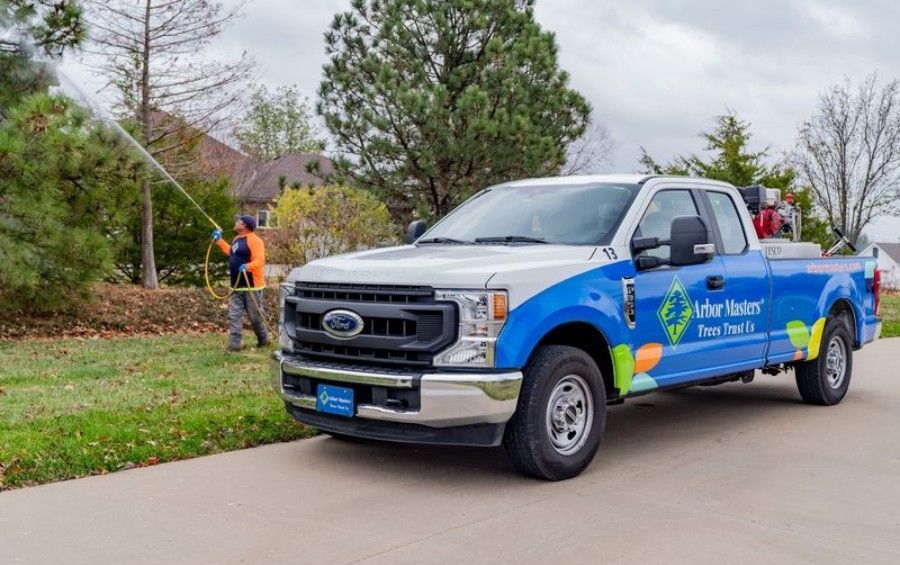
For heavy or repeated infestations, an Arbor Masters Des Moines plant health care technician can assess the tree and time any treatment correctly.
Get Ahead of Next Season’s Webs with Arbor Masters Des Moines
If the webs on your tree are heavy, coming back every year, or show up on a tree you’re worried about, it’s worth it to have a professional come take a look. Arbor Masters’ Des Moines ISA Certified Arborists can assess the tree and recommend a plant health care plan that fits the situation. Call us at 515-500-6531 or request a free quote to get started.

Want More Like This?
Get the latest local news, tree care tips, special offers, and company updates directly to your inbox! It's easy to subscribe and there's no spam - we promise.
"*" indicates required fields