
Do Mature Trees Need Structural Pruning in Oklahoma City?
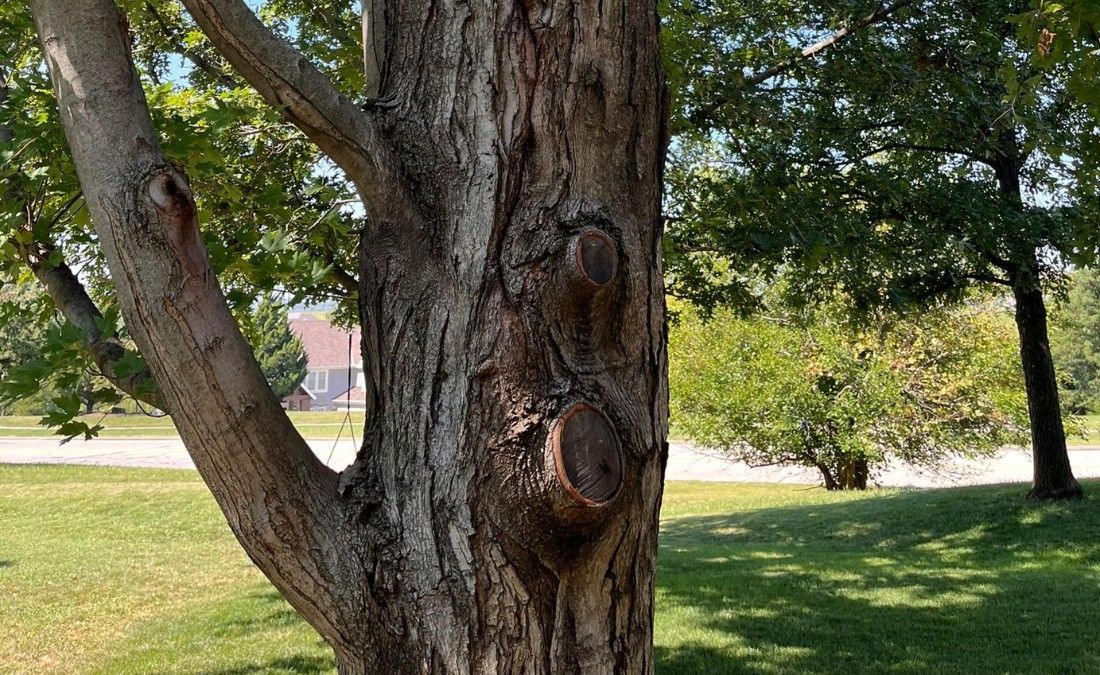
Structural pruning isn’t just for young trees. Learn how strategic pruning of mature trees can reduce failure risks while preserving the established canopy.
Heritage Hills, Mesta Park, and Crown Heights are home to mature oaks and elms that have been growing for 80 to 100 years. Over time, these trees can develop heavy or uneven limbs, competing trunks, crossing branches, and other structural weaknesses that may increase the risk of branch or trunk failure.
Structural pruning uses selective cuts to improve how a tree carries weight and responds to stress. While some structural problems in mature trees can be corrected through pruning, larger defects may be too established to remove safely. Understanding those limitations helps Oklahoma City homeowners know what structural pruning can realistically accomplish for an older tree.
Key Takeaways
- Structural pruning on a mature tree generally manages and stabilizes a framework that’s already set, rather than rebuilding it the way pruning does on a young tree.
- Crossing or rubbing branches are often among the more manageable structural problems on a mature tree; codominant stems and major weak branch unions typically can’t be removed outright once a tree is mature.
- Cabling can help manage a defect that’s too large to prune away safely, but it’s not a permanent fix and requires ongoing professional inspection.
- Dormant season, from late fall through winter, is generally the best window for structural pruning, and oak-heavy neighborhoods like Heritage Hills benefit from this timing since insect activity is lower.
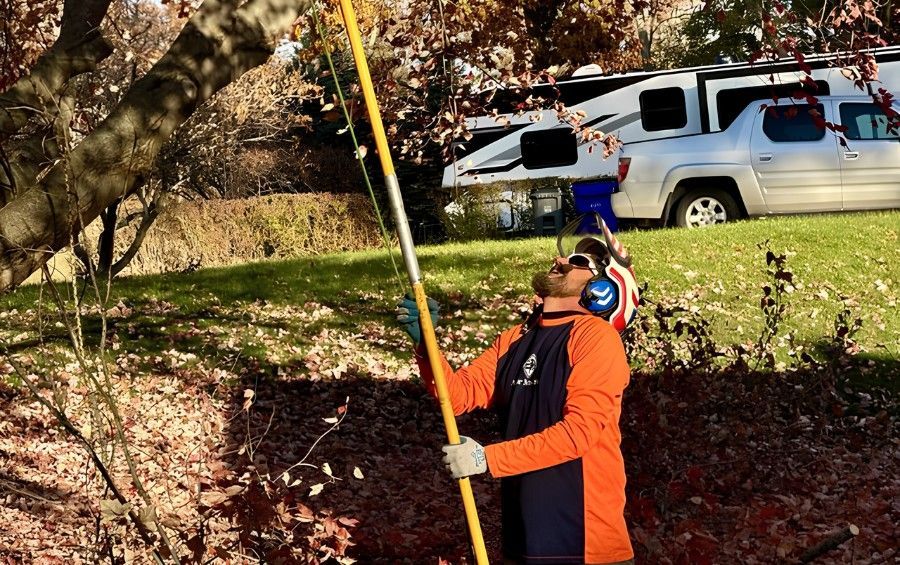
Structural pruning can reduce or shorten selected branches on a mature tree to manage its existing framework without unnecessarily removing large limbs.
Should You Structurally Prune a Mature Tree?
Yes, but the goal changes once a tree is mature. On a young tree, structural pruning builds a framework by correcting weak angles and removing a competing leader while branches are still small enough to manage with hand pruners. On an 80- to 100-year-old oak or elm, that framework is already established, so pruning focuses on improving and supporting the existing structure rather than reshaping it.
Some defects, like a crossing branch, may still be addressed relatively directly. Others, like a large codominant stem, typically can’t be removed the same way once a tree is mature, since doing so can compromise the trunk left behind. Management shifts toward reduction cuts or, in some cases, cabling instead.
Structural problems are generally easier to address while a tree is young and its branches are still small, before they’ve grown large enough to complicate removal. If your trees are newly planted rather than decades old, our guide to structural pruning for young trees covers what pruning looks like at that earlier stage.
What Are the Signs Your Mature Tree Needs Structural Pruning?
Several observable patterns signal weak structure on an older oak or elm, even before an arborist comes out to assess it:
- Two or more branches of similar size are competing as leaders near the top of the tree.
- A narrow, V-shaped crotch shows bark pinched into the union instead of forming a smooth ridge.
- Branches cross and rub against each other.
- The canopy is noticeably heavier or fuller on one side than the other.
A pronounced lean with soil heaving on one side, horizontal cracks in the trunk, or a large trunk cavity fall into a different category. Those are hazard signs, not routine structural-pruning signs, and they call for a professional risk assessment rather than a pruning consultation.
What Structural Problems Can Pruning Help Manage on a Mature Tree?
By the time a tree is mature, the size and location of a structural defect can limit how aggressively an arborist can intervene without creating a new problem. The safest approach depends on the defect, the size of the affected branch or stem, and how much live canopy can be removed without compromising the tree.
| Defect | Manageable? | Typical Approach |
| Codominant stems and weak branch unions | Not outright | Crown reduction or cabling instead of removal |
| Overextended or heavy limbs | Yes, via reduction | Reduction cut back to a lateral branch |
| Crossing and rubbing branches | Often manageable | Remove one branch cleanly at the collar |
| Uneven canopy weight | Partially | Selective thinning or reduction, done gradually |
Codominant Stems & Weak Branch Unions
Two or more stems of similar diameter competing as co-leaders, instead of one dominant trunk with subordinate branches, tend to be weaker and less durable than a single trunk. Included bark can prevent a strong wood connection from developing between the stems, making the union more vulnerable as the stems grow larger.
On a young tree, removing or subordinating one of the competing stems while it’s still small is often straightforward. On a mature tree, taking out one of two large codominant trunks outright can risk destabilizing or breaking the trunk that remains, so an arborist is more likely to recommend crown reduction or, in some cases, cabling to help manage the load instead.
Overextended or Heavy Limbs
Long, heavy limbs with foliage concentrated at the tips create leverage, which makes them prone to failure in wind or ice, especially on old oaks with wide horizontal spread. Reduction pruning shortens an overextended limb back to an appropriate lateral branch, decreasing its length and leverage without removing the entire limb.
Arborists generally limit how much live canopy is removed in a single pruning cycle. OSU Extension recommends removing no more than about 25% of a tree’s branches at one time, with the exact amount depending on the tree and the purpose of the pruning.
Crossing & Rubbing Branches
Branches that cross and rub wear through bark over time, creating a chronic wound site that invites decay and disease. On a mature tree, one of the two branches is usually removed cleanly at the branch collar, not flush and not left as a stub. This is often one of the more manageable structural issues on a mature tree, particularly when neither branch is a major scaffold limb.
Uneven Canopy Weight
Some asymmetry in a mature canopy is normal, especially in trees that have grown near buildings, other trees, or a strong light source. It becomes more relevant to structural pruning when individual limbs carry disproportionate length or end weight, or when previous storm damage or pruning has left load concentrated in one part of the crown.
When correction is warranted, it’s usually selective thinning or reduction on the heavier side, done gradually rather than in one aggressive session. Stripping the interior and concentrating foliage at the tips, sometimes called lion-tailing, isn’t a real fix. It can create poor taper and leave the remaining branches more prone to failure, the opposite of what it’s meant to do.
Correcting these defects is part of a larger job of protecting a canopy you can’t replace, which is also the goal behind Arbor Masters’ tree preservation services in Oklahoma City.
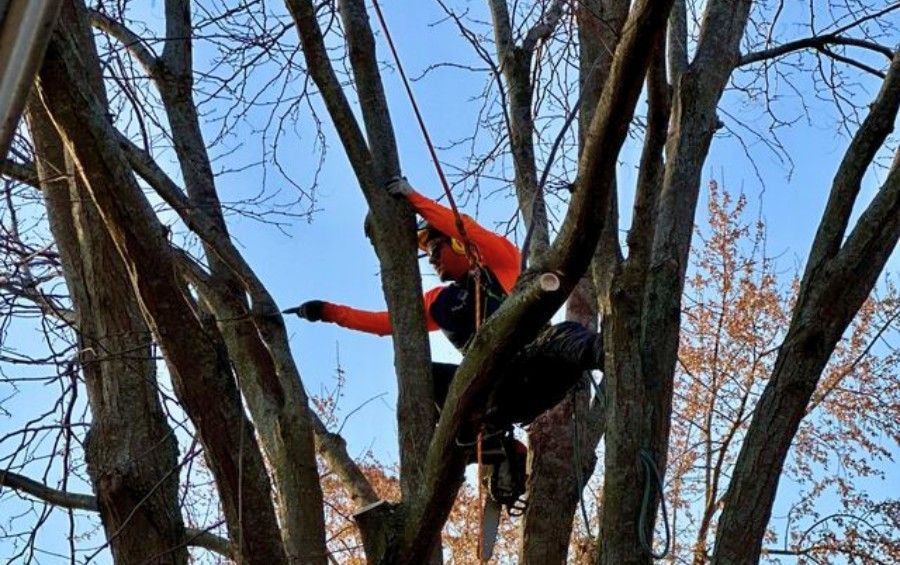
Selective hand pruning allows an arborist to address individual branches while preserving as much of a mature tree’s established structure as possible.
Can You Correct Poor Structure Without Removing Large Branches?
Partially. When removing a large limb or stem would leave a wound too big for an old tree to close safely, or when taking out a codominant stem could destabilize the tree, an arborist typically has two alternatives, shortening the problem branch with a reduction cut or installing cable or bracing hardware to help share the load.
Cabling should only be done by a professional.Rope, wire, or bolts rigged up by a homeowner won’t meaningfully add to a tree’s safety. Cabling also isn’t a permanent fix; a system needs periodic professional inspection for as long as it stays in the tree.
Arbor Masters’ professional structural pruning service in Oklahoma City can evaluate whether reduction cuts, cabling, or some combination fits your specific tree.
When Is the Best Time to Structurally Prune a Mature Tree?
Dormant season, from late fall through winter after leaf-drop, is generally the best window, offering full canopy visibility, lower disease and insect transmission risk, and less stress on the tree, per Oklahoma State University Extension.
Oak-heavy neighborhoods, like Heritage Hills, also benefit from dormant-season pruning, when insect activity is lower and fresh pruning wounds are less exposed to potential pests and disease. Arbor Masters recommends pruning oaks during the dormant season when possible. Deadwood and hazardous limbs are the exception and can be addressed when needed.
Frequently Asked Questions About Structural Pruning for Mature Trees
How is structural pruning different from general tree pruning?
Routine pruning generally addresses deadwood, minor shaping, and clearance from structures. Structural pruning specifically targets defects in a tree’s framework, such as competing leaders, weak unions, or an unbalanced canopy, that affect its long-term stability. Because it requires identifying which cuts actually affect that framework, it’s worth having an arborist involved rather than treating it as a routine visit.
If a mature tree has more than one structural issue, can everything be corrected in a single visit?
Not usually. Because only a portion of a mature tree’s canopy is safely removed at one time, a tree with several structural problems is often addressed gradually, across more than one pruning visit, rather than all at once.
Does structural pruning guarantee a tree won’t fail in a storm?
No pruning can guarantee that. Structural pruning can reduce certain failure risks by shortening overextended limbs, reducing load, or addressing specific structural defects.
What does structural pruning for a mature tree typically cost?
Cost depends on the tree’s size, how many defects need attention, and whether cabling or bracing is needed alongside pruning. A Certified Arborist can give you a specific figure after an on-site assessment.
Can homeowners safely prune minor branches on a mature tree themselves?
Homeowners can typically manage small, easily reached deadwood. Larger cuts, work near a major limb, or anything involving a codominant stem generally calls for the equipment and judgment behind Arbor Masters’ tree services, especially on a tree this size.
Why do ANSI A300 standards matter for structural pruning?
ANSI A300 is the tree care industry’s recognized standard of care in the United States, developed through the Tree Care Industry Association and covering pruning cuts, structural support systems, and other core practices. Following ANSI A300 gives homeowners a recognized benchmark for how pruning and structural-support work should be planned and performed.
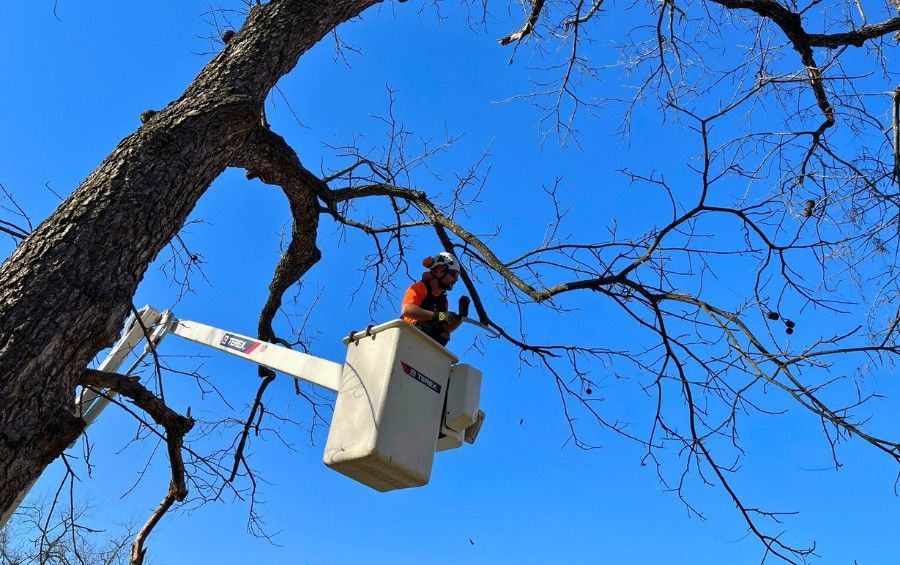
Bucket access allows an arborist to make selective pruning cuts high in a mature canopy while managing branch structure and load.
Call Arbor Masters to Protect a Canopy You Can’t Replace
Mature-tree structural pruning is less about rebuilding a tree and more about managing the structure already in place. Smaller issues, such as some crossing or rubbing branches, may still be addressed with selective pruning. Larger defects, including codominant stems or heavily loaded limbs, are more likely to require reduction pruning, staged work, or supplemental support.
A Certified Arborist can determine which defects can still be corrected and which need ongoing management. If you have a mature oak or elm in Heritage Hills, Mesta Park, or Crown Heights showing structural concerns, call Arbor Masters at 405 302-8123 or schedule a structural pruning assessment to find out what can be done to protect your tree.
Learn More With These Related Articles
Want More Like This?
Get the latest local news, tree care tips, special offers, and company updates directly to your inbox! It's easy to subscribe and there's no spam - we promise.
"*" indicates required fields
